Cosatu expressed frustration at the failure to convene a summit for the tripartite alliance
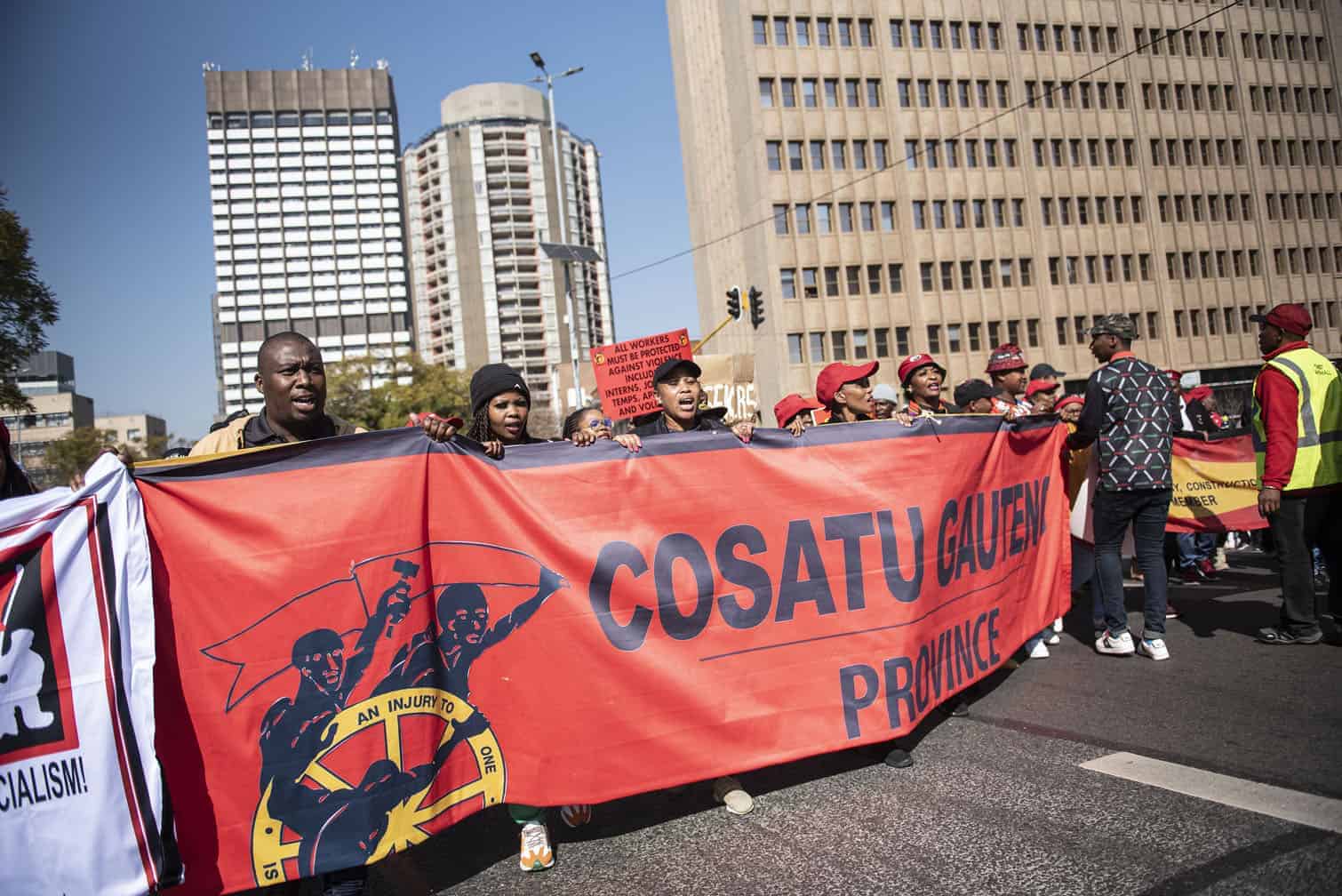
Members of the Congress of South African Trade Unions (Cosatu) take part in a march in Braamfontein, 6 July 2023. Picture: Michel Bega/The Citizen


Cosatu has vowed to preserve the tripartite alliance with the ANC and the SA Communist Party (SACP), despite mounting tensions over the SACP’s decision to contest the November local government elections independently.
After a two-day central executive committee (CEC) meeting, Cosatu stressed the need for unity within the alliance, even as relations between the ANC and SACP grow increasingly fragile.
Senior leaders of the two parties have been trading verbal blows publicly and with both targeting the same constituencies, their parallel campaigns risk dividing alliance members, who must now choose between the two parties at the polls.
SACP remains firm in its stance to field candidates separately, showing no signs of cooperating with the ANC in post-election coalitions. Its leadership has long opposed the ANC’s neoliberal policies, arguing they undermine the working class. It also rejects the ANC’s embrace of the DA in the government of national unity.
Cosatu calls for unity
Cosatu, however, insists unity is still possible.
“The federation will continue engaging its partners and will intensify its efforts to convene the alliance and develop a common programme before and after the local government elections,” it said in a post-CEC statement.
Cosatu expressed frustration at the failure to convene the alliance political council and summit, despite repeated calls.
“The current challenges confronting the alliance cannot be wished away or postponed indefinitely,” the CEC noted.
SACP general secretary Solly Mapaila has placed the blame squarely on the ANC, particularly President Cyril Ramaphosa, pointing out the alliance council has not convened once since Ramaphosa became the ANC president.
Cosatu’s decline
Cosatu faces its own internal crisis of dwindling membership, which has plummeted from nearly three million in 2012 to about 1.5 million. The decline stems from multiple factors, such as the rise of the SA Federation of Trade Unions, retrenchments across the economy and a growing disinterest in unionism as workers turn to alternative dispute resolution mechanisms.
On this decline, Cosatu was blunt: “This cannot be treated as a statistical problem. It represents a weakening of the organised power of workers at a time when employers are intensifying attacks on collective bargaining, employment security and workers’ rights.”