After 114 years, the ANC must adapt to deliver clean governance, jobs, and accountability—or risk irrelevance.
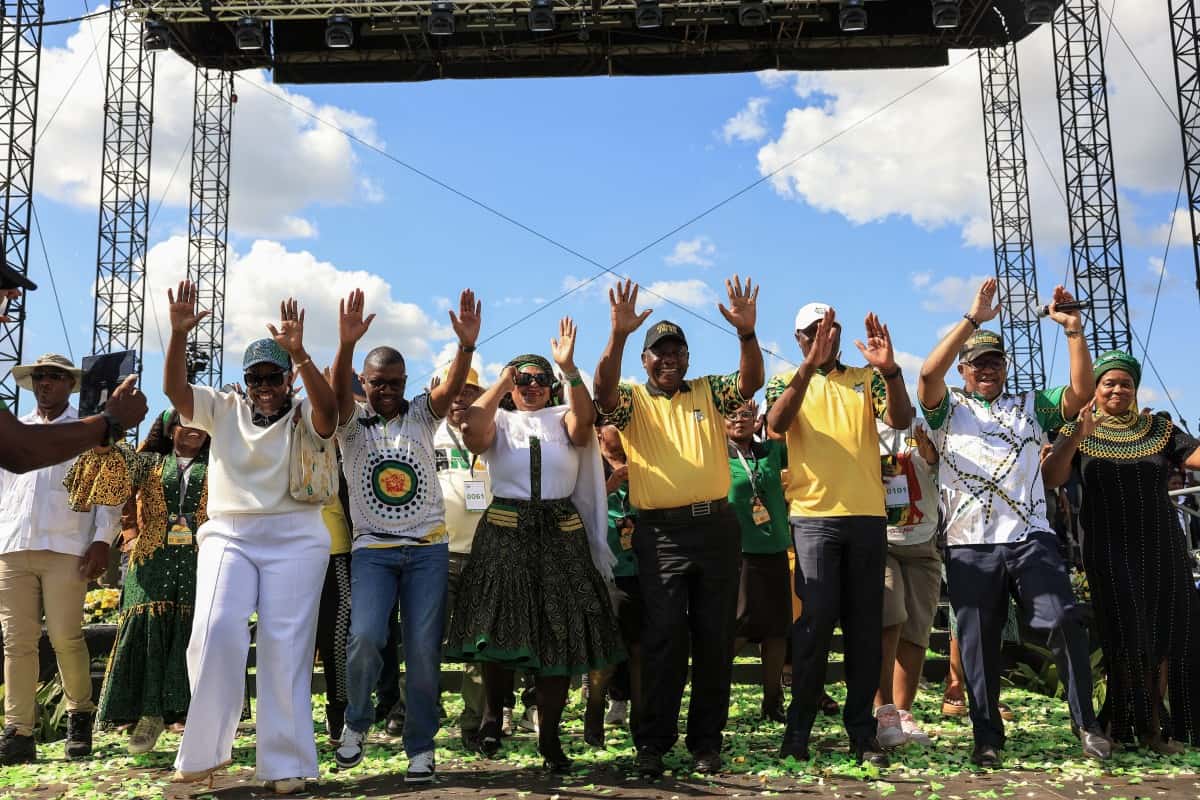
South African President Cyril Ramaphosa celebrates during the ANC’s 114th anniversary celebration at the Moruleng Stadium in Rustenburg on January 10, 2026. (Photo by PHILL MAGAKOE / AFP)


The ANC is widely known throughout South Africa, and maybe the world, but the essence of this organisation has been lost over the 114 years of its existence.
Initially, this organisation was known as the South African Native National Congress (SANNC) and it was founded by enlightened Africans who wielded some influence in their communities.
This included preachers, teachers, chiefs and well-learned, influential black people.
An argument could be made that most of them were Christianised Africans who had received missionary education and were determined to make a difference in their communities.
The brain behind the historic meeting in 1912 was Pixley ka Isaka Seme, who studied at Columbia University in New York and at Oxford University in the UK.
For a black man of his time, he was extremely educated.
ALSO READ: ANC January 8 celebrations exposed party’s dwindling support
According to some historians, Seme had an American accent, he was charismatic and his arguments in court sometimes stunned the South African white authorities. He was a lawyer by profession.
When Seme arrived in the US in 1889 for his studies, he was received by his uncle John Dube, who would later become the first president of the SANNC at its foundation meeting in Bloemfontein.
The meeting in 1912 had a clear agenda, blacks had to fight for their space in the new Union of South Africa that was formed in 1910 and they wanted full rights as citizens.
So, for at least the first four decades of this organisation, there was no radical attitude towards the white regime, it participated in peaceful demonstrations, petitions and so on.
The calibre of leadership it managed to keep had high standards, because they had to prove that they were just as capable as white people.
Two things happened that changed the flow of things for this organisation, the first being the formation of the ANC Youth League (ANCYL) by Anton Lembede and AP Mda. These young men would later influence Nelson Mandela, Oliver Tambo and Robert Sobukwe.
ALSO READ: ANC January 8 Statement: Unemployment debate dominates celebrations after Mantashe comments
Another shift in ANC politics was the introduction of the Programme of Action, which was adopted in 1949. The ANCYL was formed in 1944.
So, this decade was important in changing tactics for the ANC and the youth league was criticising the soft manner in which its mother body was dealing with the regime at the time.
The ’40s are also important because the apartheid system was becoming more brutal and introducing dehumanising laws such as the Mixed Marriages Act of 1949.
Even though the world recognised the peaceful manner that then ANC president Albert Luthuli was negotiating on behalf of the majority of blacks, for full rights as equal citizens, young people like Mandela, Tambo, Joe Slovo and Walter Sisulu believed it was time to change tactics to force Pretoria to do the right thing. They launched the armed wing of the ANC, uMkhonto weSizwe, in 1961.
The unhappiness with the leadership of the ’50s also led to the formation of the Pan Africanist Congress. It also had an armed wing.
From this period onward, there was a lot of violence in SA, until the ’80s when there were signs that Mandela would be freed from prison.
ALSO READ: ANC January 8 Statement: Ramaphosa outlines six tasks to improve party’s image
He had been arrested in KwaZulu-Natal for going to another country without a valid passport and he had also been accused of inciting workers to strike. This was a time when he was doing underground work.
The next phase of the ANC came in 1990, when Mandela was released and the country prepared to negotiate for a peaceful transition of power. The ANC was preparing to become a governing party and it no longer needed arms.
It brought the best minds to the negotiation table, people like Cyril Ramaphosa, a lawyer, and Thabo Mbeki, an economist, and other black intellectuals.
When 1994 came, the ANC had full state power, most members were back from exile, South Africa was a rainbow nation and blacks and whites were equal citizens.
But, for at least 35 years, the ANC failed to transform. It failed to meet the demands of the time; the country no longer needed people who would fight for them using arms, they wanted government services, accountability and a prosperous country.
The failure of the ANC to adapt and change saw it lose elections for the first time in 2024. It was shocked and now has to share power with its political nemeses, the DA.
ALSO READ: ANC ‘must address cadre-deployment in January 8 Statement’
The ANC could learn a few things from parties like the DA, which has gone through a number of transitions because it understood that it had to adapt or die.
The DA traces its roots from old parties, like the Progressive Party, the Democratic Party and some can argue that it has remnants of the National Party.
But the point is it has transitioned with the needs of the moment. What South Africans want from the ANC is simple, clean governance, without corruption, ethical behaviour, functioning municipalities and an economy that can create jobs.
The time for singing about being in the camps and holding guns is over. The time for reminiscing about bringing down the apartheid machinery is over.
This period needs new songs and those are songs of hard work, unity and making South Africa one of the best.
Support Local Journalism
Add The Citizen as a Preferred Source on Google and follow us on Google News to see more of our trusted reporting in Google News and Top Stories.