


The ANC's delayed coalition decisions and shifting political alliances could have serious consequences for municipal governance.
 Elections 2026
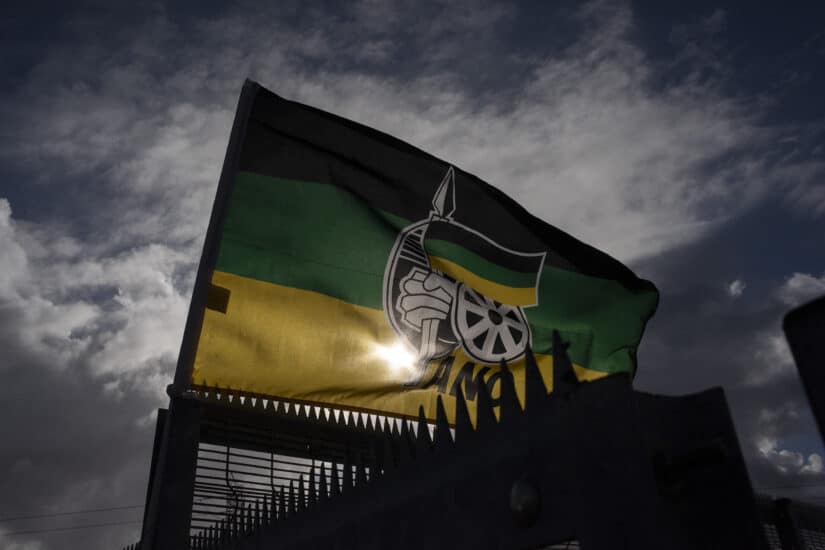
A flag of the ruling African National Congress (ANC) flies outside a polling station in Langa, near Cape Town, on November 1, 2021, during South Africa’s local elections. Picture: Rodger Bosch/AFP


The fact that the ANC is waiting until the last minute to reveal its position on municipal political coalition arrangements could mean that it is forcing its suitors to make concessions to win its favour, because it is still convinced it is the belle of the South African political ball.
But the delay could also be to allow the ANC itself to “have the last word” as a party, as a way of emphasising that it is no longer the spent force many think it is.
Being able to delay things, prima donna-style, allows the focus to drift away from realities, such as the local government election results in Joburg, where the DA gained just under 430 000 votes (or 34.6% of the total cast), compared to the ANC’s paltry 253 000 (or 20.6%).

Get your results on
our Election Hub
Live results
Actually, let’s put that in its proper perspective: Helen Zille (because she was who people voted for, rather than the DA) took nearly 180 000 more votes than the ANC could muster.
Those are some of the facts which will get swept under the carpet when – as seems almost inevitable – Zille and the DA are consigned to the opposition benches by an alliance of parties which are unashamedly playing the race card.
There have already been some odd developments around the country, though.
In Madibeng, the ANC and ActionSA look as though they’re going to be squeezed out as parties, led by the DA, want to unite to make a difference in a city wracked by appallingly bad service delivery.
In the Northern Cape municipality which includes Orania, the DA has turned its back on the Freedom Front Plus to side with the ANC.
Worryingly, though, many coalitions in existence and about to be formed seem to be shaky… and that means another five years of squabbles, potholes and dry taps.


