William Saunderson-Meyer explains how coalitions could shape the balance of national politics on the road to 2029.
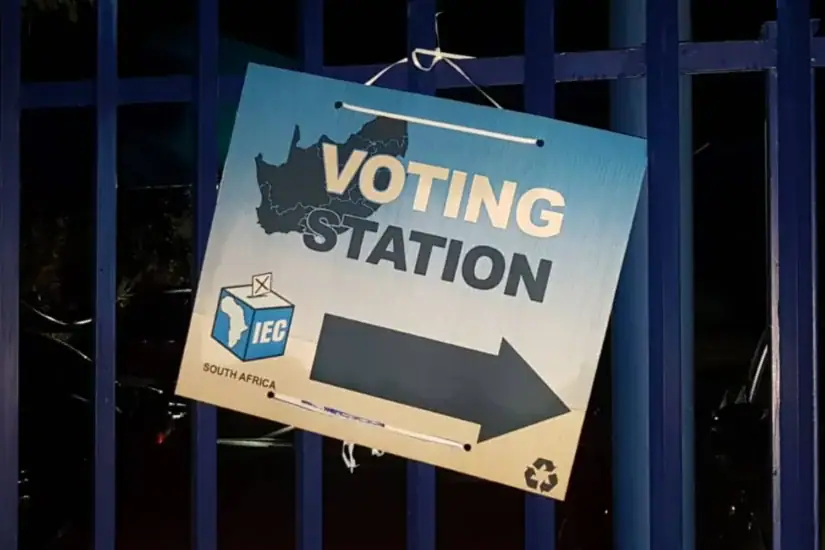
Signage outside a voting station. Picture: File / The Citizen


The final shape of Wednesday’s polling won’t be clear until the coalition horse-trading is done, which may take weeks.
But one thing is certain, the local government elections matter as much nationally as they do at a municipal level.
At stake is not simply which parties enter the coalitions, but which actually wield power within them – and whether they have enough of it to govern effectively.
The polls – like last week’s midterms in the US – are both a verdict and an indicator.
These are the tea leaves from which we might read how much the ANC’s abject failure at local government really matters to the voter.
They also offer a foretaste of how the polls might reshape the balance of national politics for years to come. But tea leaves aren’t facts.
Road to 2029
Wednesday’s significance as a pointer to 2029 lies not so much in the precise distribution of votes as they have emerged, as in what the parties subsequently do with the power that those votes confer.
The 2021 polls in important ways foreshadowed the government of national unity (GNU) that emerged three years later.
The proliferation of hung councils – about a third of the 213 contested municipalities – produced an array of coalitions in which appointments and the perks of office were bartered for support.
Too often, the result was not a fundamental change in governance, but a redistribution of the spoils. The GNU that followed the 2024 national elections replicated this pattern.
Despite losing its parliamentary majority, the ANC retained the presidency, key departments and – despite modest reforms aimed at improving economic efficiency – control of all the principal institutions shaping the ideological direction of government.
Beyond the fate of individual municipalities
But the ANC continued to hold the whip hand. The greatest danger from these polls is that the ANC will again manage to turn an electoral rout into a governing reprieve.
That an ANC, characterised by a callous indifference to the plight of ordinary South Africans, will, in the end, have again lost votes and managed to do so without surrendering its grip on power.
Key to what happens in this regard is the DA, because it alone is big enough to realistically compel the ANC to reform.
This might take the form of a two-party arrangement with the ANC, or a DA alliance with smaller parties that excludes the ANC.
In other words, the DA needs to seize the whip hand. What has been missing in the past is a culture in which agreement on how to govern takes precedence over negotiations about who gets which job.
This demands a degree of political maturity that has so far been in short supply. The 2026 polls are an opportunity to change this.
There is also, it seems, an appetite for political pragmatism among voters that the parties have been unwilling or unable to satisfy.
The enduring paradox of South African politics is that widespread disenchantment with the ANC has brought the DA only modest electoral gains.
The ANC’s losses have coincided with the rise of its breakaway rivals, the EFF and uMkhonto weSizwe party, growing voter abstention and the proliferation of smaller parties.
In other words, the important measure of these elections is not whether voters change who governs, but whether the result creates the conditions for changing how SA is governed.
That is why the elections matter beyond the fate of individual municipalities.
Their results cannot be extrapolated mechanically to the 2029 national election. But just as the municipal upheavals of 2021 anticipated the coalition politics of 2024, the coalitions that emerge now could be the template for government after the 2029 national election.