


The ANC only secured outright majorities in 53 municipalities.
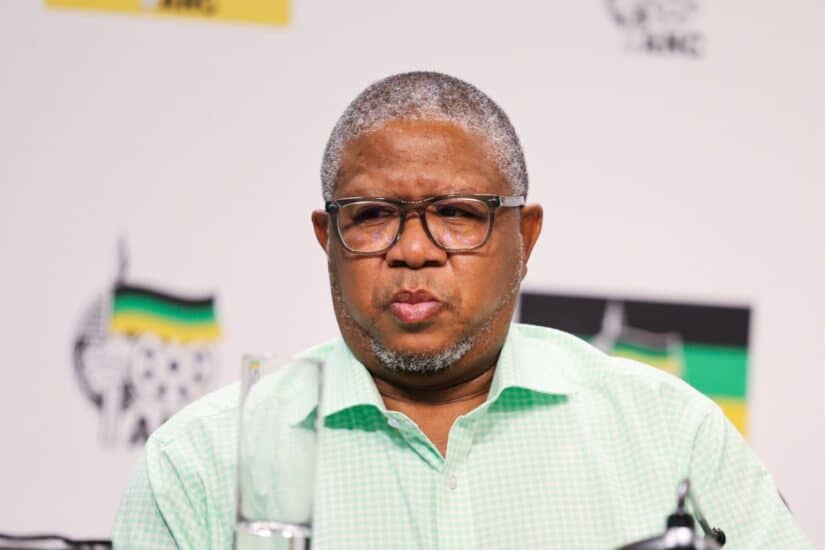
ANC secretary-general Fikile Mbalula at Chief Albert Luthuli House in Johannesburg on 21 October 2026. Picture: Gallo Images/Luba Lesolle


ANC secretary-general Fikile Mbalula has confirmed a series of coalition and municipal cooperation agreements with political formations across the country, following the party’s poor performance in the 2026 local government elections.
Addressing the media at Luthuli House in Johannesburg on Friday, 27 November, Mbalula outlined the outcomes of a special National Executive Committee (NEC) meeting that focused on the ANC’s post-election strategy and the arrangements reached in municipalities where no political party secured an outright majority.
The elections left 139 of the country’s 213 councils hung, thus necessitating extensive coalition negotiations to determine how these municipalities would be governed.
The ANC emerged with 3 246 council seats, accounting for 30.76% of the total vote.
Although it secured outright majorities in 53 municipalities, it emerged as the largest party in 133 councils.
Mbalula concedes ANC suffered its worst electoral performance
Reflecting on the election outcome, Mbalula said the NEC had acknowledged the scale of the ANC’s electoral decline, describing it as the party’s worst performance in its history.
“The ANC did not win this election, and it does not say that it did,” he remarked on Friday.
He stressed that the results should prompt serious reflection within the organisation and reinforce its ongoing renewal efforts, with the electorate having made its dissatisfaction clear at the polls.
Mbalula also ruled out the possibility of ANC members accepting positions in municipal councils through seats or wards won by other political parties.
He referred to Section 27 of the Municipal Structures Act, which sets out when a councillor must vacate office during their term.
“An office held on another organisation’s seat is, therefore, an office held at another organisation’s pleasure, and the movement will not place a public representative in that position, however it is offered and by whomever.”
Watch the ANC’s briefing below:
Parties sign up to ANC’s municipal arrangements
As part of its coalition negotiations, the ANC approached several parties with written proposals outlining possible governing arrangements.
These included the Economic Freedom Fighters (EFF), uMkhonto weSizwe (MK) Party, Inkatha Freedom Party (IFP), South African Communist Party (SACP), ActionSA and the Democratic Alliance (DA).
Mbalula explained that the proposals were designed around individual municipalities, with the ANC placing particular emphasis on securing arrangements that could sustain governing majorities for the full five-year term.
“Each term-sheet is a council-by-council document, not a statement of goodwill,” he stressed.
The party also negotiated with smaller political formations and independent councillors, eventually reaching coalition agreements and other council arrangements with the Patriotic Alliance (PA), United Democratic Movement (UDM), GOOD Party, African Christian Democratic Party (ACDP), Freedom Front Plus (FF Plus), African People’s Convention (APC), Defenders of the People (DOP), New Generation Party, Bolsheviks Party of South Africa (BPSA), Born To Win, People’s Movement for Change (PMC), Afrika Mayibuye and Magoshi Swaranang Movement (MSM), among others.
Highlighting the extent of the negotiations, Mbalula pointed to Limpopo, where agreements had been concluded in ten municipalities involving nine different political formations.
“No party that sought a meeting with the ANC was refused one.”
Breakdown of coalition partners
Mbalula also sought to clarify how the various political parties had been accommodated in the ANC’s municipal governing arrangements.
The SACP would participate in government or oversight structures alongside the ANC in more than 96% of municipalities where the party leads.
The EFF would be part of the bloc negotiated by the ANC in 107 councils, followed by the SACP in 73, the MK Party in 34 and the PA in 25.
The IFP and ActionSA would also participate in arrangements in other municipalities.
According to Mbalula, the agreements reflected the ANC’s willingness to work with political parties across the political spectrum rather than exclude them from municipal governance.
“Every major party in this country is somewhere in the system of arrangements we have settled.”
The NEC further noted that the ANC and DA had the combined numbers to command majorities in 159 municipal councils.
Despite this, the formal governing agreement between the two parties covers 12 municipalities, all of them outside the country’s metropolitan areas.
ANC outlines plans for governing hung councils
Mbalula indicated that the ANC would rely on its coalition framework to guide its participation in local government.
“Where the ANC governs, it must use its mandate with discipline.
“Where voters have returned a hung council, we are prepared to build cooperation around a common programme, with clear responsibilities and a written process for resolving disputes.”
In municipalities where it occupies the opposition benches, the ANC intends to use its councillors to hold administrations accountable.
Mbalula maintained that stable coalition governance did not require parties to abandon their differences, but rather to develop mechanisms to manage disagreements without “collapsing government, paralysing administrations or interrupting services”.
In addition, the ANC has developed a 2026/2031 Municipal Cooperation Accord, which establishes guidelines for how political parties should work together in municipal councils.


