
Women said they would walk alone at night if men vanished, the fantasy was existing without fear.
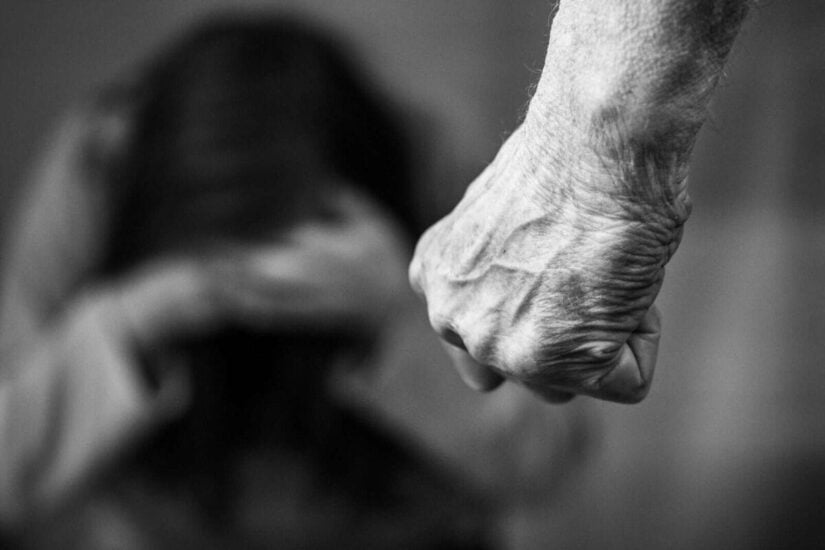
Picture: iStock


Early on Tuesday morning, in the wake of the latest serial killer (of women) on the East Rand, I posted, partly tongue-in-cheek, on X: “Curfew for men. Let’s start there instead of telling women how to protect themselves.”
I did not, at any point, submit this to parliament as a five-point policy document. It was a start, a way of saying: stop making this women’s problem to manage, when it’s men doing the killing.
Hundreds of thousands of views later, the replies have sorted themselves into a predictable pattern. Broadly: women are liking it. Men are explaining to me why it wouldn’t work. Let’s go through the greatest hits.
‘Who’s going to enforce it?’
This is South Africans’ stock reply to any law they don’t fancy. It’s what we say about speeding, jaywalking, littering, basically anything with a fine attached.
And sure, we don’t have the greatest police force in the world – I’m not unaware of that. But there’s a culture in our country where we don’t really believe a law is a law unless someone’s standing over our shoulder to catch us breaking it.
There’s also an assumption underpinning that question: that only men can do the enforcing. Funny how that logic never seems to apply when it’s women being told to get home before dark, travel in groups and carry their keys between their fingers. We’re all very capable of managing our own safety then.
Also, if men are the big, brave enforcers of the laws we already have against rape, murder and assault, I have some bad news. Look at the statistics. You’re doing a bad job.
‘Men also get murdered’
Yes. By other men, overwhelmingly. This isn’t the gotcha you think it is, it’s my entire point, handed back to me with a bow on it.
‘Criminals don’t obey the law, so they won’t obey the curfew’
Correct – and also true of rape, murder and hijacking, all of which we still, somehow, bother to legislate against.
We don’t abolish speed limits because some people speed. Followed to its logical conclusion, this is an argument for having no laws at all.
The journalist in me finds the pattern a bit boring: three replies, on rotation, from men who skipped the word “start”.
The woman in me is just tired – tired of a national emergency being met with the governmental equivalent of “thoughts and prayers”, tired of the labour of staying safe being handed to the people who are least responsible for the danger.
So, no, a curfew for men isn’t a complete policy platform. It’s not even a real suggestion. But it’s a useful thought experiment, because the objections to it tell you everything about why we’re stuck: a lawless country, dressed up as a philosophical objection, plus a reflexive assumption that men are the only ones capable of holding the line… right up until it’s inconvenient for them to hold it.
But there’s a much more serious point to address, one a handful of women correctly raised in their replies: most of the men we need a curfew for aren’t out on the street after dark.
They’re inside our homes.
SA’s Medical Research Council released its latest femicide report in October 2024 and it should end every “but who’s going to enforce it” conversation stone dead.
Of the women murdered in South Africa in 2020-21, 60.1% were killed by an intimate partner… a husband, a boyfriend, an ex. That’s not a fringe statistic.
That’s three women a day, every day, killed by someone who was supposed to love them. The rate has barely moved since 2009, and 2009’s number was already a national disgrace.
The men responsible are mostly getting away with it. Less than one in five intimate partner femicide cases ended in a conviction.
One in six of the women murdered that year showed evidence of sexual violence, too. SA’s overall femicide rate sits at roughly six times the global average. We are a country organised, structurally, around men being allowed to kill women they claim to love – and mostly not paying for it.
So, here’s the uncomfortable follow-on to my tongue-in-cheek suggestion: a curfew wouldn’t even catch most of them.
The danger isn’t primarily the stranger on the streets. It’s the man who sleeps next to us, or who used to. Asking who’s going to enforce this imaginary curfew is the wrong question.
The real question is who’s going to hold the men we already know accountable, in the homes we already know about, for the violence that’s already on record.
A few years ago, a question did the rounds online. It asked women what they’d do if men vanished for 24 hours.
It went viral globally, hundreds of thousands of responses, and the overwhelming answer, from women on every continent, was some version of: I’d go for a walk, at night, alone and without fear.
The fantasy wasn’t a holiday, or a promotion, or a lie-in.
It was existing, briefly, without calculating a man’s potential for violence into every decision.
So, what I’d actually like is far less quotable and far more useful: properly resourced domestic violence units.
Protection orders enforced before the fact, not after. A conviction rate for intimate partner femicide that shows progress.
Shelters that aren’t run on donations and prayer. Service delivery from municipalities for things like working streetlights, which make streets safer for everyone.
None of it requires me to inconvenience a single innocent man after 9pm. It just requires the country to treat “national emergency” as more than a phrase the president says once and files away.
The men reassuring me that “not all men” do this are, statistically, correct.
But three women a day are being killed by men who were somebody’s “not all men” too – right up until they weren’t.