
Young women should never have to question whether an authority figure before them is worthy of trust in South Africa.
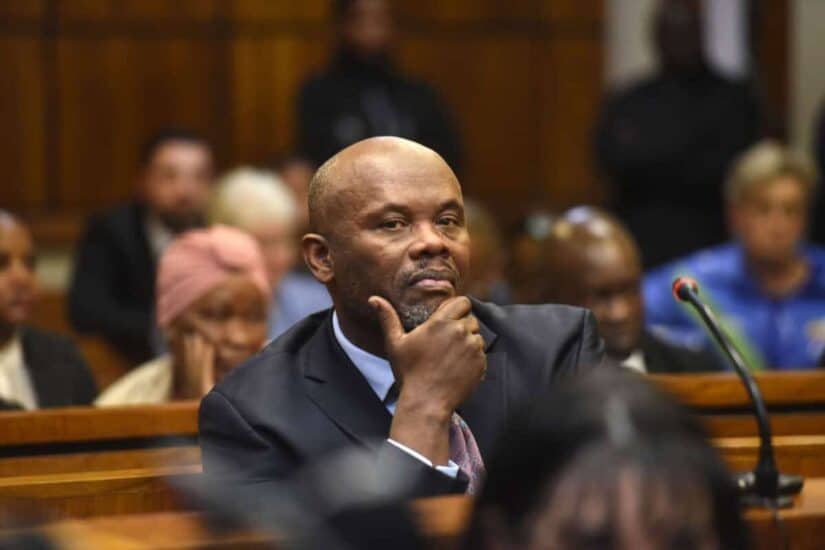
Suspended Deputy National Police Commissioner Lieutenant General Shadrack Sibiya appears at the Randburg Magistrates’ Court in Johannesburg, 1 October 2026, for a bail application on five charges, including rape, human trafficking and the alleged sexual grooming of a 16-year-old girl. Picture: Nigel Sibanda/The Citizen


There are moments when a nation must pause and confront a hard truth. What happens when the man entrusted to protect society is himself accused of violating the very people the police are meant to defend?
The allegations against suspended deputy national police commissioner Lieutenant-General Shadrack Sibiya have brought South Africa to such a moment.
Sibiya, 59, faces six charges, including rape, human trafficking and sexual grooming involving a 16-year-old girl and a young woman, 18. He denies the charges, insisting that his encounter with the woman was consensual.
That distinction matters legally. A criminal allegation is not a conviction and Sibiya is entitled to due process and the presumption of innocence.
But another question goes beyond the courtroom. What do we expect of men entrusted with authority?
A police general carries a badge, commands officers and represents the institution that is supposed to protect women and children from violence and abuse.
When someone holding such authority becomes the subject of allegations involving a teenage girl and an alleged rape, the damage extends beyond the individual. It strikes at public confidence.
The Randburg Magistrate’s Court heard that other girls will testify about a confession Sibiya allegedly made when he came out of a Sandton hotel room after 30 minutes. He allegedly said: “This girl omonate [is very nice] and she was still a virgin.”
This is an old man who should have been playing with his grandchildren, but was instead arrested at a Sandton strip club.
The allegations are particularly disturbing because they come against the backdrop of the controversy surrounding Sibiya’s testimony before the Madlanga Commission of Inquiry, where questions were raised about his conduct, the handling of sensitive investigations and his alleged relationships with figures linked to the criminal underworld.
Those allegations remain contested and have not automatically established criminal wrongdoing.
The courts are now being asked to deal with an entirely different set of allegations. South Africa cannot afford a system in which status becomes a shield.
If the evidence is proven beyond reasonable doubt, then consequences must be serious. Not because Sibiya is a general. Precisely because he is a general. The higher the office, the greater the accountability.
Young women should never have to question whether the authority figure before them is worthy of trust. Men in power must understand that authority is responsibility, not entitlement.
This case is bigger than Sibiya. It is about the kind of society South Africa wants to be. For decades, women have spoken about sexual violence, abuse of power and the fear of not being believed.
We cannot simultaneously tell women to trust the police while a top cop is facing allegations of this magnitude.
The courts must assess the evidence without fear, favour, or regard for status. If the prosecution proves its case, punishment must fit the crime, with no special treatment.
No mercy because someone wears a uniform. No protection because someone carries a title. Let the evidence speak.
If the allegations are proven, the courts should make absolutely clear that a badge is not a licence to abuse power, a rank is not a shield from accountability and being a powerful man or having deep pockets does not place anyone above the law. That would be the example this country needs.