


From Tel Aviv to Tehran, propaganda clouds reality as media frames conflict through selective silence.
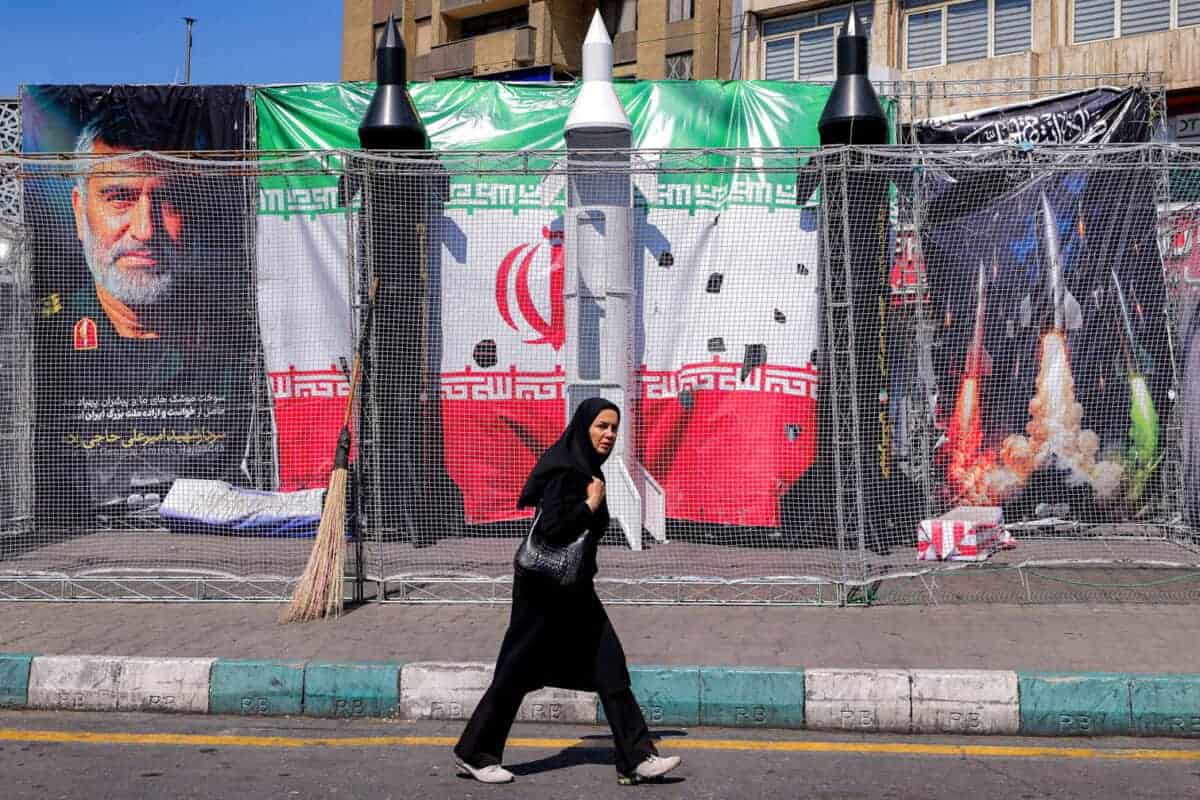
A woman walks past mockups of Iranian missiles along Valiasr Square in Tehran on April 6, 2026. Israeli strikes killed the intelligence chief of Iran’s Revolutionary Guards, as the Islamic republic on April 6 defied threats from the US President to devastate civilian infrastructure if it does not reopen the Strait of Hormuz. Picture: Atta Kenare / AFP


In times of war, truth is often the first casualty – gunpowder smoke clouds not only the battlefield but also the information space, where narratives become weapons.
The current Persian Gulf conflict, driven by Israel and the US against Iran, illustrates how information itself is contested terrain. In the process, major media outlets, particularly those with vested interests, obscure or distort events.
Gone are the days when the BBC was renowned for balance and objectivity. We recall CNN’s Peter Arnett reporting from Baghdad during the first Gulf War, offering unflinching accounts from the other side.
Such independence is rare today, as much of the mainstream press appears embedded in a Western worldview of conflict.
Yet social media, podcasts and independent online publications have cracked the monopoly. They filter fragments of truth through the veil of censorship.
This week, one watched a footage of a Western correspondent reporting from Tel Aviv, under heavy Iranian missile bombardment. He described destruction in detail – buildings collapsing, infrastructure damaged people scattered, but conspicuously avoided naming Iran as the source of the attack.
In his perspective, the missiles seemed to “rain from the sky”, detached from any actor. This omission was not accidental for to acknowledge Iran’s firepower would be to concede its military capacity, undermining the preferred narrative of weakness that always comes from those agencies.
Propaganda thrives in this ambiguity which, for the untrained eye, is difficult to detect because it is mixing fragments of truth with distortions in order to be believable. Today, propaganda is not confined to one side.
AI-generated podcasts and fabricated broadcasts circulate online, designed to sway audiences with uncanny detail and suspiciously polished delivery. To the discerning listener, the accents, the unreal characters, and the exaggerated passion betray their artificiality – making it so easy to believe.
Another form of censorship is silence. Western outlets have largely avoided reporting that parts of Tel Aviv resemble Gaza after sustained Iranian strikes, or that several US fighter jets have been downed by Iranian defences.
Protests inside Israel against the war and the Gaza military campaign are muted. Silence ensures audiences relying on these outlets remain unaware. Language itself becomes a weapon.
Russia’s “military operation” in Ukraine is framed as an “invasion” by Western media. Yet US and Israeli attacks on Iran are not described as “invasions”, but as justified actions against a “terrorist state”.
In reality these attacks are actually invasions. Even the term “terrorist state” is a US government label that the media and the world in general is expected to accept, even if Iran is not perceived in that way by other countries.
This begs the question: How many terrorist groups are sponsored by the US in Africa and the Middle East? Such media framing shapes perception, legitimising one side while delegitimising the other because it’s often based on US dictates.
Independent media now report the two-week ceasefire agreed by the two sides was not on US terms. Instead, Iran leveraged strategies such as shutting down the Strait of Hormuz and allowing certain countries’ ships through, striking US bases in neighbouring Gulf states, and threatening to target American technology firms.
President Donald Trump claimed Iran called him to propose a ceasefire. In reality, it was the US that sought respite – either to retreat or regroup.
The ceasefire may well be a prelude to ground deployment, with Iran preparing defences bolstered by Russian systems. In all this, biased reporting obscures the scale of destruction and the political fallout.
Truly independent media – social platforms, podcasts and standalone publications – remain the only hope for audiences seeking clarity.
Support Local Journalism
Add The Citizen as a Preferred Source on Google and follow us on Google News to see more of our trusted reporting in Google News and Top Stories.

