


Has government outsourced its job to the private sector?
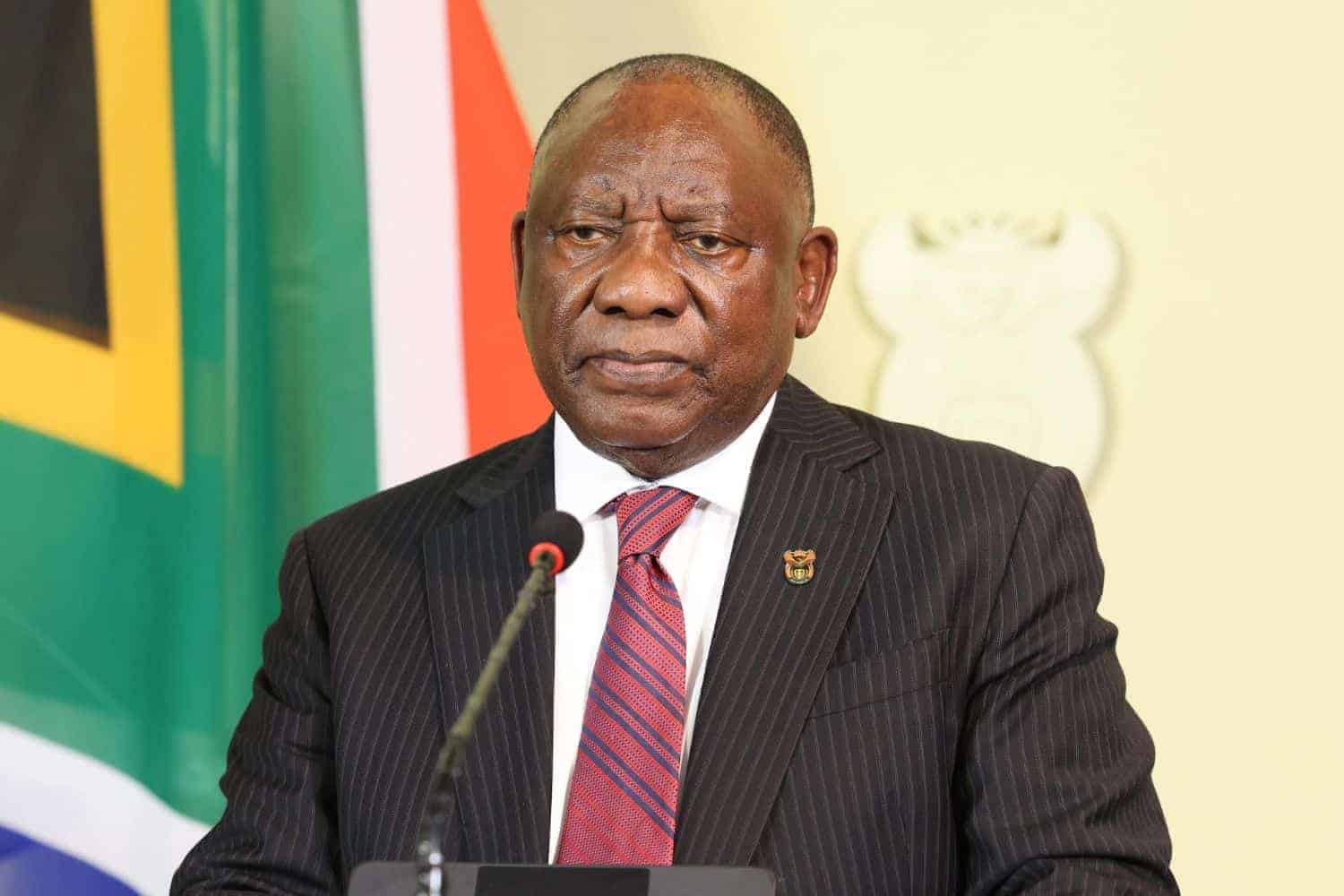
President Cyril Ramaphosa. Picture: GCIS


ANC President Cyril Ramaphosa has dismissed “whispers” that his party is outsourcing governance or selling the country to the private sector.
Speaking to members of the ANC NEC at a Lekogtla over the weekend, Ramaphosa said there was criticism within the party that it had become neo-liberal and sold out.
He said this was not true, instead suggesting that it was all part of a master plan for governance.
“There is an accusation, and some of it is whispered in the corridors of our movement, that we have become so neo-liberal that we are privatising state assets.
“I say now and here, we are not privatising anything. What we are doing is to bring in partners. Partners who have money, like what we did when we built the N3 and N4.”
Ramaphosa said the private sector was brought in to help improve the roads through a concession agreement, but that would one day come to an end.
“These roads were not privatised. They remain the property of the people of South Africa. When the concessioner’s term comes to an end, the entire road administration comes back to the state.”
He said the same agreements were now being made to help struggling state-owned entities like Eskom and Transnet.
“We are bringing in the private sector to run certain aspects. It is like build, operate, and transfer [back to the state]. Through this, we are bringing in massive investments into our logistics, rail, and [power] transmission.”
More jobs?
Ramaphosa said this creates more competitive and efficient industries, while “ensuring strategic assets remain publicly owned and regulated”.
“We have agreed, as the ANC, that we must use this massive investment in infrastructure from the private sector to support local suppliers to grow our construction and related industries, to provide opportunities for black, women, and youth-led enterprises and sustainable jobs”.
ALSO READ: Mbalula reveals shocking state of ANC support: Is the ANC becoming a rural party?
Mashatile: Privatisation is not a swear word
Deputy President Paul Mashatile told The Financial Times in 2024 that the ANC understood the need for more private investment in key sectors.
He said the party no longer saw privatisation as a “swear word” and that “bringing private sector money on board is not selling your soul”.
Betraying its history?
However, the ANC’s historic partner, the Congress of South African Trade Unions (COSATU) and the South African Communist Party (SACP) have seen this as a betrayal of the party’s National Democratic Revolution (NDR) and struggle ideologies.
The party’s own policy document on state-owned entities and development finance institutions in 2012 admitted that “initially, the ANC was strongly opposed to the selling of state assets and was of the opinion that privatisation was merely a strategy implemented to deny the new government control over the economic resources of South Africa and to keep the businesses within white hands.”
“In 1994, however, the Government of National Unity identified a need for the privatisation of some SOEs. It was decided that a few smaller state enterprises would be completely privatised, and others like Telkom and SAA would sell a portion of their ownership share to private interests.
“The key reason for government’s change of heart was its inheritance of a near-bankrupt government, and funds were desperately needed to revitalise the economy,” the paper states.
NOW READ: ANC’s revolutionary vision faces a historic decline
Support Local Journalism
Add The Citizen as a Preferred Source on Google and follow us on Google News to see more of our trusted reporting in Google News and Top Stories.

