Ramaphosa said some individuals were deliberately using the immigration debate to create disorder.
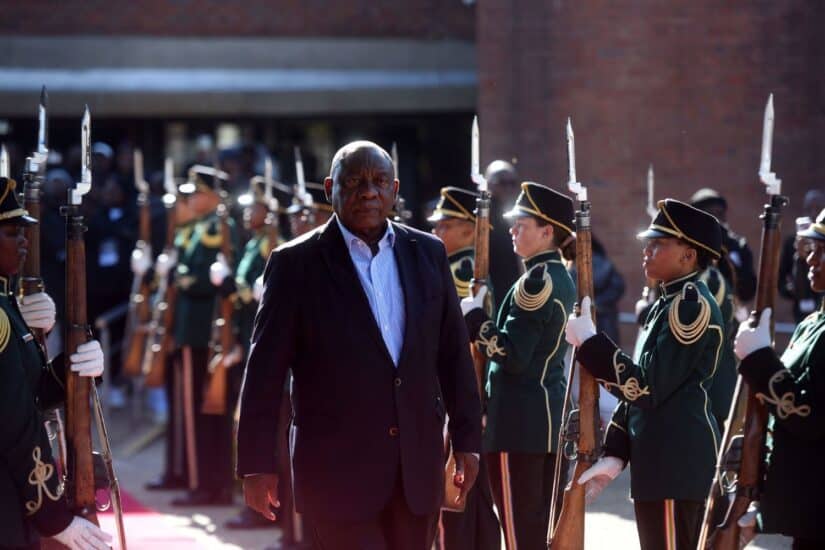
President Cyril Ramaphosa before laying a wreath at Hector Pieterson memorial site in Soweto,16 June2026. on its 50th year anniversary to commemorates the 1976 Soweto Uprising. Picture: Nigel Sibanda/ The Citizen


Ramaphosa used Youth Day commemorations on June 16 to address the country’s growing anxiety over illegal immigration, dismissing the widely circulated 30 June deadline for undocumented foreign nationals to leave South Africa as unnecessary.
Speaking to the media on the sidelines of the June 16 Commemoration at Nasrec, Soweto, Ramaphosa said government had already put measures in place to deal with the issue.
“I have intervention measures that are being taken to address the concerns of our people. And as I announced the other day when I addressed the nation, I outlined a number of interventions that we are taking,” he said.
He added that the steps had been well received.
“Those interventions have largely been welcomed by our people as immediately effective and important steps that we need to be taking to ensure that we have people in our country who are fully documented.”
Additionally, the president made clear that dealing with undocumented nationals was a matter for the state, not for ordinary citizens.
He cautioned against South Africans taking matters into their own hands.
“No South African must take any action against any person from any of our African sister countries,”HE SAID.
On the 30 June deadline that has been circulating publicly, the president was direct.
“The so-called 30th of June, in my view, is not an event that is even necessary because we are addressing the challenges that our people are facing.”
Government warns of those stirring unrest
Ramaphosa also warned that some individuals were deliberately using the immigration debate to create disorder..
“We must not allow South Africans to be duped and to be misled by those who want to foster instability in our country. And we will not allow that,” he said.
He added that law enforcement would act decisively.
“Security forces in our country are going to ensure that there is no instability and there’s no disruption of the lives of our people. But government is continuing the interventions that we announced.”
Malawians stranded in Durban
While the national debate around immigration continues, the situation on the ground in KwaZulu-Natal has reached critical levels.
KZN Premier Thami Ntuli visited the Sherwood Hall grounds in Durban, where thousands of Malawian nationals have been camped, waiting to be transported home.
Ntuli described the scene as deeply concerning, calling for urgent and coordinated intervention.
“The situation here is unfortunate. It’s a crisis which really we must manage,” he said, adding that he had agreed with those present to establish a steering committee.
He said he supported the national government’s decision to pursue deportation rather than waiting for repatriation processes.
“We can’t wait for repatriation if it’s going to take quite some time. When we already have 10 000 people plus here, you don’t know how many will be here tomorrow and next week. We might have more coming into this place.”
Ntuli said Home Affairs had already moved to act and transport the immigrants to the Lindela Repatriation Centre in Krugersdorp.
“They have briefed me that they are waiting for 10 buses from Malawi to take those who are going to be taken through the repatriation process.”
Ramaphosa: SA’s problems are its own
Delivering his keynote address at the official Youth Day Commemoration at FNB Stadium, Ramaphosa pushed back against the narrative that foreign nationals are responsible for South Africa’s socio-economic challenges.
He acknowledged public frustration but said it should not translate into scapegoating.
“We recognise that many communities are frustrated by crime, unemployment and pressure on public services. These frustrations are real and must never be dismissed. But we must also be honest about their causes.”
Furthermore, Ramaphosa was direct in placing responsibility.
“Even as we recognise the challenge of illegal immigration – which we are taking decisive action to address – our problems are our own. And which we have a responsibility to fix ourselves.”
He said the solutions needed to be grounded in reality rather than blame.
“The roots of these challenges lie primarily in inequality, slow economic growth and weaknesses in service delivery. Addressing these challenges requires practical solutions, not the scapegoating of vulnerable people.”