Ramaphosa turned to the Western Cape High Court, seeking an urgent interdict to block the impeachment inquiry while he challenges the Section 89 report.
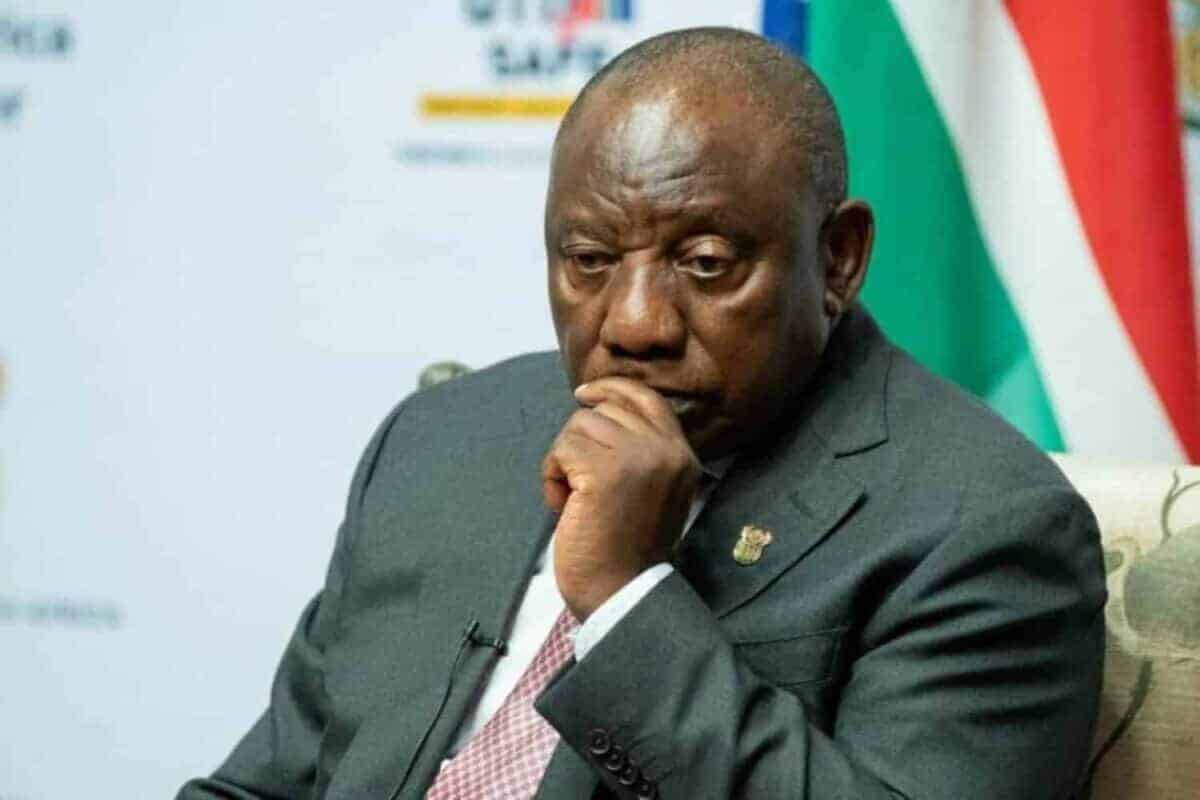
President Cyril Ramaphosa. Picture: Gallo Images/Jeffrey Abrahams


The National Assembly’s impeachment committee is expected to oppose President Cyril Ramaphosa’s urgent application for an interdict to prevent it from conducting hearings into the controversial Phala Phala game farm scandal.
The 31-member committee resolved to take action on Thursday, after MPs were advised by an independent legal expert.
Opposing the interdict
Parliament’s Section 89 Impeachment Committee on the Phala Phala matter chairperson, Makashule Gana, confirmed the committee’s decision to oppose the interdict bid.
“That is the prevailing opinion of the committee. I don’t even need to put it to a vote; the numbers are such that those who are on the side of opposing it are in the majority.”
Petitioning the speaker
Gana said that, as the chairperson of the impeachment committee, he aligns with the prevailing view of the committee members that they should oppose the application.
“We will then petition the speaker (Thoko Didiza) to also join in opposing this application, but if the speaker decides not to oppose the application, as the chairperson of the committee and the second respondent to the interdict application, I will represent the committee in opposing the application.”
Last week, The Citizen reported that Didiza is reportedly set to meet with her legal team to determine a way forward after Ramaphosa filed an interdict application to halt parliament’s impeachment process relating to the Phala Phala scandal.
Didiza
The legal battle has placed Didiza at a crossroads.
The speaker now faces the difficult decision of whether to oppose both Ramaphosa’s interdict and review applications, potentially putting her at odds with her fellow ANC member.
According to the Sunday Times, some members within the ANC are concerned that Didiza is not handling the issue in a sufficiently political manner.
This concern arises in light of her decision to decline the president’s request, particularly given the potential implications an impeachment process could have for the party.
“Many expected her to give the president space while the legal process unfolds.
“Instead, she appears to be approaching this from an institutional and parliamentary perspective,” a source told the publication.
Urgent application
On Friday, 12 June 2026, Ramaphosa approached the Western Cape High Court, seeking an urgent interdict while he challenges the Section 89 Independent Panel’s report, seeking to prevent the start of an impeachment inquiry until his separate review application against the report has been finalised.
Ramaphosa decided to revive a judicial review of the Section 89 Independent Panel Report after the Constitutional Court (ConCourt) sent the report on the Phala Phala scandal back to parliament earlier this month, paving the way for an impeachment process against Ramaphosa to proceed.
Legal opinion
An urgent legal opinion requested by parliament’s impeachment committee this week recommended that the panel oppose the court application.
The opinion stated that if the committee chose not to oppose Ramaphosa’s application, it should still file an explanatory affidavit to assist the court in adjudicating the matter.
According to the opinion, the impeachment committee has a constitutional and legal obligation to comply with the Constitutional Court order that referred the report to the committee for consideration and possible implementation.
Advice to oppose Ramaphosa
Advocate William Mokhare further advised the impeachment committee to oppose Ramaphosa’s urgent interdict seeking to halt its proceedings, stressing that the panel must act in accordance with its constitutional mandate.
Mokhare concluded that opposing the interdict is not biased but a constitutional necessity.
He underscored the committee’s independence.
“You have not yet assessed the evidence or expressed a view on the merits. Your role is to gather evidence freely, without interference, and to assert the duties imposed by the apex court.”
Ramaphosa’s rights
On Ramaphosa’s rights, the opinion was emphatic.
“The president will have every opportunity to controvert evidence and present his own. His rights are not imperilled – a fair hearing will be given, and that alleviates any claim of irreparable harm.”
Mokhare stressed that the committee’s duty is rooted “purely on legal grounds, simply asserting what its duty has been as mandated by the Constitutional Court.”
Apex court
He warned that “only the apex court can stay its own order”.
“The High Court is in no position to do that,” underscoring that the impeachment process must proceed “without delay, expeditiously, to bring finality to this matter involving the president of the Republic.”
WATCH: Parliamentary proceedings
Watch live the meeting of the Impeachment Committee on the Section 89 Enquiry at 08:00 on YouTube via this link: https://t.co/VMWXUSKv1c #ImpeachmentCommittee
– Parliament of RSA (@ParliamentofRSA) June 18, 2026
Review application
The High Court has scheduled the review application to be heard between 2 and 4 September, with opposing parties required to file notices of motion by 7 July.
In his court papers, Ramaphosa maintained that urgent intervention is necessary.
He argued that without the interdict, the impeachment committee could begin its work before the courts had had an opportunity to rule on the validity of the panel’s findings.
ConCourt ruling
The legal developments follow a Constitutional Court (ConCourt) ruling in May, which found that parliament had acted unlawfully when it blocked impeachment proceedings against Ramaphosa in December 2022.
As a result, the National Assembly was compelled to establish a formal impeachment committee to investigate the allegations further.
The committee, made up of 31 MPs from 16 political parties, is chaired by Rise Mzansi’s chief organiser, Makashule Gana.