
The accident comes as heavy rain and treacherous road conditions continue to wreak havoc across the Eastern Cape.
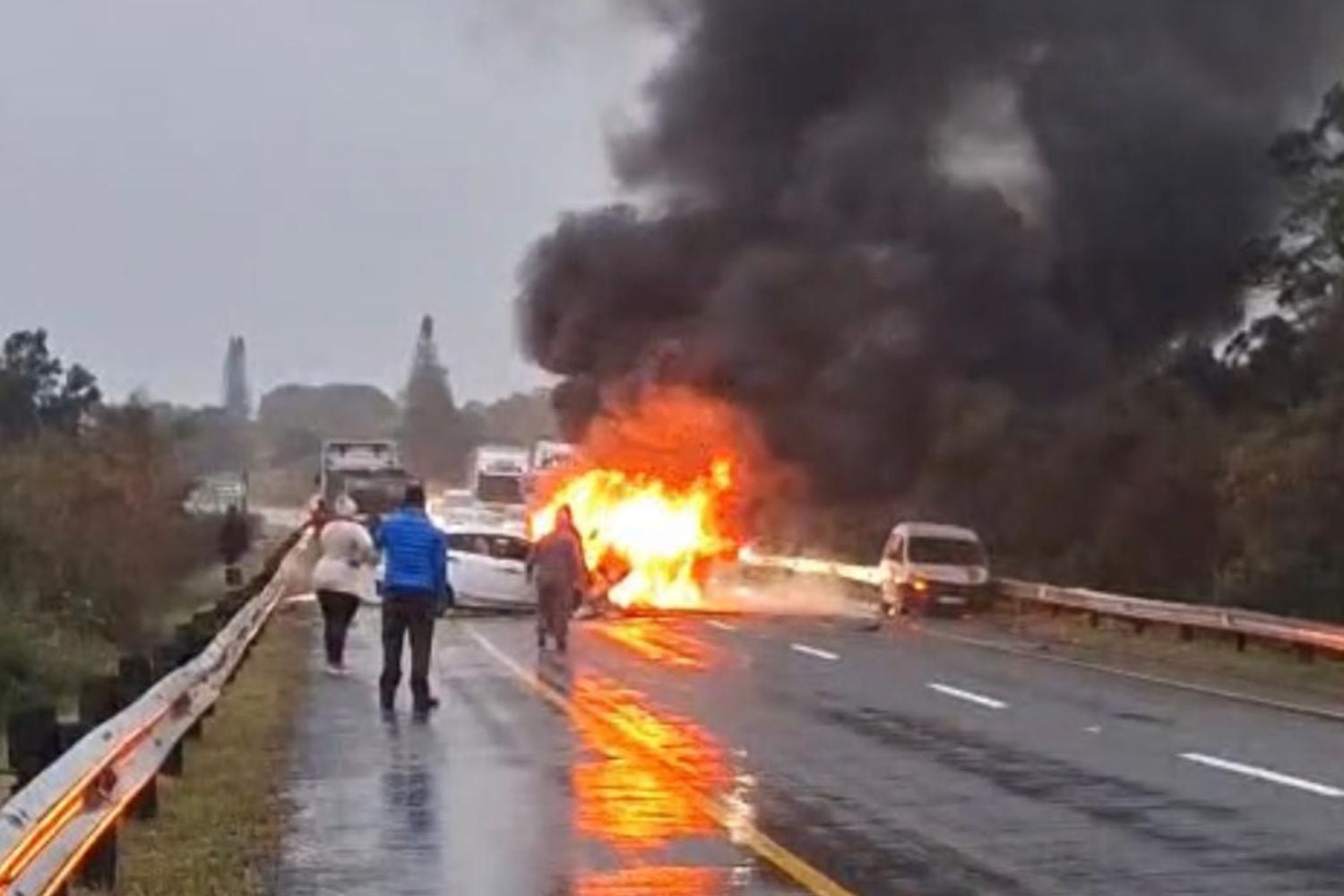
At least six people have been killed in a fiery head‑on collision on the N2 near in the Eastern Cape. Picture: Eastern Cape Transport Department.


The Eastern Cape Department of Transport has confirmed that the death toll from the early morning head-on collision on the N2 near Mooiplaas, just outside KuGompo City, has risen to six.
“The female victim who was rushed to hospital in a critical condition has sadly succumbed to her injuries shortly after arrival,” said Eastern Cape transport department spokesperson Unathi Binqose.
“The road remains partially closed as rescue, recovery and crash investigation teams continue their work. Motorists are urged to approach with caution and follow the directions of traffic officials.”
Several others were injured in the crash.
The crash occurred in Mooiplaas outside KuGompo City on Tuesday, 28 July 2026, when one of the vehicles burst into flames, trapping its occupants inside.
The accident comes as heavy rain and treacherous road conditions continue to wreak havoc across the Eastern Cape.
Bad weather
Earlier, Binqose said wet and slippery roads, poor visibility and the possibility of black ice in high-lying areas significantly increase the risk of serious collisions.
“The Eastern Cape Department of Transport can confirm that five people have lost their lives, while one person sustained critical injuries, following a head-on collision involving a Volkswagen Polo and a Renault on the N2 near Mooiplaas, just outside KuGompo City.
“The injured have been rushed to a hospital in KuGompo City.”
Crash
Binqose said the Renault caught fire on impact, resulting in the driver-believed to be a teacher at Qumrha Primary School-being burnt beyond recognition.
“Four of the five occupants of the Volkswagen Polo, comprising one male and three females, also died in the collision.
Condolences
The department extended its heartfelt condolences to the bereaved families and loved ones of the deceased and wishes the injured survivor a speedy recovery.
It appealed to all motorists to reduce their speed, increase following distances, switch on their headlights and avoid unnecessary travel where conditions are particularly hazardous.
Binqose said further information would be communicated as it becomes available.