



Cachalia called for intelligence-sharing and coordinated cross-border operations to dismantle transnational criminal networks.
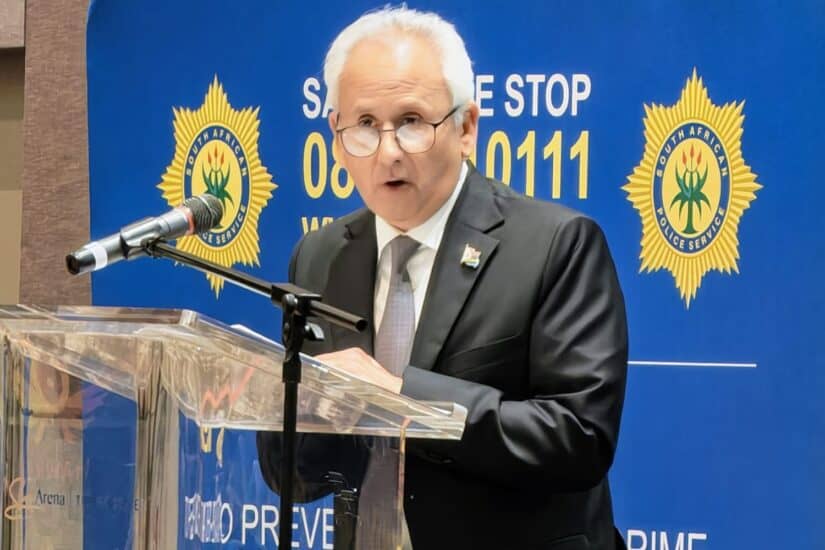
Police Minister Firoz Cachalia sounded the alarm over the growing threat posed by transnational crime syndicates. Picture: Saps.


Southern Africa risks becoming a major centre for illicit drug production as powerful crime syndicates tighten their grip on the region, Police minister Firoz Cachalia warned on Thursday.
Cachalia was delivering the welcoming address at the Ministerial Troika Meeting of the Trilateral Planning Cell (TPC) in Tshwane, Gauteng.
Drug trafficking
The meeting brought together policing representatives from South Africa, Mozambique, Tanzania, Angola, and Uganda to strengthen regional efforts against drug trafficking and organised crime.
Cachalia sounded the alarm over the growing threat posed by transnational crime syndicates, warning that Southern Africa is no longer just a transit route for drugs but is increasingly emerging as a source of illicit drug production.
He called for an aggressive, intelligence-driven crackdown, saying organised crime networks are exploiting borders, coastlines, and trade routes to traffic drugs, launder money, and fuel a range of serious crimes.
Organised crime
Cachalia said organised crime had become a regional threat requiring a united response.
“Transnational organised crime demands a transnational response. No country can effectively confront these sophisticated criminal networks in isolation.”
He described drug trafficking as one of the world’s most damaging criminal enterprises.
“Illicit drug trafficking remains one of the most lucrative and destabilising enterprises within the global organised crime economy.”
Warning
Cachalia warned that syndicates are exploiting maritime routes through countries such as Mozambique and Tanzania before moving drugs into South Africa.
He said the threat extends far beyond drugs.
“Drug trafficking intersects with other serious crimes, including kidnapping, vehicle theft, human trafficking, migrant smuggling, financial crime, environmental crime and, in certain contexts, terrorism financing.”
Criminal networks
The minister stressed that authorities must target entire criminal networks rather than focus solely on drug seizures.
“Our response must target not only the drugs in circulation but also the criminal infrastructure, financial flows, facilitators, and networks sustaining these activities.”
Success
Cachalia said law enforcement agencies would measure success by their ability to dismantle criminal organisations, identify kingpins, and disrupt illicit financial networks.
“Our effectiveness must not be measured by arrests and seizures alone. We must assess whether we are dismantling criminal networks, identifying high-value targets, disrupting illicit financial flows, recovering criminal assets, and closing the strategic gaps that allow trafficking routes to remain operational.”
The meeting also backed establishing a Regional Joint Counter-Narcotics and Organised Crime Fusion Centre to improve intelligence-sharing and cross-border operations.
Delayed intelligence
Warning that criminal groups are exploiting gaps between countries, Cachalia said delayed intelligence, fragmented information systems, and limited operational coordination create opportunities that sophisticated criminal networks quickly exploit.
Cachalia called for intelligence-sharing and coordinated cross-border operations to dismantle transnational criminal networks exploiting porous borders and maritime routes to traffic illicit drugs through southern Africa.



