
A security expert says calls to deploy the SANDF in Bekkersdal highlight policing and consequence management failures.
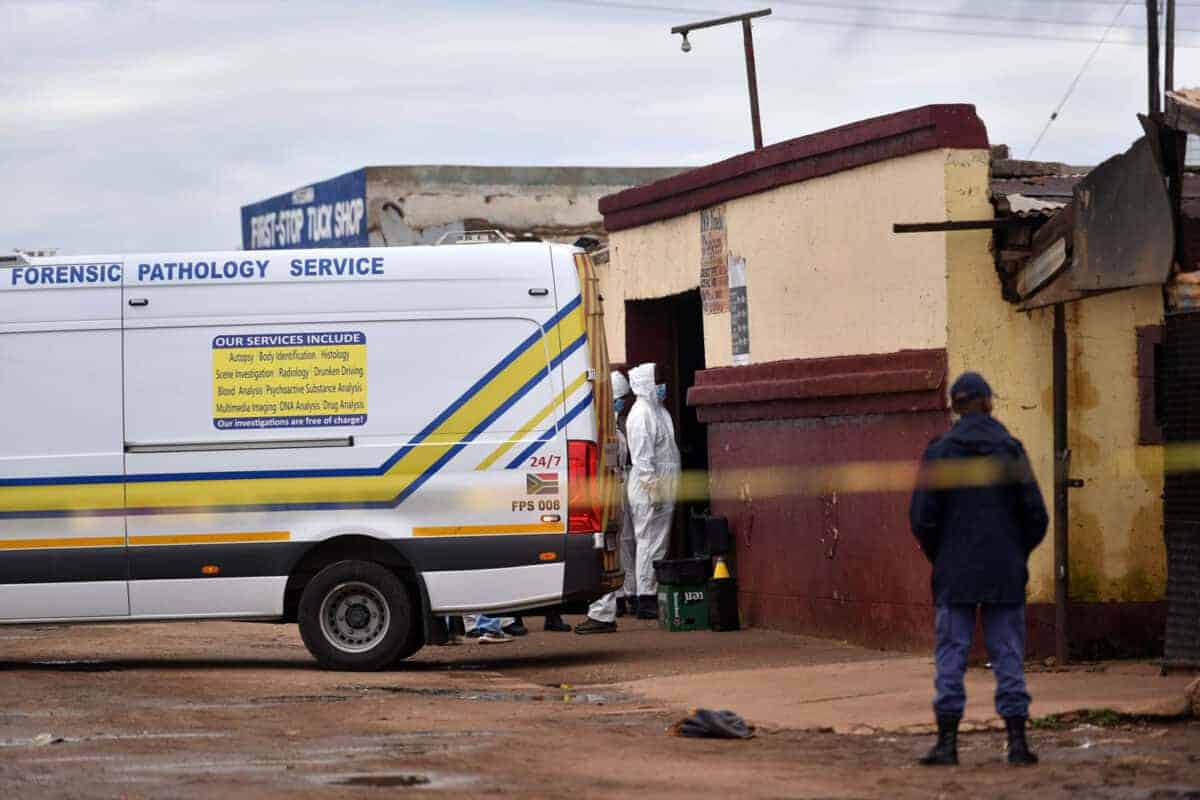
Gauteng forensic investigators at the crime scene in Bekkersdaal, West Rand, on 21 December 2025, after nine people were killed and another 10 injured in a mass shooting. Picture: Nigel Sibanda/The Citizen


The Rand West City Local Municipality’s appeal to President Cyril Ramaphosa to deploy armed forces in Bekkersdal township after the Sunday morning mass murder reveals critical security cluster failures, according to the Geopolitical Intelligence Advisory (GIA).
The Bekkersdal tavern shooting that left at least nine people dead and 10 others wounded comes weeks after 12 people, including a three-year-old, were shot and killed in a hostel tavern in Saulsville, west of Pretoria.
Deputy mayor Nontombi Molatlhegi said Bekkersdal residents were afraid of speaking out and identifying those responsible.
She said police were under-resourced, thinly spread and called for the military to get involved in protecting residents.
Expert doubts over effectiveness of troops
But military expert and GIA director Lunga Dweba said no military force has successfully defeated non-state armed groups in recent conflicts globally.
He said from Afghanistan to Somalia, Nigeria to Colombia, and the Democratic Republic of the Congo to Mozambique, military interventions address immediate symptoms, only for armed groups to adapt, disperse, and resurface months or years later.
Policing mandate versus military role
Dweba said the tactical reality favoured adaptive groups that operate among civilian populations, not conventional military forces designed for different conflict intensities.
ALSO READ: Bekkersdal mass shooting: Tavern owner arrested over fraudulent licence, two suspects identified
“Military units excel at holding territory and engaging conventional threats. They are not structured, trained, or legally mandated for intelligence-led counter-criminal operations in civilian environments.
“Deploying the SA National Defence Force [SANDF] to taverns and townships [does not] address consequence management failures and systemic vulnerabilities that enabled these attacks in the first place,” he said.
Consequence management at the centre
Dweba added the SANDF operated under specific legal mandates governing when and how it can be employed domestically.
These frameworks, he said, distinguished between supporting law enforcement and engaging in combat operations.
He said SA cannot declare war on fragmented criminal groups who commit sporadic attacks without directly challenging state authority itself.
“The ongoing mass shootings, however brutal, remain fundamentally policing problems requiring police operations, not military campaigns. The distinction matters both legally and operationally.
ALSO READ: Saulsville mass shooting suspect arrested, seized firearm sent for ballistic tests
“Military rules of engagement, operational protocols and training are designed for conventional warfare, not for navigating civilian-criminal interface that characterises these attacks,” Dweba said.
He said National Joint Operational and Intelligence Structure must work behind the scenes to contain the situation through targeted operations and clear consequence management.
According to Dweba, local government calls for SANDF deployment were understandable as there were no tangible results from the current approach.
What residents should see are arrests, prosecutions and dismantled criminal networks and not platoon patrols.
“The security cluster’s credibility depends on demonstrating consequences at first breach, not deploying military assets after criminal groups have already established operational patterns.
“The failure that led to nine deaths in Bekkersdal was not insufficient force, it was insufficient consequence management when earlier incidents tested state capacity,” Dweba said.
NOW READ: Why the deadly tavern killings?