Ramaphosa warned that the world's complex challenges make the global education agenda "more critical than ever."
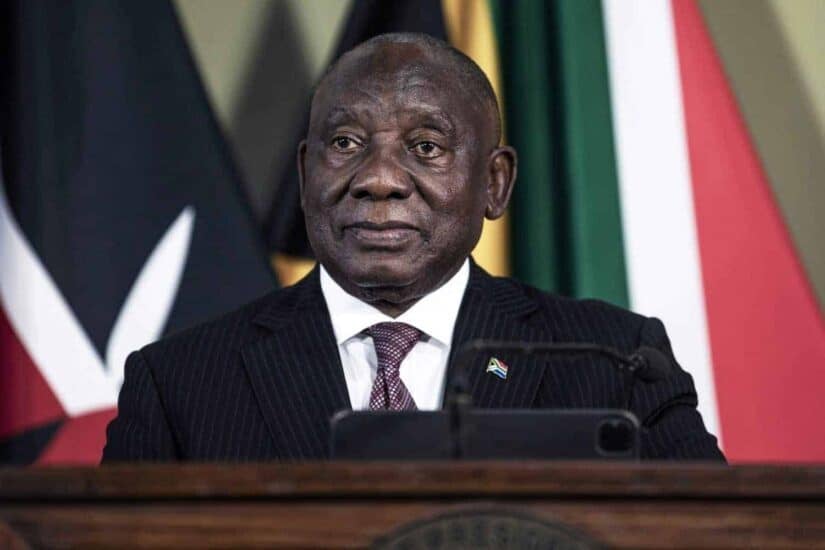
South African President Cyril Ramaphosa. Picture: Getty Images/Per-Anders Pettersson


President Cyril Ramaphosa has called on global leaders to place education at the centre of sustainable development, describing it as “the bedrock and the enabler of the other Sustainable Development Goals (SDG).
Ramaphosa embarked on a three-day official working visit to France to advance global education reform, strengthen bilateral ties, and honour fallen South African soldiers.
Engagements
The visit featured high-level diplomatic engagements with French President Emmanuel Macron and a key leadership role at a gathering at the United Nations Educational, Scientific, and Cultural Organisation (Unesco) headquarters.
Ramaphosa co-chaired the leaders’ meeting of the Unesco High-Level Steering Committee (HLSC) on Sustainable Development Goal 4 (SDG 4) on Quality Education, at the invitation of Unesco director-general Khaled El-Enany.
Complex challenges
In his address, Ramaphosa warned that the world’s complex challenges – from conflict and pandemics to poverty, inequality and climate change – make the global education agenda “more critical than ever.”
“We meet at a time when our world faces complex and interconnected challenges, including conflicts, pandemics, poverty and inequality, and the worsening impacts of climate change. This makes the global SDG 4 agenda more critical than ever.
“Inclusive and equitable quality education is the key to building resilience and to fostering sustainable societies, Ramaphosa said.
Three pillars
The president outlined three pillars for action: foundational and lifelong learning, strengthening the teaching profession, and inclusive digital transformation.
“Strong literacy, numeracy and socio‑emotional skills are the scaffolding that holds up the educational journey,” he said, adding that outcomes improve when teachers are “capacitated, given the necessary resources, and supported in their work.”
He stressed that digital transformation is “non‑negotiable if we are to adequately prepare today’s learners for the workplaces, economies and societies of the future.”
Education
Ramaphosa reminded delegates that education is not only a universal human right but “a public good” that must be safeguarded against commodification and exclusion.
He argued that financing is the critical lever
“For education to deliver on its universal and timeless promise, we have to fix the way it is financed.”
He pointed to the Sustainable Financing Pathways endorsed last year as a blueprint for credible, long‑term fiscal frameworks, highlighting innovations such as debt‑for‑education swaps already piloted in Indonesia and Côte d’Ivoire.”
Ramaphosa also warned against mismanagement and corruption that drain scarce resources, urging support for initiatives to strengthen public financial management in countries such as Jordan, Madagascar, and Burkina Faso.
2030
Looking beyond 2030, Ramaphosa noted that 20 000 young people from 95 countries had voiced demands for greater access, mental health support, flexible learning pathways and a role in decision‑making.
“Young people must be treated as co‑creators and not only beneficiaries,” he said.
Resilient education
Ramaphosa called for resilient education systems that “anticipate disruption, adapt with equity, and are ultimately transformative.”
He urged Member States to embed risk‑informed policies, align investments with national strategies, and ensure gender‑responsive planning.
“Let us leave Paris today with the resolve to turn the decisions of this Committee into the daily reality of every learner,” he declared. “The generation of today and the generations of the future are counting on us.”