
The report found that only five of the 14 institutions separated international academics from other staff categories
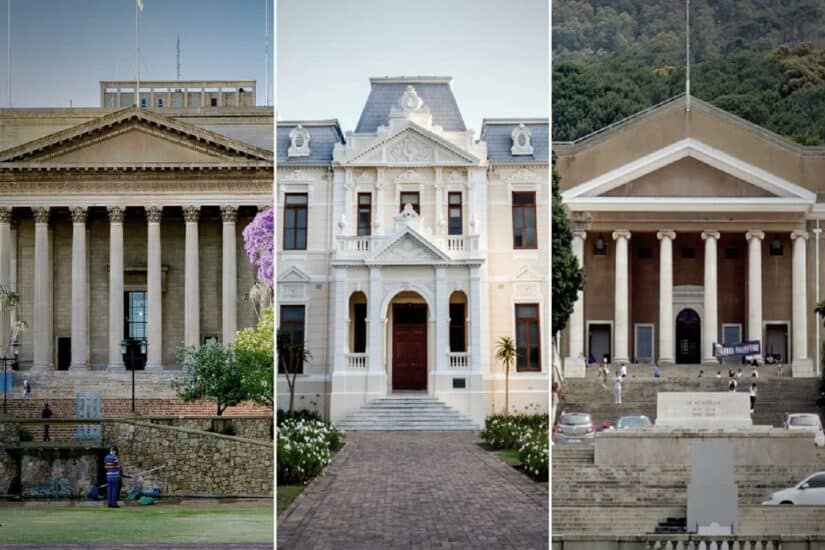
Image used for illustration. Picture: X/ @unisa


Only five of 14 public universities visited by the Department of Higher Education and Training (DHET) have published figures showing the proportion of their staff who are foreign nationals, with the reported share ranging from 1.7% to 8.3%.
The figures are contained in a DHET report on the implementation of the Internationalisation Policy, presented to Parliament’s Portfolio Committee on Higher Education and Training on Wednesday.
The report found that the University of KwaZulu-Natal (UKZN) recorded foreign nationals as 1.7% of its total staff, followed by North-West University (NWU) at 2.4%, Nelson Mandela University (NMU) at 2.5%, Mangosuthu University of Technology (MUT) at 3% and Sol Plaatje University (SPU) at 8.3%.
However, the proportion was higher when looking specifically at academic staff at institutions that disclosed those figures.
SPU records 27% among academic staff
At NMU, foreign nationals accounted for 7.4% of academic staff, while SPU reported that foreign nationals made up 27% of its academic staff.
The report also highlighted the Central University of Technology (CUT), which reported 12 permanent foreign academics, with 10 of them working in a single faculty.
DHET said the figures should be considered against significant gaps in how universities report information about international academics.
“Only 5 of the 14 visited universities publish a figure for foreign-national staff,” the report states.
It said seven institutions, Rhodes University, the University of Fort Hare, the University of the Free State, the University of Mpumalanga, Walter Sisulu University, Sefako Makgatho Health Sciences University and Durban University of Technology, did not publish a foreign-national staff figure.
The University of Zululand, meanwhile, reported only new appointments, recording three foreign-national hires out of 86, rather than providing a cumulative figure for its foreign-national staff complement.
DHET flags reporting gaps
The department’s oversight report found that universities were not providing enough consistent information to allow it to build a comprehensive picture of foreign academics across the sector.
The typical institution visited published less than a third of the information DHET requires to monitor the implementation of the 2020 Policy Framework for Internationalisation of Higher Education.
The report found that only five of the 14 institutions separated international academics from other staff categories, while only one reported their seniority or occupational level.
DHET also found that only three institutions provided information on the split between permanent and temporary foreign-national staff.
The department said these gaps made it difficult to determine where international academics were working, what positions they occupied and how they were recruited.
“No institution publishes a country-of-origin breakdown of international staff,” the report states.
It added that the lack of information meant the department could not assess the extent to which universities’ international academic recruitment aligned with the policy’s focus on regional and international engagement.
More monitoring planned
DHET has proposed standardising the information universities provide in their annual reports, including the number and percentage of international academic and non-academic staff by occupational level, contract type, and gender.
The department also plans to strengthen the Higher Education Management Information System (HEMIS) by making staff nationality and student citizenship mandatory fields.
The report said the oversight programme would also be extended to universities not yet visited during the current phase.
DHET said better information was needed to support internationalisation while ensuring that international recruitment contributed to the development and progression of South African academic capacity.