
Gwarube said food insecurity remains a daily reality for many pupils and continues to affect their educational outcomes
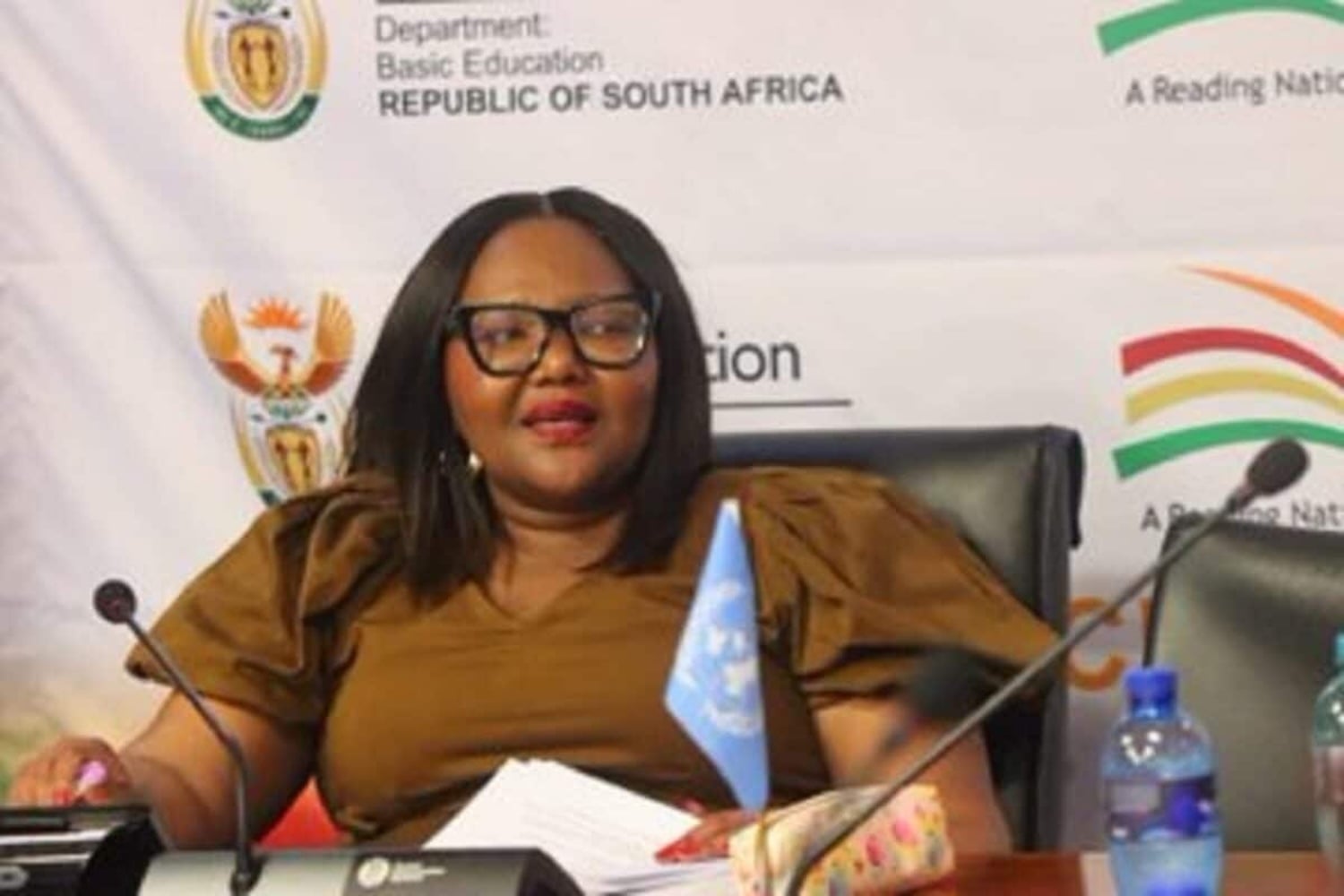
Minister of Basic Education, Siviwe Gwarube. Picture: X/ @DBE_SA


Education Minister Siviwe Gwarube has called for greater investment in school nutrition programmes, warning that hunger and poor nutrition continue to undermine children’s ability to learn.
Gwarube made the remarks while delivering the opening address on the fourth day of the South African Human Rights Commission’s (SAHRC) National Investigative Hearing into South Africa’s food systems, during which discussions focused on the link between nutrition and educational outcomes.
Hunger affects education
Addressing the hearing, Gwarube said food insecurity remains a daily reality for many pupils and continues to affect their educational outcomes.
“A hungry child cannot concentrate properly, participate meaningfully in class, or benefit fully from the right to basic education.
“Learner nutrition is therefore not peripheral to education-it is central to educational access, learner well-being, attendance, retention, and learning outcomes,” she said.
Gwarube highlighted the National School Nutrition Programme as one of the Department of Basic Education’s most important interventions, saying it provides meals to about 9.8 million learners at 20,504 public schools on school days.
“The programme currently reaches approximately 9.8 million learners in 20,504 public schools on school days. It is intended not only to reduce hunger during the school day, but also to support punctuality, attendance, participation, and concentration,” she said.
Programme faces challenges
While describing the programme as critical, Gwarube acknowledged that it faces several challenges.
“The programme of this scale is not without its challenges… constraints relating to funding, food inflation, fuel costs, rising learner numbers, infrastructure, food safety, menu quality, and uneven implementation across provinces,” she said.
Gwarube said provincial governments are responsible for implementing the programme, but stressed that implementation failures must be addressed.
“This division of responsibility cannot become an excuse for weak implementation… where there are failures in delivery, they must be identified quickly and addressed decisively,” she said.
Call for more funding
During the hearing, commissioners questioned whether the amount spent per child each day is sufficient to provide nutritious meals that can help prevent malnutrition and stunting.
Gwarube said the department would welcome additional funding but was working to maximise the budget currently available.
“We would certainly want more, but we also make sure that we are utilising the economies of scale based on what we are able to negotiate, considering that we’re a big buyer,” she said.
She said the department was also exploring ways to reduce costs by involving more small-scale farmers in supplying schools and encouraging schools to establish food gardens and use locally available food where possible.
Gwarube said the department monitors whether schools serve meals that include starch, protein, vegetables, and fruit in line with approved menus, although she acknowledged that some schools still fall short, particularly in providing vegetables.
‘Stunting is irreversible’
Gwarube warned that poor nutrition during childhood can have lasting consequences for learning.
“Stunting is irreversible,” she said.
“It will impact learning. It will create learning losses for years to come. We have to deal with the problem at the source.”
She said expanding access to nutritious meals, particularly at early childhood development centres, could help reduce child deaths linked to malnutrition.
Acknowledging South Africa’s fiscal constraints, Gwarube said the government needed to have an honest conversation about its spending priorities.
“I do think that as a government, we have to ask ourselves: where are our priorities? And where can we shift money to really service the priorities that we need to serve?” she said.