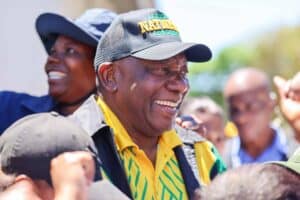
The report sets out recommendations for establishing an independent Transmission System Operator separate from Eskom.
President Cyril Ramaphosa has endorsed the Phase I report of the Eskom Restructuring Task Team (ERTT). Picture: Gallo Images


President Cyril Ramaphosa has endorsed the Phase I report of the Eskom Restructuring Task Team (ERTT), a landmark step toward restructuring South Africa’s electricity sector to create competition, attract investment, reduce electricity costs, and ensure energy security for sustained growth and job creation.
The report, presented to Ramaphosa on 30 July 2026, sets out recommendations for establishing an independent Transmission System Operator (TSO) separate from Eskom.
Modernisation of energy sector
This entity will be a cornerstone of a competitive wholesale electricity market, designed to deliver reliable and cost‑effective power.
Ramaphosa said the endorsement reflects government’s unified vision to modernise the energy sector.
“This report shows how government can ensure that the architecture of the electricity sector evolves in line with international best practice. It creates the foundation for South Africa’s growth, and it is welcomed that all key stakeholders are aligned on this objective.”
Phase 1
The Phase I analysis confirmed that restructuring is feasible without compromising Eskom’s financial sustainability. It also highlighted the urgent need to address municipal arrear debt, which poses a significant threat to Eskom and the broader electricity sector.
Immediate actions identified include strengthening the independence of the National Transmission Company of South Africa (NTCSA), ring‑fencing its licensed activities, and introducing interim governance measures.
Ramaphosa’s spokesperson Vincent Magwenya emphasised that the reforms are not only technical but also economic.
“The establishment of a fully independent TSO is a key enabler of growth. It will support higher rates of investment, job creation, and ensure that electricity is delivered at affordable prices to households and businesses,” he said.
Phase II
Phase II of the restructuring begins immediately and will run over the next three months, focusing on the detailed transaction structure and implementation plan.
A working group will develop a consolidated action plan to arrest the growth of municipal arrears, including stronger credit enforcement, rollout of smart meters, stricter licensing, and reforms in municipal trading services.
The proposals also include unbundling tariffs, clarifying payment structures, and insulating market participants from non‑payment risks.
Safeguards
Governance safeguards will ensure that NTCSA operates independently, with its own board and management, separate from Eskom.
Decisions on grid access will be relocated to NTCSA and eventually to the TSO, ensuring non‑discriminatory treatment of all market participants.
Magwenya underscored the broader vision.
“South Africa is embarking on fundamental reform of the electricity sector to achieve reliable, affordable and sustainable supply for all.
“At the heart of this reform is a competitive market where multiple generators – public and private – compete to provide electricity most efficiently. This is how we will power growth, create jobs, and expand access,” he said.
Restructuring
The Presidency reiterated that the restructuring aligns with commitments made in the 2026 State of the Nation Address (Sona) and builds on progress since the establishment of NTCSA in July 2024.
The reforms are also consistent with the Electricity Regulation Act (ERA) of 2024, which enshrined the policy objective of a fully independent state‑owned transmission entity.
South Africa joins a growing list of countries that have implemented similar reforms, aimed at ensuring reliable, affordable, and sustainable electricity supply.
The restructuring of Eskom to establish an independent transmission and market operator removes the inherent conflict of interest found in vertically integrated utilities and strengthens constitutional institutions.
ERTT
The ERTT, established in March 2026, is led by directors‑general from the Presidency and National Treasury, with senior representatives from the Department of Energy, Eskom, and NTCSA.
Its mandate is to design the institutional model for the TSO, ensure Eskom’s financial sustainability, safeguard energy security, and align reforms with international best practice.
The Task Team’s work is being undertaken in two phases: Phase I, completed in June, focused on developing a high‑level proposal to establish the TSO.
Phase II, now underway, will deliver a detailed implementation plan with timeframes for completing the restructuring.
“This is about building a resilient energy future. The President’s endorsement signals that South Africa is serious about reform, serious about investment, and serious about delivering affordable electricity to its people,” Magwenya said.
New transmission lines
In April last year, The Citizen reported that, according to the National Transmission Company of South Africa, the country needed about 14 000 km of new transmission lines at a cost of about R440 billion.
Minister of Electricity Kgosientsho Ramokgopa, at the time, said neither the state nor Eskom had the financial capacity to fund this expansion independently.
Kgosientsho Ramokgopa announced the initiative, describing it as a “step change” in addressing the nation’s ongoing energy challenges.