Thousands of qualifying students remain locked out of universities and colleges.
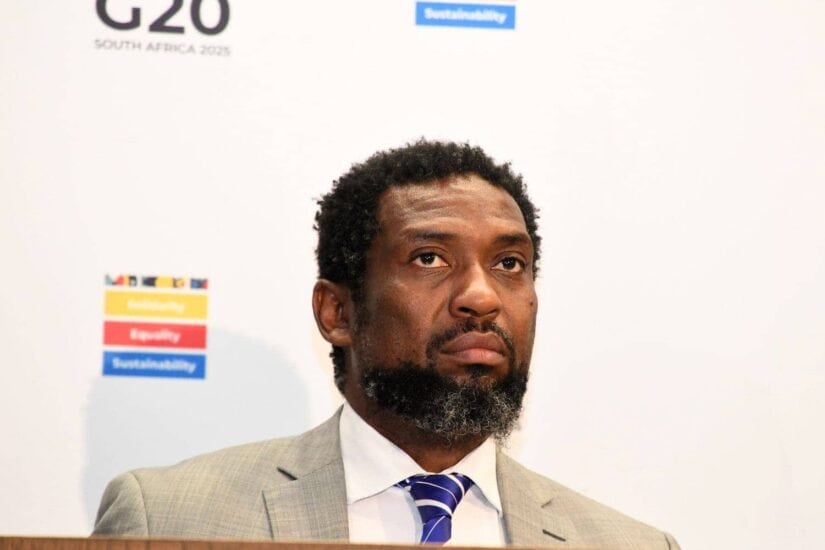
Higher Education and Training Minister Buti Manamela. Picture: Gallo Images / Frennie Shivambu


The Special Investigating Unit (SIU) has clawed back more than R1.7 billion in misallocated student funding, prompting a sweeping overhaul of NSFAS’s operations.
However, thousands of qualifying students remain locked out of universities and colleges despite meeting the admission requirements.
SIU investigation remains ongoing
According to the Minister of Higher Education, Buti Manamela, the SIU’s probe into the National Student Financial Aid Scheme, conducted under Proclamation R.88 of 2022, found that two structural weaknesses had enabled large-scale financial abuse.
These were a Solution Provider intermediary model that sat between NSFAS and the students it was meant to serve, and poorly governed memoranda of agreement with institutions.
Together, these created the conditions for overcharging and the exploitation of so-called ghost beds, accommodation that was billed for but never occupied.
Manamela confirmed the scale of the response, noting that the findings had prompted sweeping institutional and operational changes.
Questions
He was responding to a question posed by Imraan-Moosa, Al Jama-ah MP.
“The SIU investigation identified the Solution Provider intermediary model and weak MOA governance as the primary vectors for the R1.7 billion misallocation,” Manamela said.
The most consequential reform has been the shift to a direct payment model. From 2026, NSFAS will disburse allowances and accommodation payments directly to students and accredited providers, cutting out the intermediary layer entirely.
The memoranda of agreement with all institutions have also been revised to include stronger reconciliation obligations, tighter verification of registration data, and explicit financial accountability provisions.
Changes
At the governance level, the changes have been equally significant.
The former board was dissolved, and the former chief executive’s contract was terminated following findings in the Werksmans Report.
“A new board was appointed in March 2025 with a specific mandate to implement a turnaround strategy covering financial integrity and internal controls,” Manamela said.
He added that the SIU investigation remains ongoing and that consequence management against implicated individuals and entities continues.
Thousands of students turned away from universities
Even as the funding system is being repaired, a separate crisis persists: qualified students – many holding bachelor’s passes and distinctions – are failing to secure places at universities or TVET colleges.
The minister acknowledged the severity of the situation directly.
“The placement challenge is real, and the Department does not minimise it,” Manamela said.
“Demand for university places consistently exceeds available capacity, particularly at established urban institutions.”
Legislation
The government’s response is built around three parallel efforts.
Legislation for a national Central Application Service is expected to be tabled before Parliament in 2026, which is intended to improve placement coordination and close the information gaps that currently prevent qualified students from finding available spaces across the system.
Manamela indicated that students who do not secure university placement are being actively directed to TVET colleges, where occupational and vocational programmes offer funded alternatives on the same basis as university study.
The longer-term answer, however, lies in physically expanding the system.
“The Ekurhuleni and Hammanskraal university establishment processes are advancing to expand system capacity in high-demand areas,” Manamela said.
Private universities will not be brought into the NSFAS funding net, for now
A proposal to extend NSFAS funding to private higher education institutions – and potentially integrate private colleges into public university structures – has been ruled out under the current legislative framework.
The Higher Education Act of 1997 limits NSFAS funding strictly to students enrolled at public institutions, and Manamela said there are no current plans to change that.
“Any such expansion would require amendment of the NSFAS Act and a thorough assessment of financial sustainability and quality assurance implications,” he said.
“There are no current plans to pursue this.” The minister made clear that neither the integration of private institutions into public university structures nor the extension of NSFAS funding to private providers is under active consideration.
Editor’s note: An earlier version of this story incorrectly stated Siviwe Gwarube was the Minister of Higher Education. The minister is, in fact, Buti Manamela. We apologise for the error.