



Factionalism, personality clashes and assault claims threaten the DA in Ekurhuleni as candidate lists take shape.
 Elections 2026
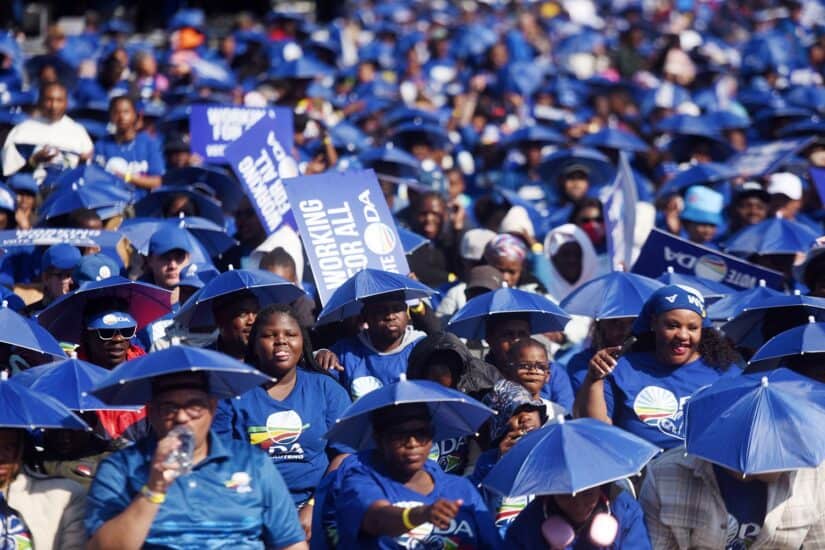
Democratic Alliance supporters at the party’s National Manifesto Launch for Election 2026 at Mary Fitzgerald Square in Johannesburg, 8 August 2026. Picture: Nigel Sibanda/The Citizen


Factionalism, personality clashes and even claims of assault are threatening to tear apart the DA’s Ekurhuleni caucus as candidate lists take shape ahead of the November local government elections – even as party leadership pushes the line of provincial unity.
Ward councillor Lana Marais has accused another councillor, Madeleine Muller, of pushing her forcefully from behind during the party’s Gauteng East regional congress at the Barnyard Theatre at Emperor’s Palace last week.
Marais accused fellow councillor Muller of assault
Marais laid a criminal complaint against Muller at the Kempton Park police station last week after she required medical attention for injuries to her back and leg. She was obtaining documentation in support of it.

LIVE interactive map, latest news, multimedia and more!
View MapMuller has denied the allegation and said she knew nothing about the criminal complaint until The Citizen contacted her.
Sources said tempers are flaring as in-fighting grows around those who will make the cut as candidates for the elections.
Experienced councillors have allegedly been pushed down the candidate lists, or out altogether, and sources said political alignment may have played a role in who survived the process.
Behind the scenes in Ekurhuleni, several caucus members painted a picture of a group divided over its candidate selection process.
One source said Ekurhuleni mayoral candidate Khathutshelo Rasilingwane may consequently face a substantial task unifying the very people who will be expected to campaign to make her mayor.
Divisions in DA Ekurhuleni caucus
The Citizen reported in March on divisions in the Ekurhuleni caucus, including allegations of rival factions, complaints between party members and councillors jockeying for positions as candidate evaluations approached.
At the time, a senior party source said election and congress periods typically brought existing rivalries to the surface. One caucus source said: “They want yes men. They don’t want thinkers.”
The source alleged a group of provincial party figures had sought to influence the process through political manoeuvring.
The source also estimated that as many as a third of the caucus’ experienced members could disappear and said critical institutional and technical knowledge could disappear with them.
Marais questioned why some experienced councillors had been ranked lower, while candidates with significantly less institutional knowledge were emerging.
She said she had objected to and appealed aspects of the candidate selection process.
Goslin’s future contentious
Boksburg councillor Gerald Goslin’s future has also become contentious. Sources claimed a document associated with him had circulated and sparked speculation that he was considering establishing another political party to compete with the DA.
Goslin rejected the interpretation. He said the document arose from an attempt to explore constitutional amendments and discussions around whether another political formation could support the DA.
Goslin acknowledged another person had circulated the paper because they thought he should start a party, but said this was not evidence he intended doing so. He said he had also not been given a clear explanation for why he would not return as a ward councillor.
Muller, who said she had been informed she would return as a candidate, rejected claims that alignment with influential party figures determined candidates’ fortunes.
“We’ve got a very rigorous selection process. We get set targets and set performance assessments,” she said.
A senior DA executive similarly defended the process and said selection assessments and scoring were fair.
Muller rejected claims
“The biggest bit of your score is related to your performance over the past five years,” the executive said, adding disgruntled candidates’ complaints sometimes looked different when their records were measured against the party’s minimum performance standards.
The DA announced this week it had completed its candidate selection process across all 257 municipalities ahead of the November election. Things can still change ahead of list publication by the Electoral Commission of South Africa next month.
DA leader Geordin Hill-Lewis was equally dismissive of suggestions that unhappiness around candidate lists was unusual.
“When the lists come out, there’s always a lot of angry and disappointed people. Some people don’t make it back. Some people are lower than they think they should be,” Hill-Lewis said.
He said candidates believed others had been ranked higher than they deserved and predicted a “bumpy ride” as lists emerged.
“This is normal. We experience this every time,” he said.
‘Electionitis’
The phenomenon is so familiar inside the DA that it has acquired its own name.
“We even have a name for it in the party,” Hill-Lewis said. “It’s electionitis.”