



Parties must explain how campaign promises will be met, says analyst
 Elections 2026
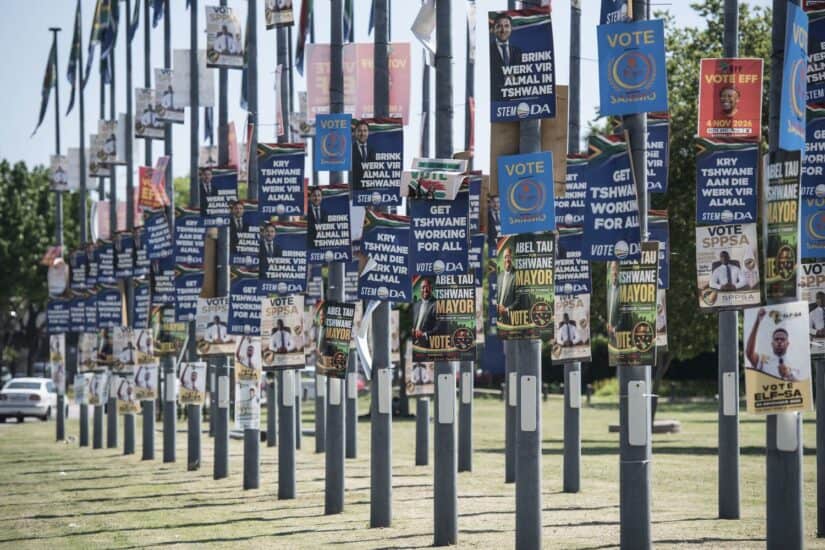
Election posters featuring various political parties are seen on 13 October 2026, in Hatfield, Pretoria. The local government elections will take place on 4 November 2026. Picture: Michel Bega/The Citizen


Service delivery failures, unemployment and municipal accountability are expected to dominate South Africa’s local government elections on 4 November.
Parties’ previous performance
The electorate faces a critical choice between political promises and the performance records of parties seeking to run their communities.
From unreliable water and electricity supplies to deteriorating roads, failing sanitation systems and inadequate refuse removal, the state of municipal services is likely to be a defining factor in how voters assess parties competing for their votes.

LIVE interactive map, latest news, multimedia and more!
View MapPolitical analysts say the elections should be about more than campaign slogans and promises of change. They should also force political parties to explain how they intend to repair struggling municipalities, stimulate local economies and ensure that public money translates into tangible improvements in residents’ lives.
Voters will used lived experiences
Nsizwazonke Yende, a lecturer in development studies at the University of Mpumalanga, said local government elections were particularly important because municipalities were the sphere of government with which citizens interacted most directly in their daily lives.
Voters were likely to judge parties on their lived experiences of municipal governance, including access to reliable water, functioning infrastructure, clean communities and municipal officials who respond to residents’ concerns.
“The election is, therefore, not simply a contest over political messaging, it is also an opportunity for citizens to express their satisfaction or dissatisfaction with the performance of local government,” Yende said.
Can campaign promises be met?
Though parties are expected to campaign on familiar themes such as job creation, improved services, support for small businesses and financial accountability, questions remain about whether their promises can be implemented within the financial and institutional constraints facing many municipalities.
He said some parties used residents’ poor living conditions to their advantage by making ambitious promises, without adequately explaining how these would be funded, implemented or measured.
According to Yende, the challenge is particularly significant, given the findings of the auditor-general’s 2023-24 local government audit, which he cited as evidence of the institutional weaknesses confronting municipalities.
He said only 41 of the country’s 257 municipalities received clean audits, while 113 adopted unfunded budgets and 174 incurred unauthorised expenditure.
These figures raise questions about the ability of municipalities to deliver on existing responsibilities, let alone fulfil additional commitments made during election campaigns.
Yende said manifestos should not automatically be dismissed as populist, but voters needed to distinguish between credible programmes and promises designed primarily to attract support.
“The test of a manifesto is not the ambition of its promises, but the credibility of the pathway through which those promises are expected to become reality,” he said.
Political parties should, therefore, explain their funding arrangements, implementation timelines, performance indicators and accountability mechanisms, instead of giving broad commitments.
Service delivery, jobs and economic development
Independent political analyst Solly Masilela identified three central campaigning issues: service delivery, unemployment and local economic development.
Beyond the immediate need for reliable municipal services, he said parties should demonstrate how they intend to support sustainable infrastructure development, small, medium and micro enterprises, transport networks, retail activity and informal businesses, including spaza shops.
Municipal infrastructure can, said Masilela, determine whether businesses operate reliably, while transport networks and well-managed trading spaces can support local economic activity and employment.
For communities struggling with limited job opportunities, election promises will carry greater weight if parties can demonstrate how municipal planning, infrastructure investment and support for small businesses will contribute to livelihoods.
The relationship between the three spheres of government – national, provincial and local – should also feature in campaigns. Masilela said parties must explain how local government programmes aligned with national policy and provincial planning.