


Analysts say voters should scrutinise candidates on their ability to manage municipal finances and deliver basic services.
 Elections 2026
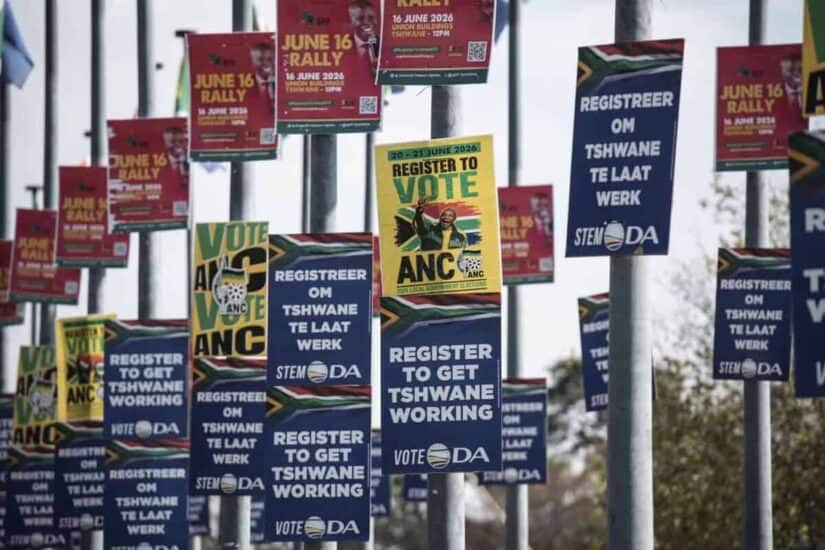
Various political party posters, including African National Congress (ANC), Democratic Alliance (DA) and Economic Freedom Fighters (EFF) are seen on flag posts along Pretorius Street in Hatfield, Pretoria, ahead of the upcoming local government elections. Picture: Michel Bega/The Citizen


Political parties and independent candidates contesting the upcoming local government elections have been accused of misleading voters by promising solutions to problems that fall outside municipalities’ constitutional responsibilities.
Experts say some parties are exploiting national concerns, including gender-based violence (GBV) and immigration, to attract support, while placing less emphasis on the basic services and local governance issues that municipal councils are responsible for addressing.
They have also criticised the use of political leaders’ faces and slogans on campaign posters, arguing this can divert attention from the candidates who will ultimately be responsible for running municipalities.

LIVE interactive map, latest news, multimedia and more!
View MapFocus of local election campaigns questioned
Political analyst Theo Neethling said the prominence of leaders on the posters and the emphasis on national political issues raised questions about whether local elections were still focused on local government.
He said municipal candidates and party lists should primarily be judged on their ability to deliver basic services, maintain infrastructure, manage public spaces and handle taxpayers’ money responsibly.
“The real test for political parties is whether they can convince voters with credible, actionable plans for local governance, rather than primarily with national political slogans and familiar faces,” Neethling said.
Voters should be asking which parties can resolve water shortages, repair roads, remove refuse, maintain traffic lights and manage municipal finances responsibly, he said.
Featuring national leaders on campaign posters was likely a deliberate strategy to mobilise voters through familiar faces and party symbols, Neethling said.
But that approach could undermine local democracy by diverting attention from the people who would ultimately be responsible for running municipalities, he warned.
Neethling cited DA Joburg mayoral candidate Helen Zille’s campaign as an example of an approach that brought attention back to local government issues.
Zille’s focus on potholes, water shortages, deteriorating infrastructure and municipal mismanagement highlighted problems residents could observe in their daily lives.
“Highlighting these challenges did not necessarily guarantee that they would be resolved, but it helped bring substantive local government issues into the campaign,” Neethling said.
Parties urged to focus on municipal responsibilities
Analyst Sandile Swana criticised parties that campaigned on issues outside municipalities’ constitutional responsibilities.
Some politicians had built their campaigns around popular national issues, promising voters solutions to problems local governments did not have the authority to resolve, he said.
Swana cited Patriotic Alliance (PA) leader Gayton McKenzie as an example of a politician who had popularised this approach.
ActionSA had also fallen into the trap of mixing national and local issues in its campaigns, he said.
“Parties need to focus on the constitutional mandates of municipalities and the responsibilities outlined in legislation governing local government, including the Municipal Finance Management Act and the Municipal Systems Act.”
Swana praised Rise Mzansi and the DA for focusing on municipal issues, saying their campaigns had addressed local government responsibilities and the skills required to manage municipalities.
He also cited the United Democratic Movement, led by Bantu Holomisa, as an example of a party that had, in several instances, concentrated on local concerns in the Eastern Cape.
National leaders overshadow local candidates
However, Swana criticised the use of political leaders’ photographs on local election posters, arguing this allowed municipal candidates to rely on prominent figures, rather than demonstrate their own abilities.
“EFF leader Julius Malema had no business, together with President Cyril Ramaphosa, appearing on posters for local government elections,” he said.
Voters needed to know their ward councillors and mayoral candidates, assess their competence and engage them directly on problems affecting their communities, he said.
Placing national political personalities at the centre of local campaigns risked allowing weaker candidates to hide behind popular leaders, instead of being judged on their own performance, Swana warned.
Local elections, he said, should ultimately focus on the people responsible for municipal administration and whether they could deliver on their promises.
With residents continuing to face unreliable water supplies, deteriorating roads, refuse collection problems and poor financial management in some municipalities, Swana said parties needed to demonstrate they had the skills and capacity to address these challenges.
“The central question for voters is whether parties can demonstrate they have the capacity, skills and credible plans to improve the communities they seek to govern, rather than relying on national political visibility to secure support.”
Analysts question campaign funding and messaging
Swana also questioned the funding of campaign posters, the ANC’s sources of funding and disclosure of political donations to the Electoral Commission of South Africa.
Political analyst Ntsikelelo Breakfast also criticised parties for using national leaders to attract voters, saying the practice could indicate a lack of confidence in local candidates.
“These things happen, but they differ from party to party,” Breakfast said.
The Inkatha Freedom Party had previously used the face of its former leader, Mangosuthu Buthelezi, on T-shirts, he said
“People need to see the faces of the people who will be interacting with them, so that they would be able to assess them before the election.”
Breakfast also criticised parties for using national crises, including immigration, to attract support in municipal elections, arguing these issues largely fell under the national government’s responsibilities.
Some parties’ messaging ahead of the elections was misleading because it created the impression that municipalities could resolve problems beyond their powers, he said.
“Having a good strategy and campaigning aimed at addressing service delivery-related problems is essential,” Breakfast said.
Campaign assessment
- A qualitative assessment by Reputation 1st Group, based on publicly available campaign material and on-the-ground observations this month, ranked five political parties according to the effectiveness of their campaign execution, message clarity, and relevance and appeal.
- The DA received the highest overall score of 8.8 out of 10, followed closely by ActionSA with 8.7.
- The ANC scored 7.7, the EFF 7.5 and Rise Mzansi 7.3.
- The assessment was attributed to Tshepo Matseba, managing director of Reputation 1st Group and a former head of marketing and communication at five JSE-listed companies.
- The scores represent the group’s qualitative assessment of campaign material, rather than an official election ranking.