


Compare the water promises in the ANC, DA, EFF and MK party.
 Elections 2026
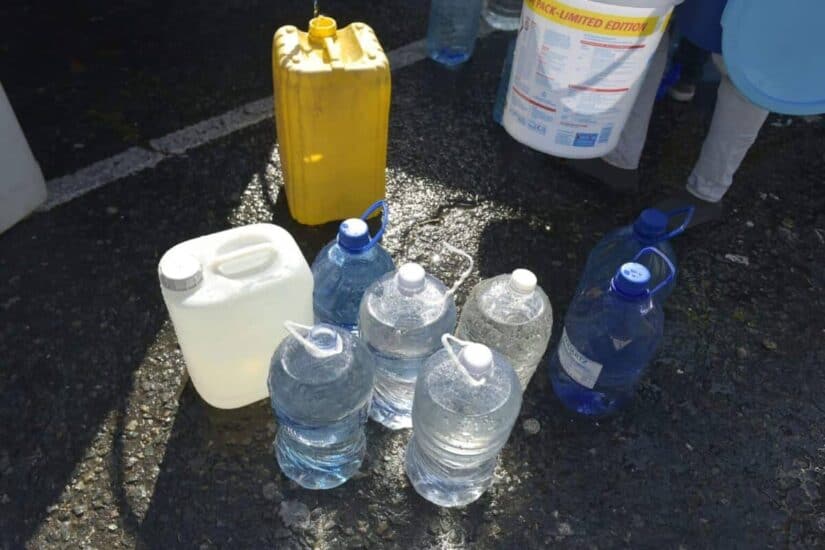
Resident queue for water in Linmeyer, Johannesburg on 7 July 2021. Picture: Neil McCartney


The ANC, DA, EFF and MK party have all promised to fix South Africa’s water crisis, but they differ on how.
Their local government manifestos set out plans ranging from private investment to tighter state control, with less than a month to go before the 4 November elections.
South Africa faces a severe and worsening water crisis. Ageing infrastructure, poor municipal management, high non-revenue water losses and climate pressures drive the crisis.

LIVE interactive map, latest news, multimedia and more!
View MapPoor service delivery has sparked protests over the years, including multiple this year alone, with people going months without water.
The situation is exacerbated by the alleged water tanker mafia, who intentionally destroy and disrupt water services in order to benefit from the carnage.
Additionally, municipal debt to water boards has made matters worse. As of 31 July 2026, it stood at R23.77 billion, excluding current accounts.
Deputy Minister of Water and Sanitation David Mahlobo said in September that this is squeezing the cash flow of water boards and raising the risk of financial distress for some.
It also limits their ability to maintain, refurbish and expand infrastructure and to keep supplying bulk water to municipalities.
ANC water promises: Infrastructure spending and water quality
The ANC pledged to invest at least 8% of the value of municipal assets in maintenance and renewal each year.
It also set a five-year target of cutting non-revenue water to below 30% in every metropolitan municipality.
The party said it would treat water contamination as a health emergency.
“E. coli and sewage contamination of rivers and other water sources will be treated as urgent public health risks requiring immediate action,” the ANC manifesto said.
It also promised new sources of supply.
“Municipalities will develop alternative water sources, including groundwater, water reuse, desalination and rainwater harvesting, and strengthen water quality through the Blue Drop and Green Drop programmes,” according to the ANC manifesto.
On costs, the party said it would keep tariffs fair and protect free basic services for qualifying households.
“People should pay a fair price for the services they use, not carry the cost of municipal waste, inefficiency and failure,” the ANC manifesto said.
DA water plan: Ringfenced revenue and private investment
The DA said it would ringfence water and sanitation revenue so that it was spent only on water infrastructure.
It also promised to install smart meters so residents could track their own usage.
The party said it would back drought planning and backup generators for water pump stations.
“A DA-led local government will make sure that when a tap is turned on, water comes out,” the DA said.
The party placed heavy emphasis on private-sector help.
“Where municipalities lack the resources to build and maintain water and sanitation infrastructure themselves, the DA will partner with the private sector to get it done under strict service level agreements that protect communities’ interests,” according to the DA manifesto.
It also promised to publish reports on where leaks were located and how quickly faults were fixed.
“Transparency is a powerful incentive: when the public can see the data, both municipalities and private suppliers have nowhere to hide,” the DA manifesto said.
The DA pointed to Cape Town’s New Water Programme as proof of delivery. The programme aims to add 300 million litres of water a day from new sources by 2031.
EFF water manifesto: Faster leak repairs and debt relief
The EFF listed 13 commitments for its municipalities on water, the environment and climate change.
Several focus on speed and fairness.
“Fix water leaks within a day of being reported and establish dedicated municipal plumbing teams in high-leakage areas,” the EFF manifesto said.
The party also promised universal access to water and sanitation for all households. “Ensure that every household has access to clean, safe, and reliable running water,” according to the EFF manifesto.
It said it would write off water debt caused by incorrect billing and offer targeted relief to vulnerable households, including pensioners and people with disabilities.
The EFF also planned to bring water tanker services in-house and limit them to emergencies.
During water shedding or droughts, tankers would deliver directly to the doorsteps of disabled people, bypassing public queues, it said.
MK party water policy: State control and tackling mismanagement in eThekwini
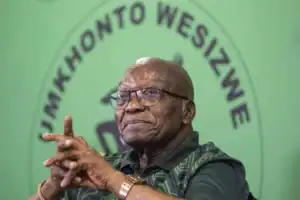
The MK party’s manifesto framed water as a matter of state ownership.
The party also warned against privatisation, saying it would work to undo its progression.
“Ensure state ownership and control of all natural resources on behalf of the South African people, including water spectrum, and renewable energy resources,” the MK party manifesto said.
The party also promised to reverse what it called a bias towards private capital.
“Reverse the policies that seek to privilege private capital at the expense of the state in the provision of water infrastructure,” according to the MK party.
It added a pledge on state-owned enterprises.
The party said it would “Ensure that key state SOEs provide cheap electricity, water and transport for citizens and industry”.
At a party debate ahead of the elections in KwaZulu-Natal in late September, MK party mayoral candidate Mxolisi Phakathi said eThekwini’s water crisis was a management problem, not an unsolvable one.
He said the party would prioritise fixing leaks, improving tanker management and addressing leadership failures.