






With weeks to go before the local government elections, here's what life is like in rural parts of Limpopo
 Elections 2026
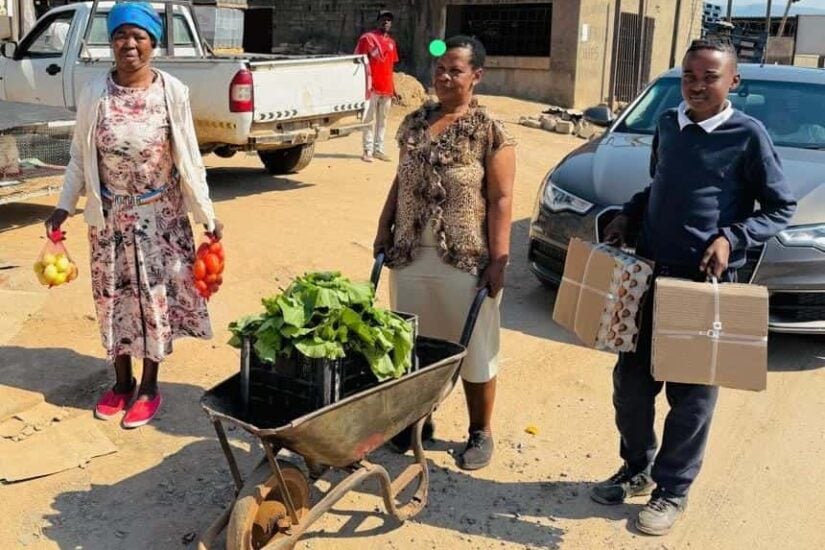
Local businesswomen- Mmago Mahlatse Pilusa, Masewapa Marium Pilusa and Prince Matlala deliver vegetables to their stalls at Relela Bustop in Bolobedu outside Tzaneen. Picture: Alex Japho Matlala


Acute water shortages, dilapidated roads, a constant fear of flooding, and unemployment best describe life in the Balobedu Nation, located 123km from Polokwane and 33km from Tzaneen.
The area consists of about 150 villages nestled between the escarpments of the world-renowned Modjadji Rain Dynasty and the Kgwekgwe Mountains. Summer temperatures from September to March average 28°C while winter averages around 15°C. Rainfall ranges from about 800mm per year in the low-lying areas to 1 500mm in the mountains.
Such climates make life difficult for many residents, with their struggles written on my faces during a recent visit to the area by The Citizen.

LIVE interactive map, latest news, multimedia and more!
View MapThe trip is part of The Citizen‘s travels across the length and breadth of the country to explore the lives, struggles, successes, and frustrations of everyday South Africans ahead of this year’s local government elections.
Entering the sprawling villages of Bolobedu from Tzaneen, the aroma of traditional delicacies fills the air. Houses are covered in smoke from firewood, as women cook dishes such as khedobja, khapamorogo, lebjibje, khethoothoo, khenkhwerere, and mashotja [mopani worms], served with porridge.
While Limpopo’s official unemployment rate increased to 32% in the second quarter of the 2026 financial year, according to Statistics South Africa, young people aged 21 to 35 remain the hardest hit.
Most adults aged 36 to 60 work on citrus farms or in kitchens in Tzaneen, Modjadjiskloof, Hoedspruit, and Magoebaskloof.
The Citizen spoke to some of these residents about their expectations and preparedness for the crucial local government election on 4 November.
Going it alone
During visits to Tickyline outside Lenyenye, Relela outside Tzaneen and Morutji near the Modjadji Royal Residence at Khethakone, residents – young and old – complained about the same issues: water shortages, youth unemployment, and bad roads.
Popular street vendor at the Relela bus stop, Mapula Suzan Pilusa, said she was disillusioned.
“My husband passed on in 2008. When he joined his ancestors, we were blessed with two children. I had to fend for them by myself, and employment was scarce,” said Pilusa, affectionately known as Mmago Mahlatse.
“With the little money he left us, I started this makeshift stall to sell fruits and vegetables. Some months I would make enough to put bread on the table, but some months were terrible.
“I knocked on every government door asking for funding to support my business, but all remained shut until today. We feel forgotten”
Pilusa said she has registered to vote and will cast her vote on 4 November, but would not reveal her party of choice.
“My vote is a secret. But I am definitely going to vote for a party that has the interests of all the people, a party that will upskill its people and prepare them for the dog-eat-dog job market and help us grow our businesses by providing funding,” she said.
Disillusioned but still voting
Her words were echoed by emerging businessman Sekese of Morutji Smart Food.
“My name, Sekese, comes from Six Guns. I earned this name because after eating my food, people praised it, claiming my food was mouth-watering and delicious even without Six Gun spices,” Sekese said on Wednesday.
He, too, said he would vote but would not disclose his party.
“Although I struggled alone to build this business from scratch without any inheritance, loan or government funding, I still think by voting I will be exercising my rights. I want my voice to be heard.
“The kind of government I expect after the municipal polls is one that will bankroll my business and make it stand the test of time,” he told The Citizen.
Water shortages closed my business
Kedibone Letsoalo of Tickyline and Kennedy Ramaila of Relela shared similar sentiments. Both had to shut down their car wash businesses due to lack of water.
The two complained that every financial year municipalities and provincial departments table budgets with water receiving the biggest slice.
“Year after year, government buries bulk water pipes underground and builds purification plants. After that they hold gala dinners and cut ribbons. But a few weeks later, not a single drop comes out of the taps.
“That is why we ended up closing our businesses because the little money we make goes to paying workers and buying water from the well-off at exorbitant fees,” they said.
Some successes
Phillip Machubeni, a 49-year-old father of five from Khemarela near Morutji, praised the Greater Tzaneen Municipality and the Limpopo Department of Public Works for fixing local roads.
“Our roads were riddled with potholes. Some turned into dongas after the December to March floods. But the two spheres of government did not take long to fix our roads. Today, driving from home to Tzaneen is smooth,” he said.
Provincial war rooms
During her State of the Province Address (Sopa) earlier this year, Limpopo Premier Phophi Ramathuba said her government would establish provincial water war rooms. This was later confirmed by provincial spokesperson Ndavhe Ramakuela, who said such war rooms have been established.
“The premier has established war rooms in Mopani, Vhembe, including Makhado, and Capricorn, including Polokwane, that have been able to attend to most water challenges.
“Water remains the priority challenge in our province, and we have kept it at the top of our programmes. Mopani has extended its water provision by repairing boreholes and ensuring sustainable supply.
“The biggest challenge has been the flooding that for three months ravaged Mopani, Vhembe and Sekhukhune. This has affected water sources in places like Phalaborwa, which are only now being repaired.
“However, we appreciate the strength with which the Mopani District Municipality has implemented the #HiNwaMatiFridays campaign,” he said.
Boerholes
Ramakuela said the municipality has successfully installed new 2.2kW pumps for boreholes at Muyexe, and the community there is now receiving water.
In Mokgoloboto and Petanenge outside Tzaneen, new pump and motor sets have been installed, and communities are now receiving water. The municipality has also appointed contractors in all local municipalities to upgrade wastewater treatment works to comply with Green Drop standards.
“Equally, Capricorn District Municipality has extended its water provision by opening various water schemes in the past months.
“They have strengthened oversight of major water schemes through regular mayoral outreach and project monitoring visits to ensure quality workmanship, resolve implementation challenges and accelerate service delivery.
“Key achievements include the successful handover of the Avon Water Supply Project in Blouberg, the Eisleben Water Project in Molemole, which has brought relief to communities that experienced prolonged water shortages, while the Ga-Phasha Water Supply Project in Molemole has been completed and is ready for official handover,” he explained.
He said significant progress has also been recorded on the Dilaeneng Water Supply Project, Inveraan Water Supply Project, Senwabarwana sewer unblocking, Makweng Water Supply Scheme, Mphahlele Water Scheme and other Water Services Infrastructure Grant (WSIG) and Municipal Infrastructure Grant (MIG) projects across Blouberg, Molemole and Lepelle-Nkumpi.
On the protracted water problems in Polokwane, Ramakuela said Premier Ramathuba has made progress in finding a lasting solution between Lepelle Northern Water – the state-owned bulk water utility – and the Polokwane Municipality.
“We now see a consistent supply of water in Polokwane since that meeting. If there are interruptions, they are communicated to residents on time.
“Both the municipality and Lepelle Northern Water have undertaken to hold up their end of the bargain and fulfil their requirements. The session was meant to strengthen coordination between all spheres of government. Each one had a role clarified, and they are working seamlessly,” he assured The Citizen.



