


Michael Beaumont had previously accused former DA leader Tony Leon of having a hand in removing Herman Mashaba as Johannesburg mayor.
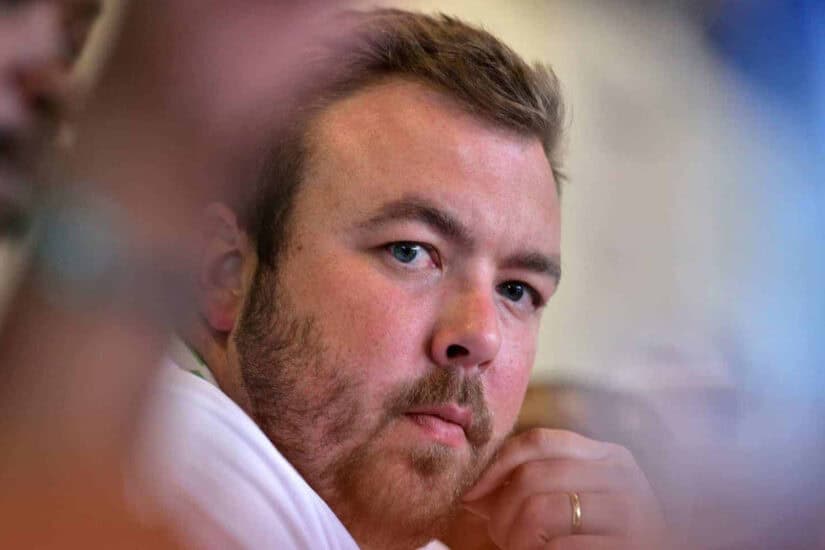
ActionSA national chairperson, Michael Beaumont. Picture: Nigel Sibanda


DA defector and ActionSA national chair Michael Beaumont has publicly challenged Resolve Communications Executive Director Tony Leon.
Beaumont penned an open letter to Leon a day after the former DA leader released his own statement on the fallout from a media interview featuring John Steenhuisen.
The former agriculture minister over the weekend stated Leon and his firm had significant political influence and were “pulling strings” in several key areas.
Leon responded by backing his firm’s work and its commitment to transparency, warning detractors of legal consequences should defamatory comments be made.
ActionSA on Monday joined the ANC in calling for an investigation into Steehuisen’s claims, with the former stating on Wednesday that it would file a complaint with the Public Protector.
Overlapping interests
Beaumont’s open letter makes a string of claims against Leon, all tied to alleged instances where Leon and Resolve Communications negotiated with government ministers on behalf of clients.
Beaumont questioned Leon’s commitment to transparency, suggesting that the details of such engagements were only revealed when mandated.
“At every turn, the truth has been dragged, kicking and screaming, into the public domain, so please do not try to position yourself now as a paragon of virtue.
“As a matter of fact, what is beginning to emerge resembles, in my opinion, a state capture racket, and this is why ActionSA has called on the president to institute an investigation into the actions of Resolve Communications,” Beaumont’s open letter to Leon reads.
Beaumont was Herman Mashaba’s chief of staff when the latter served as Johannesburg mayor while still in the DA, and he highlighted the overlap between Leon’s political and private actions.
“You claim that Resolve Communications is not a political actor and merely a corporate firm. Resolve Communications, and the DA notably, have trotted out the exact same coordinated line about “lobbying” being a normal corporate practice in the corporate interface with government.
“Tony, you chair the committees that stitch up the fate of DA leaders. You personally headed the DA’s team to negotiate the establishment of the government of national unity (GNU), including the composition of the same Cabinet on whose doors you later came knocking on behalf of your clients,” Beaumont wrote.
‘Some think, some do’
Leon’s statement on Tuesday dismissed the alleged state capture parallels, stating that “criminal subversion of public institutions” was not the same as assisting a business “make its case to government”.
“The comparison to state capture is the part I find most objectionable, and I say so as someone who fought this scourge in various forms from the opposition benches since the advent of South Africa’s hard-fought democracy.
“To conflate the two is not merely inaccurate. It is an insult to the South Africans who suffered under the real thing, and who fought to bring it to light,” Leon stated.
In the months following the successful GNU negotiations, Resolve Communications and Leon celebrated his contribution.
“I wasn’t looking for a role, but I was asked to perform it. I just felt this was too important in terms of the national future to sit up and say, ‘Well, I don’t want to go back into politics’.
“Some think, some do, some both, too few,” the firm quotes Leon as saying.
‘Selective morality is not morality’
Chairman of Eskom’s board Mteto Nyati also weighed in on the issue on social media, criticising the country’s influential businessmen and politicians of not playing by the same rules as the common man.
While commenting on Business Leadership South Africa advocating for political intervention in the operations of the Transmission System Operator, Nyathi commented on the DA infighting.
Nyathi described Leon as “a voice that has long lectured on ethical standards and clean governance”, before taking a broader philosophical stance.
“Selective morality is not morality at all. When those who position themselves as guardians of good governance apply different standards to themselves, public trust erodes.
“South Africa does not lack good people. What we need is the collective will to insist that principle applies to all,” Nyati stated.



