Here's what an analyst believes the future holds for the country's fourth-biggest party.
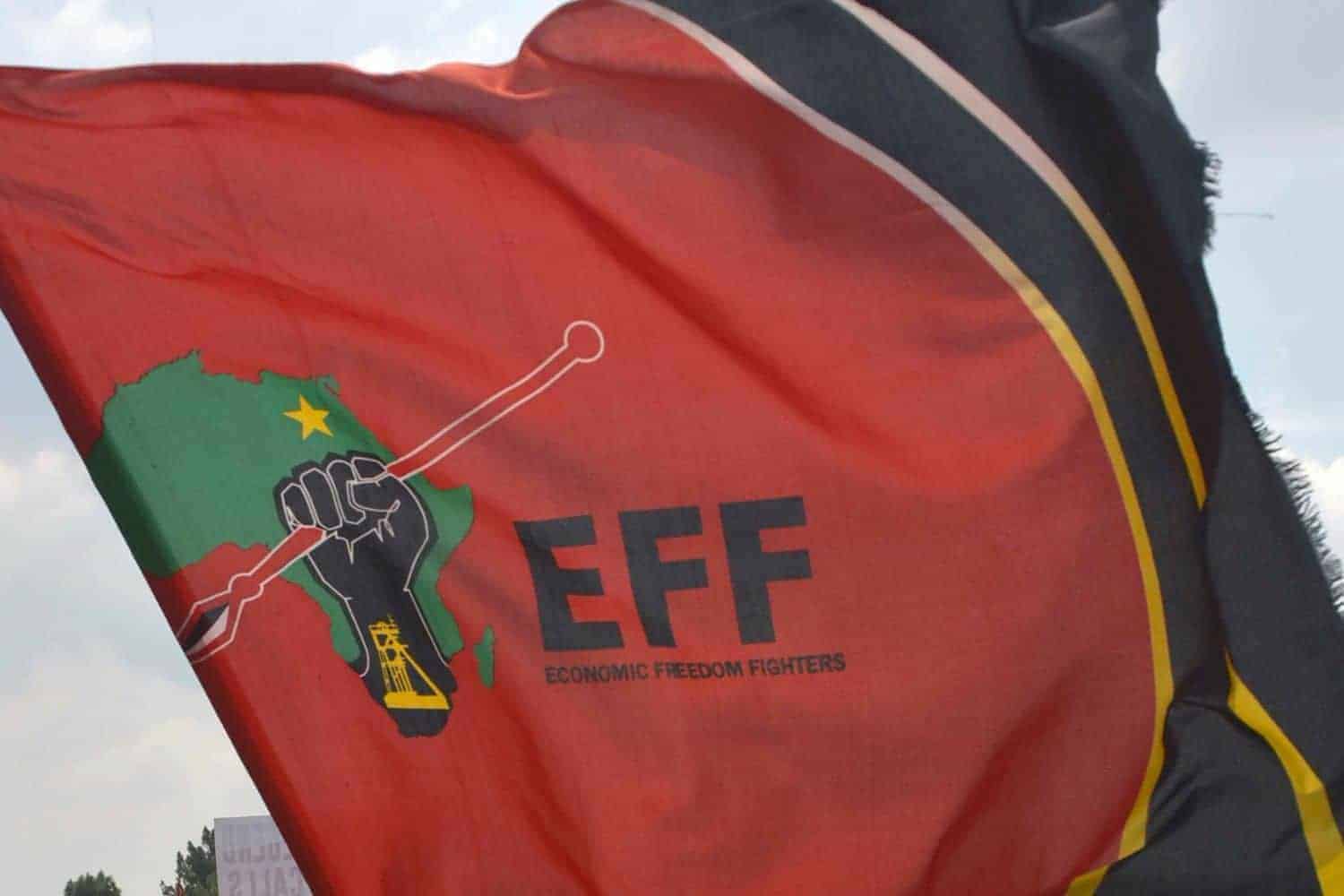
EFF flag. Image for illustration purposes. Picture: The Citizen/Neil McCartney


A political analyst says the EFF’s trajectory in 2025 offers a revealing snapshot of a party caught between its past promise and its present uncertainties.
The party began 12 years ago. It was strong and resonated with many young people who identified with leftist radical politics.
Before the 2024 elections, the party was also the third-largest in parliament and the second-largest opposition party.
But 2024 saw the exodus of some of the party’s founders and leaders, including Dali Mpofu, Floyd Shivambu and Fana Mokoena.
Theo Neethling from the University of the Free State told The Citizen that the party continues to insert itself into national debates, successfully drawing attention to issues such as high data costs.
He said they have also positioned themselves to fight for their views through legal challenges and using other matters.
Cracks in the party
He said that, despite their visibility in legislatures, the party had glaring problems that had affected its popularity.
“Signs of declining public support and persistent criticisms of the leadership underscore a party struggling to convert rhetoric into institutional consolidation.
“These difficulties are compounded by the broader political and economic headwinds that make meaningful policy implementation increasingly elusive.”
Neethling said the departure of prominent party leaders, such as Mbuyiseni Ndlozi, had negatively affected the party.
Ndlozi formally announced his departure from the EFF in February this year.
“Ndlozi, once the party’s most compelling communicator and a magnetic presence among many young South Africans, embodied the EFF’s intellectual confidence and generational energy. His disappearance from the party has been deeply felt.
“It is as though a vital part of the party’s emotional and ideological core has slipped away.”
Is Malema out of touch with reality?
Neethling questioned whether EFF president Julius Malema is still in touch with the soul of his party. He has been the party president since his party was formed.
“Does Julius Malema still resonate with a broad constituency of young people, as the party did twelve years ago when the EFF positioned itself as the voice of the young and marginalised?”
ALSO READ: ActionSA breaks the ANC stronghold in North West
He also questioned Malema’s style of politics, which appears to be rooted in disruption, militant confrontation, and anti-establishment theatrics.
He said this may continue to galvanise his loyal base, but that base has become relatively small.
“The extent to which this brand of politics can attract mass appeal in a changing political landscape is far from certain.
“It is worth recalling that the EFF Student Command once played a crucial role in the #FeesMustFall movement, galvanising students around demands for free and decolonised education.
“Yet twelve years after its founding in 2013, the EFF seems distant from the movement that originally positioned itself as the unapologetic voice of the marginalised—those left out of post-apartheid progress and grappling with poverty, inequality, and racial divides.”
The future
Neethling said the EFF has to face a harsh political reality that it has slipped to fourth place in national prominence, eclipsed by the sudden rise of Jacob Zuma’s uMkhonto weSizwe (MK) party.
He said the EFF’s leadership depth appears too thin to reclaim the momentum it once enjoyed.
“Malema’s diminishing appeal and the party’s ideological drift leave the EFF searching for a renewed purpose at a moment when its relevance can no longer be assumed,” he said.
NOW READ: South Africa closes G20 Summit – but will it worsen its relationship with the US?