
SACAA's initial findings apportioned all the blame on pilot error, something the grieving families of the crew did not accept.
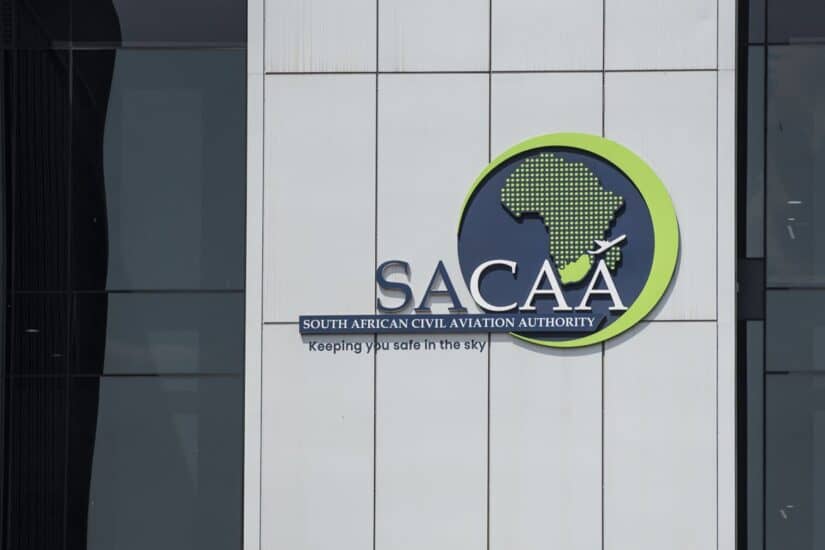
The offices of the South African Civil Aviation Authority (CAA), photographed 29 July 2026, in Centurion. Picture: Michel Bega/The Citizen


A whistleblower was fired by the South African Civil Aviation Authority (SACAA) after raising concerns about the fatal crash of the regulator’s own aircraft and making what he says was a protected disclosure.
Airworthiness inspector and former air crash investigator Jeremiah Visser was suspended soon after making the disclosure regarding the January 2020 crash of ZS-CAR, and later dismissed following a disciplinary process.
Three SACAA employees – pilot Captain Thabiso Tolo, First Officer Tebogo Lekalakala and Flight Inspector Gugu Comfort Mnguni died when their Cessna Citation S550, which belonged to SACAA and was operated by the regulator for airport calibration flights, struck mountainous terrain about 300m from the airport in George in the Western Cape.
Jeremiah Visser said he used SACAA’s internal Vuvuzela whistleblowing mechanism in March to make what he regarded as a protected disclosure based on concerns arising from his research into the crash.
He said he was summoned shortly after and suspended over allegations that included acting unethically and divulging confidential information.
The regulator subsequently went to court in July in an unsuccessful urgent bid to stop Visser from publishing or sharing a manuscript he had written about the accident and its investigation.
Visser said he had spent years raising concerns about the crash before lodging the whistleblowing report in March this year.
A dispute
The dispute comes against the backdrop of a much longer-running controversy over the accident investigation.
SACAA’s initial findings apportioned all the blame on pilot error, something the grieving families of the crew did not accept.
The family approached then transport minister Fikile Mbalula, who asked the Ethiopian Aircraft Accident Investigation Bureau to conduct a separate investigation.
The investigation had been delegated to Ethiopia because SACAA was both the regulator and the owner and operator of ZS-CAR, creating a potential conflict of interest.
What the report says
The Ethiopians released their report in January 2022. Although broadly agreeing that pilot error was the probable cause, the Ethiopians also noted a number of violations of aviation regulations by the SACAA, as the operator of the aircraft, including a substandard flight data recorder.
Among its recommendations was that the responsibility for the investigation be completely separated from the aviation oversight authority.
Advocate Anna-Lize Lourens, who represented Visser, said the Gauteng High Court in Pretoria struck SACAA’s urgent application to prevent publication of the manuscript from the roll with costs.
She said Visser had raised concerns about discrepancies in the ZS-CAR crash investigation since 2021, including a possible near-mid-air collision, but had failed to get SACAA to address them.
After his whistle-blower submission, Visser subsequently approached Transport Minister Barbara Creecy’s office, the Public Protector and Parliament’s Portfolio Committee on Transport.
He said his termination letter was sent to him on the same day his attorneys demanded clarity on whether SACAA intended returning the substantive High Court matter to the roll.
SACAA spokesperson Sisa Majola said the regulator was not concerned at this stage with whether the information contained in Visser’s manuscript was correct.
“The SACAA has no obligation to confirm the correctness or incorrectness of the information in the manuscript,” Majola said
Instead, Sacaa maintains Visser used information obtained irregularly and contrary to its policies, or his employment conditions.
Visser disputed this, saying the information used to compile the manuscript and later his protected disclosure came from publicly available sources. What differed, he said, was his analysis.
Majola nevertheless said Sacaa regarded information used by Visser as proprietary and warned against its use for personal agendas or gain.
“It is even worse when that information is the proprietary information of the Sacaa which is protected and must not be used for any personal agendas and personal gain by any Sacaa employee,” Majola said.
He said confidentiality was secondary to what Sacaa regarded as the more fundamental issue of Visser allegedly contravening its policies and his contractual obligations.
Visser’s attorney, Emile Myburgh, rejected Sacaa’s proprietary information argument, saying a regulator could not equate its information with the trade secrets of a private business.
“Their confidentiality requirement is just to keep their dirty laundry secret,” Myburgh said.
Visser declined The Citizen‘s request for a copy of the manuscript, citing confidentiality.
Myburgh described Sacaa’s application as a baseless claim and said Visser had at all times honoured his confidentiality obligations and had not disclosed the manuscript to unauthorised parties.
Sacaa’s attorneys had not responded to Myburgh’s questions on whether the regulator intended pursuing the substantive court application after the urgent matter was struck from the roll.
Visser disputed Sacaa’s contention the manuscript was unauthorised, saying he had raised his intention to write it with senior Sacaa staffer Simon Segwabe in 2021.