
Santaco has launched a pilot fleet of 10 BYD electric e-hailing vehicles following fuel price increases.
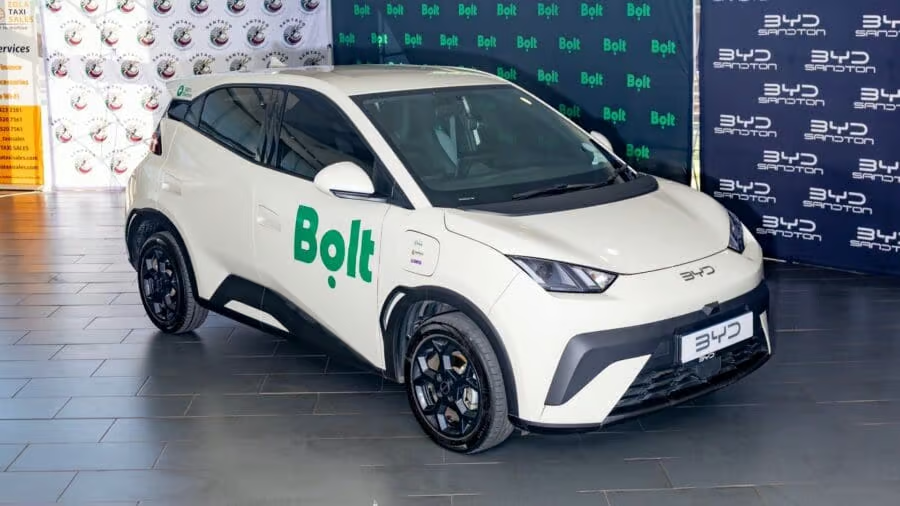
Picture: Hypertext


The South African Meter Taxi and E-Hailing Association (SAMTEA), an affiliate of the South African National Taxi Council (Santaco), has launched a pilot fleet of 10 BYD Dolphin Surf electric vehicles for e-hailing in Sandton as part of October Transport Month.
On Tuesday afternoon, Santaco national spokesperson Mmatshikhidi Rebecca Phala said the launch aligns with the month’s overarching theme of building a safe, sustainable, reliable and affordable transport system.
Evolving e-hailing landscape
According to Phala, the launch opens doors to innovation, sustainability and new opportunities within the evolving e-hailing landscape.
“This happens at a time [when] people are panicking because the fuel prices keep going up,” Phala remarked.
She said electric vehicles would operate in the e-hailing space.
“Our commuters are spending a lot more money to be ferried from point A to point B on a daily basis.
“The launch of these electrified fleets of vehicles couldn’t have come at a better time.
“We are doing this where there is a lot of conversation around the safety and compliance in the public transport industry,” Phala added.
Technological advancements
“There’s a lot of technology that still needs to be installed, starting with tracking devices, the use of telematics (which is the combination of telecommunications and informatics to send, receive and store digital information over long distances).”
“So we are moving away from issues and the problems that we are having in the climate, including issues of cash reliance,” Phala said.
Santaco President Abnar Tsebe said that practical charging solutions will be pursued at local taxi ranks, depots and suitable facilities. He also supported the launch alongside its partners.
The future of mobility
Advocate Nobuhle Mazolo of SAMTEA noted that the future of transport will not be shaped by those who merely predict change, but by those prepared to lead it.
“That is why we are here today, not simply to unveil electric-powered vehicles, but to make a statement about who will shape, participate in and benefit from the future of mobility in South Africa,” Mazolo stated.
Highlighting the importance of collaboration, she explained that the initiative was established following the 2020 Lekgotla resolution to integrate the minibus industry with taxi formations.
“And that is where transport is going in the future,” Mazolo said.
“If we are divided, we will actually not be moving forward, particularly in this public transport industry.”
Innovation
“So SAMTEA, as an affiliate of Santaco, is today launching and expressing what this relationship should deliver: innovation led by an industry structure, supported by a national vision, with BYD vehicles as a starting point.
“These vehicles may seem modest in a vast transport industry, but every lasting transformation begins with a decision to act,” Mazolo noted.
Taxi operators and financing
Mazolo said the real test was whether an operator can finance the vehicle, charge it reliably, maintain it affordably, earn a decent living, and provide safe, accessible transportation.
“If you cannot answer these questions, electrification remains a showcase rather than a solution,” Mazolo said.
This is the beginning
Mazolo further said that, for Santaco, the longer horizon includes exploring electric minibus taxis and industry participation in infrastructure, which is why members of the city and government were present.
“The infrastructure that will power them matters, because you cannot have a vehicle that you cannot absolutely utilise,” Mazolo said.
She said the initial pilot launch had been a long time coming and showcased what had been happening in the background over the last few years.
“We are not announcing that transition as accomplished today; we are beginning to build the evidence of partnerships and commercial discipline that can make this possible,” Mazolo noted.
Embracing the EV shift
Mazolo said the shift to electric vehicles requires changes in how the e-hailing industry operates, with operators needing to take a more active role in the broader electric vehicle value chain.
“We cannot demand a place in the future whilst refusing to change how we do business today; something needs to shift: organisation, reliable operational data , professionalism, formalisation, safety, compliance, and collective bargaining powers are no longer optional,” Mazolo pointed out.
“We must move beyond being purchasers of vehicles to becoming owners and participants in the charging energy technology, maintenance and skill value chain,” she added.
She said women, people living with disabilities and young people must have a meaningful stake in this future.
Collaborative efforts
Mazolo challenged business partners to help build models that work on the road and for the people.
“Do not sell this industry a vision that works only on the presentation slide,” she stressed.
“Technology is only transformative when its benefits reach the driver, the operator and the passenger,” Mazolo said.
“That means affordable financing, fair platforms, economics, dependable charging, battery and after-sales support, fleet safety and skills transfer.”
Call for government support for EV transition
Mazolo called on government to assist with the transition to electric vehicles in the public transport industry.
“We are not asking for an exemption from the rules; we are asking for an enabling framework that keeps pace with innovation, coherent operating requirements, licensing that works, charging infrastructure and appropriate transport facilities,” she asserted.
Proper transport facilities
Mazolo stressed the need for proactive energy planning to support the transition to electric vehicles.
“We need realistic energy planning because what happens in this country is that we plan after the fact, and we have seen it,” Mazolo added.
She emphasised the need for appropriate transport facilities, realistic energy planning, appropriate transport facilities and access to development finance.
“So let us judge the next phase by results and not applause, actual cost per kilometre, vehicle reliability, charging access, driver earnings, passenger safety and opportunities created for local enterprises,” Mazolo stated.
She concluded that this initiative aimed to change perceptions of the taxi industry.
This initiative was done in collaboration with BYD, C-Track and Bolt, marking a new chapter in the taxi industry’s stance on electric mobility.