Second generation iX3 has been a sales success in Europe and comes to South Africa as the first Neue Klasse model.
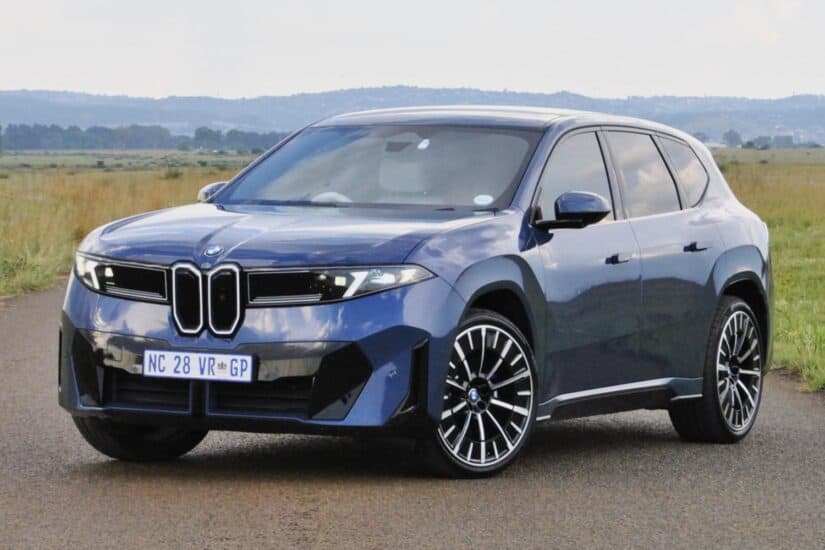
Second generation iX3 represent a dramatic departure from the original. Picture: Charl Bosch


It would be fair to say that a lot of pressure resided on the second generation BMW iX3 after its global launch last year as the first of Munich’s Neue Klasse models.
Whereas the original had, essentially, been an “electric converted” X3, the new internally named NA5 is an entirely new model in-line with the Neue Klasse philosophy shown by the Vision Neue Klasse X concept two years ago.
Runaway success
Its name translated as “new class”, the iX3’s reception has been such that demand has nearly outstripped supply.
Back in September, online forum, BMWBlog, reported that orders in Europe had exceeded 100 000 and that the 50 000th unit departed the Debrecen plant in Hungary two months before.
Said to be a record for any BMW, considering production only started in October last year, a month after its world debut, the surge in iX3 demand means it now accounts for one in every three electric BMWs sold in the Old Continent.
While soon to also be built in Mexico as a means of easing pressure on the Hungarian facility, for the time being, the latter is the sole sourcing hub for the iX3, including for South Africa.
South Africa a key market
Described at its launch in September as its most important model ever made by BMW South Africa CEO, Peter von Binsbergen, the iX3 has also been billed as one of the most controversially styled models to date – not only outside, but inside as well.
Its arrival for the weeklong stay, therefore, not only impressed, but rewrites most recently penned rulebooks that justify its success in Europe.
Polarising BMW: Sound familiar?
Arriving in flagship xDrive 50 M Sport guise – a more affordable rear-wheel drive 40 is due next year – the iX3 is an acquired taste, but as evident by the criticism once lobbied at the current M3 and M4, it is unlikely to stay polarising for long.
The catalyst for the i3, new 3 Series and X5 that all adopt the Neue Klasse design, the work of new design head, Oliver Heilmer, who previously headed operations at Mini, not only appears futuristic but unlike any BMW or EV seen thus far.
Aside from the slimmer than ever before kidney grilles, the lack of an engine means its outer surround and that of the sealed grille panel light up as part the Iconic Glow package.
At the same time, the door handles pop out so as not to ingress on the side profile, while the M Sport package features the now customary sportier bumpers and door sills.
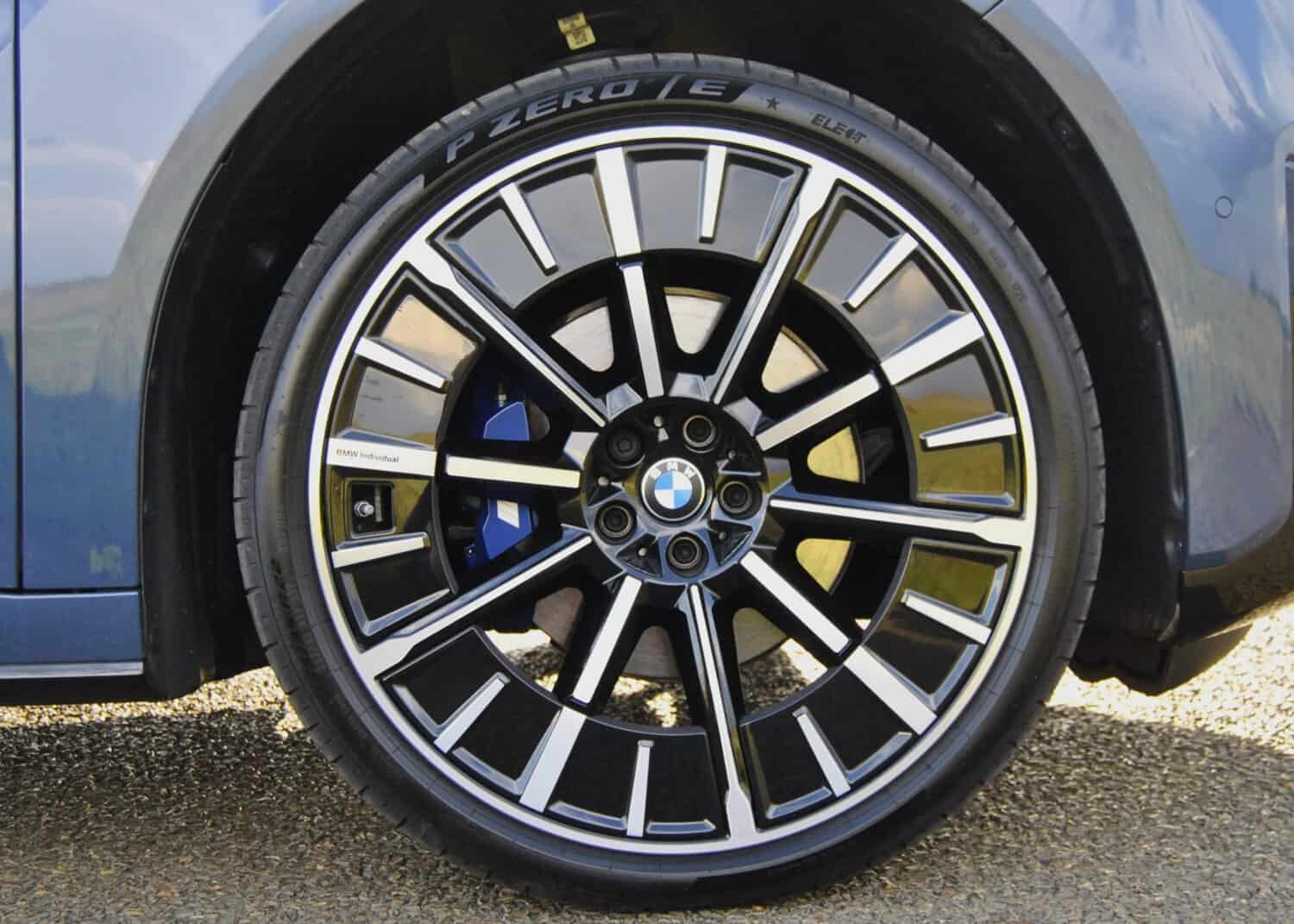
Its side profile and C-pillar bearing a close resemblance to the ill-fated iX, the M Sport touches also include gloss black finishes and, on the test unit, the optional 22-inch alloy wheels.
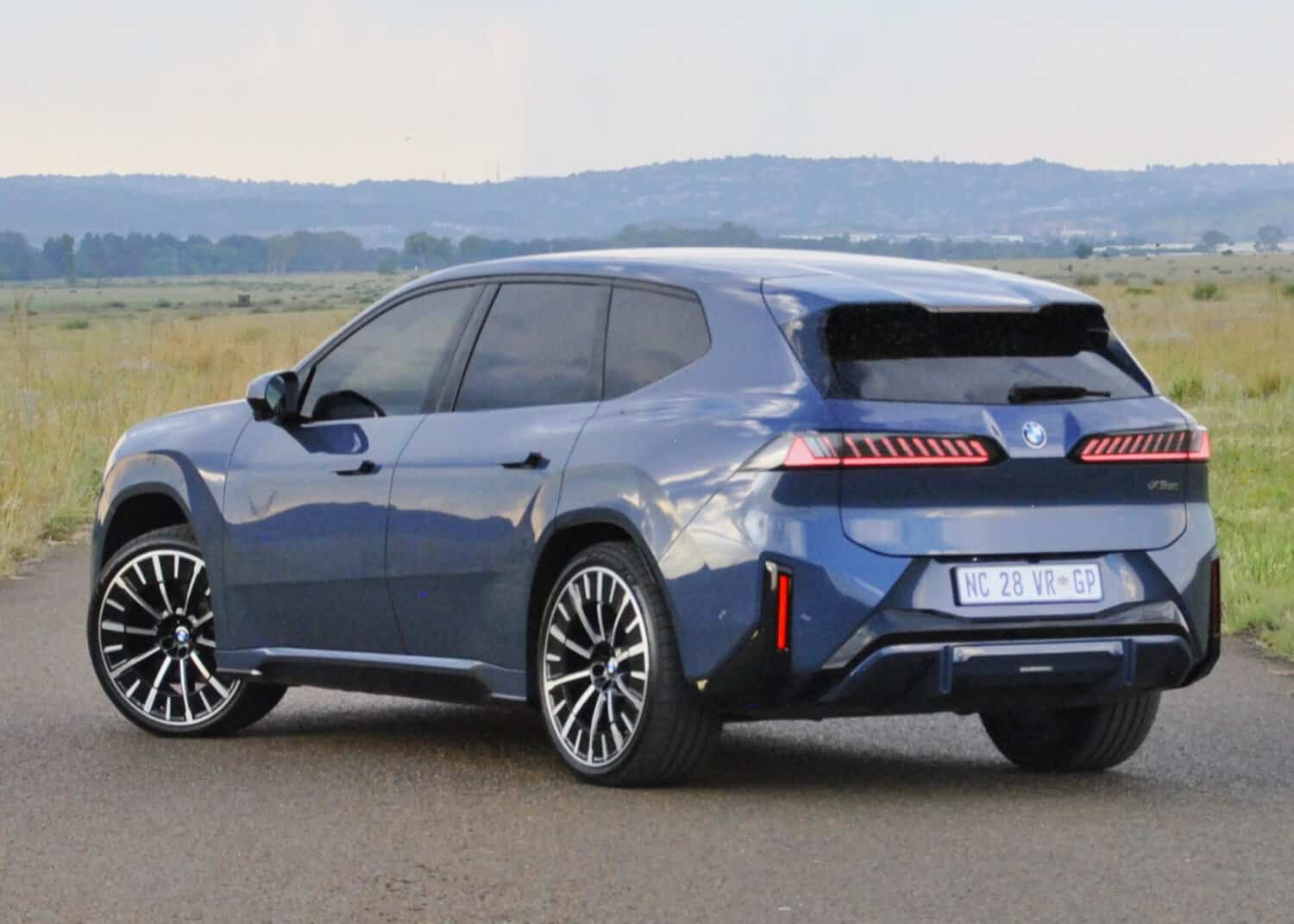
Decked out in a new bespoke colour called Ocean Wave Blue, the iX3’s rear facia is similarly controversial to its frontal appearance.
In addition to a smaller than usual window, the bumper continues to the rounded theme while the horizontal taillights appear to have been taken from the erstwhile Mini Clubman and then restyled somewhat.
However, and as per its success in Europe, the stylistic risk has, again, been worth it as the iX3 is unlikely to date quickly.
Enter the future
Stepping inside, though, is akin to a spaceship for not only being almost otherworldly, but also correcting the missteps of the iX.
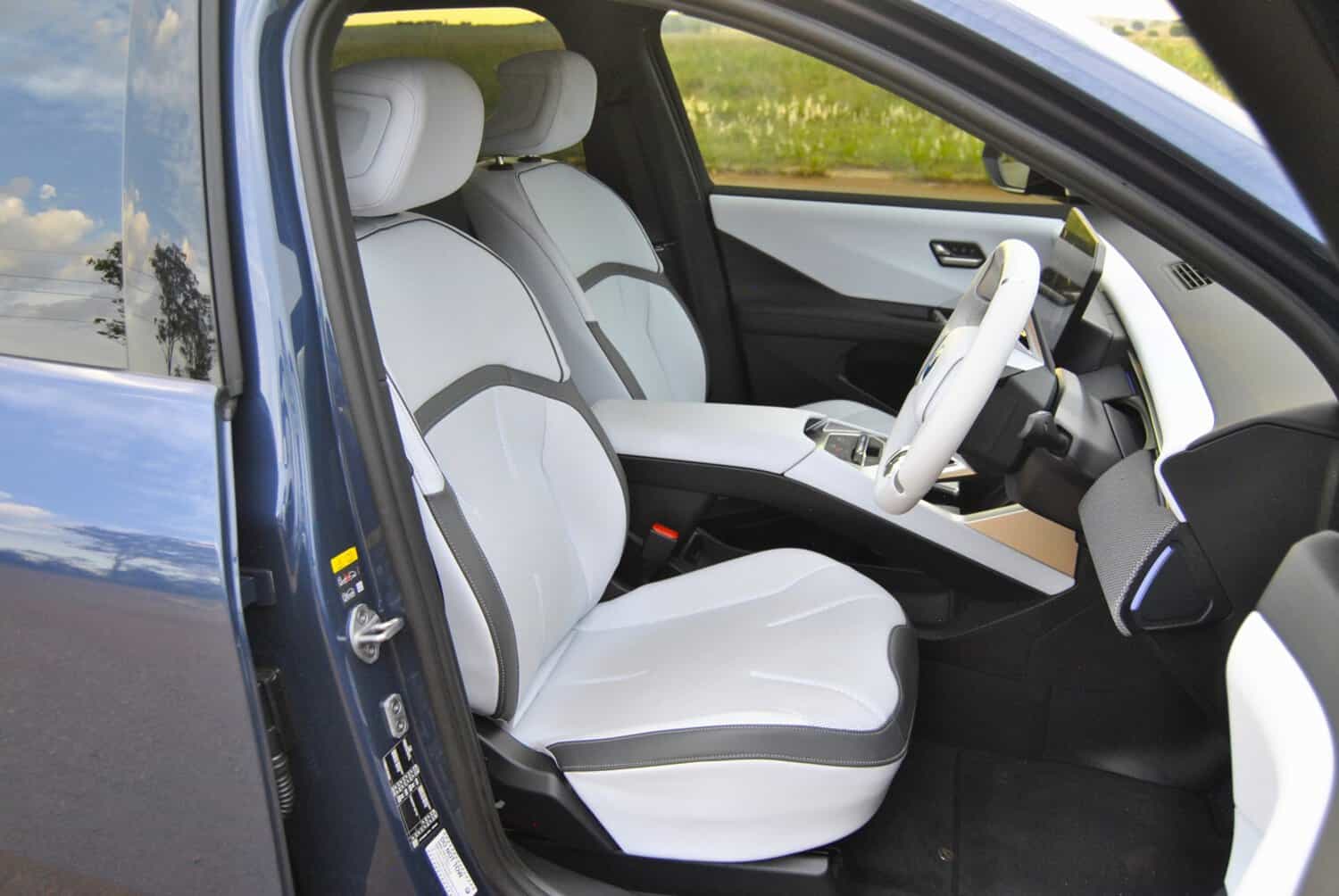
While contrasting beautifully with the blue exterior, the test unit’s white interior will prove impractical in the long run and require considerable upkeep to remain clean.
The rest of the interior ups the ante on the minimalist design theme by removing the instrument cluster completely and, literally, redesigning the wheel.
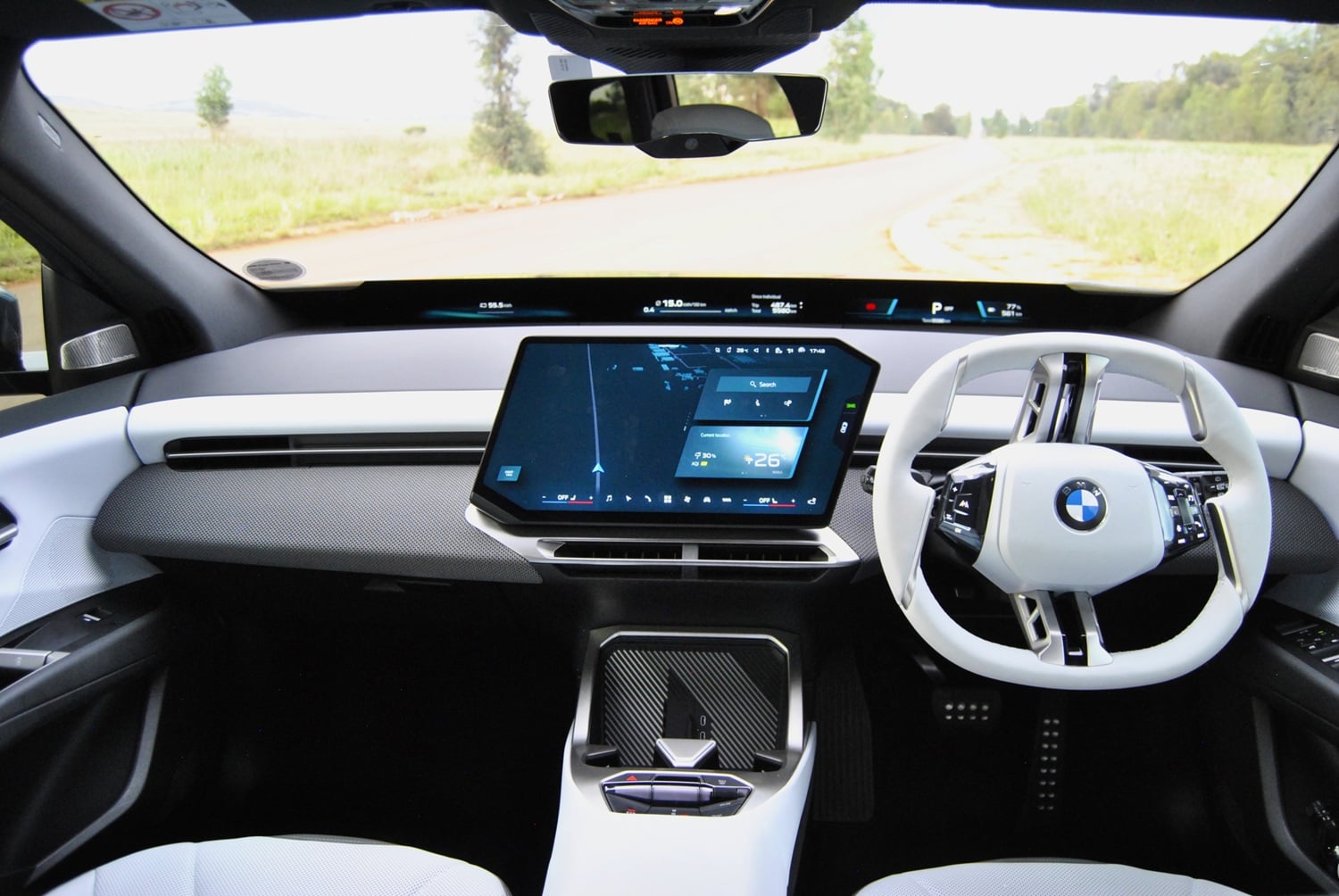
Odd in appearance with its upside-down spokes, the steering wheel is, again, an acquired taste with its haptic buttons in particular proving frustrating.
Of greater interest is the new corner-to-corner display underneath the window line called the Panoramic iDrive display.
The replacement for the instrument binnacle, the display can be scrolled through using either the buttons on the wheel or the new 17.9-inch iDrive infotainment system that debuts BMW’s new Operation X operating system.
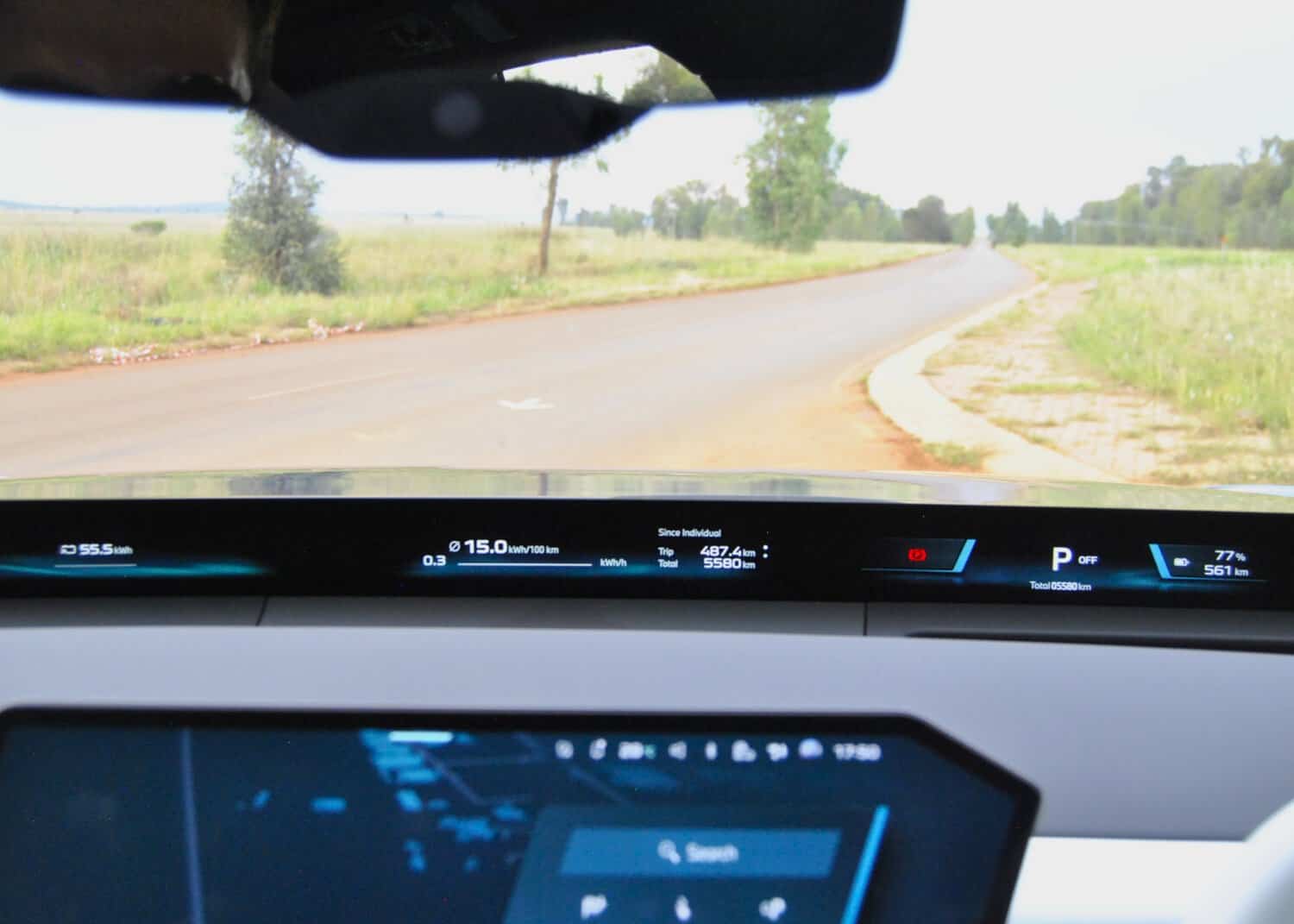
A setup that isn’t as confusing to figure out as it seems, the graphics for the Panoramic iDrive are clear, smart and well laid out when combined not only with the infotainment, but also the optional Head-Up Display fitted to the test unit.
For its part, the infotainment is crisp and its resolution is near impeccable. However, while as simplified as possible, it isn’t as instantly manageable as the “older” Curved Display.
While there is some familiarity in the buttons and the toggle switch gear selector located on the floating centre console, the drop-down look is novel and, unlike in the X1 and X3, the pair of wireless smartphone charging pads is set at an almost vertical angle.
Practical
Not lacking in feeling premium both fit-and-finish and material usage-wise, the interior isn’t found wanting for space either.
However, the omission of a blind for the panoramic glass roof was missed, even with its ability to become opaque in order to keep excessive sun and heat out.
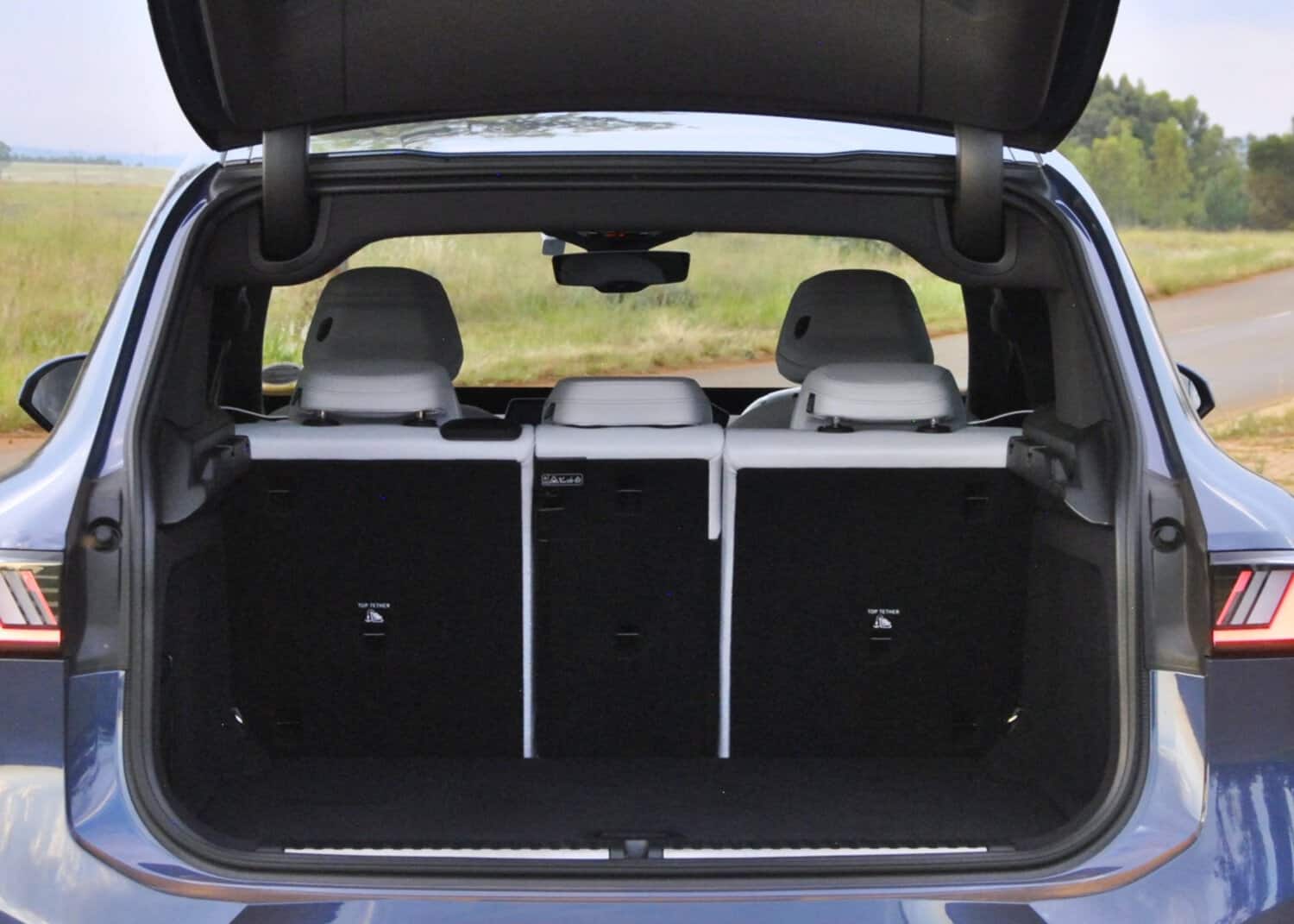
As for practicality, opening the hands-free electric tailgate reveals 520-litres of luggage space, which increases to 1 750-litres with the rear seats folded flat.
Hyperspace ‘mode’ activated?
Unsurprisingly, the iX3’s main drawing card is performance and while justifiably heavy at 2 285kg, it still proved quicker than what BMW claims.
Based on a unique 800-volt platform equipped with a control module called the Heart of Joy, the iX3 uses a 108.7-kWh battery pack that sits in the middle of the chassis with an electric motor at each end.
A setup that automatically makes its all-wheel drive, the powertrain develops 345kW/645Nm, which means a limited top speed of 210km/h and 0-100km/h in 4.9 seconds.
Setting off, the iX3 is quiet and undramatic, yet the imitation engine sound played through the speakers is anything but convincing. Fortunately, it can be turned off and won’t re-engage unless the driver chooses to.
As is the norm with EVs, planting the iX3’s accelerator unlocks an almost never-ending surge of silent power that feels unwasted as a result of drive going to all four wheels.
Best described as balanced, the power delivery is instant but not ferocious or violent as in some admittedly higher-powered EVs.
Switching to Sport mode and engaging launch control turns matters on its head, as Road Test Editor Mark Jones did at Gerotek.
With both activated, the iX3’s turn of pace saw it better BMW’s 0-100 km/h claim by nearly a tenth of a second despite its mass.
On the move
Away from silent blasting, the iX3 is largely comfortable, but as a result of the M adaptive suspension, tends to firm up on anything but smooth surfaces.
However, the ride is still communicative and more than agreeable considering its mass and the size of the battery pack.
Unlike a comparable X3 M50, the iX3’s steering is also typical EV, even in Sport mode, but still with good feedback for what is, again, anything but a full-bore M car or SUV for that matter.
At the plug…
The biggest discrepancy comes at the chargers. While the weeklong stay and 698km came to 15-kWh/100km, 0.1-kWh/100 km off BMW’s claim, the claimed minimum range of 745km never came close to being replicated.
In fact, topping up the battery twice during the seven days saw the Panoramic iDrive register around 650km after being charged to 100%.
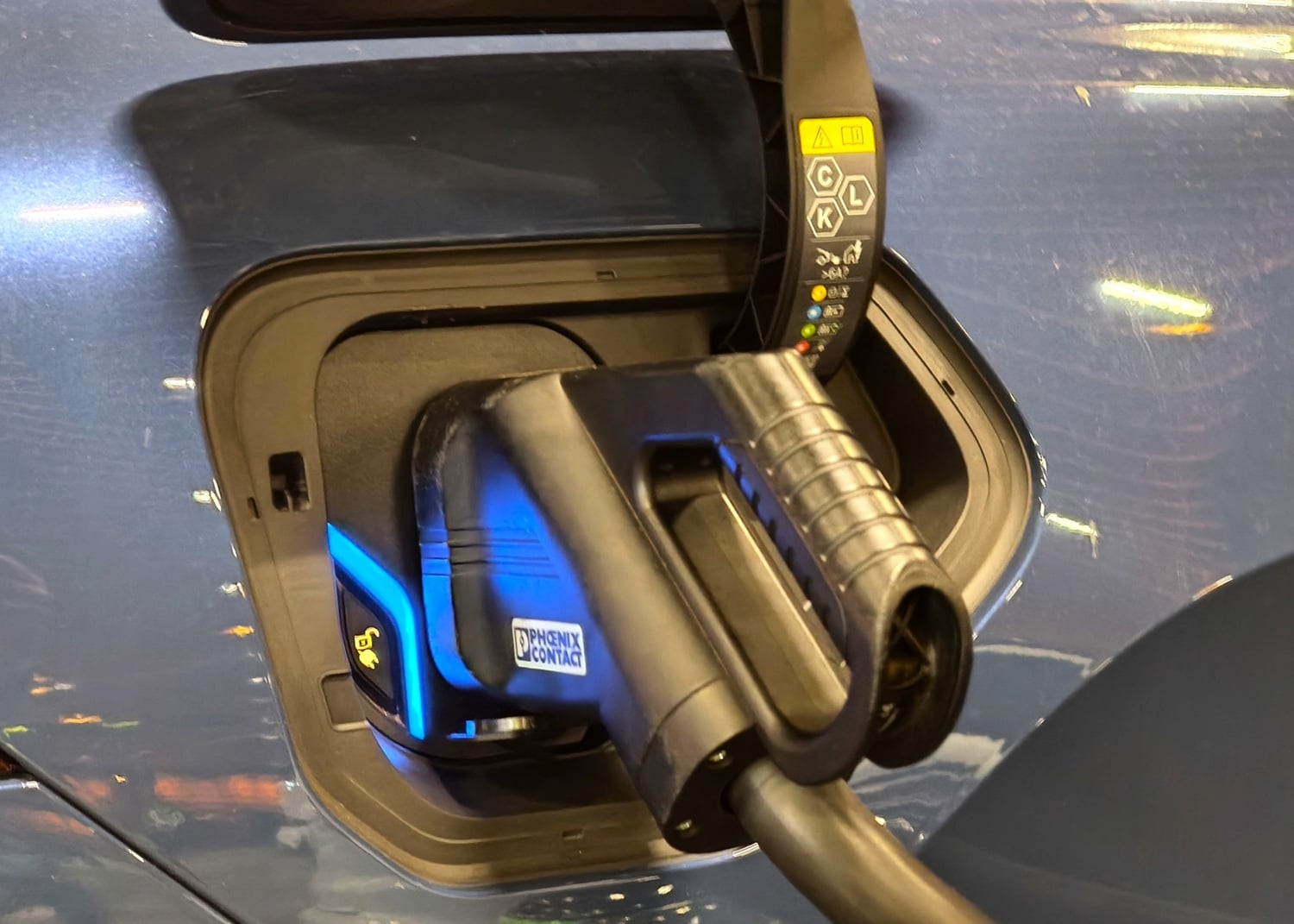
Depending on driving style and using the regenerative braking, a realistic estimation puts the eventual distance at around 550km, possibly 600km at the most.
DC charging support is up to 400kW, however, during its stay, a less powerful 80kW public station was used as home charging has been forbidden.
In both instances, the battery never dipped below 40% and, due to the charging process tapering off once closer to 100%, ultimately took between 45 and 50 minutes.
Conclusion
As much as it represents a dramatic change for EVs and BMW, the iX3 won’t be for everyone and arguably, not as universally accepted as its predecessor based solely on aesthetics.
Besides being all-wheel drive which the original never had, the other side of the argument is that the first Neue Klasse model on local soil is an undoubted drive and tech standout.
While the X3 M50 will continue to resonate the most from an emotional perspective, never mind its R1 565 447 asking price being R124 553 less than the iX3 xDrive 50, the latter’s merits are unavoidable and its success in Europe easy to fathom.
That being said, it still isn’t perfect and despite the growing acceptance of EVs in South Africa as the petrol price continues to spike, the iX3 will remain a niche rather than mainstream product, but one deeply impressive and worth a look should finances or the base-spec 40 be of little interest.
Road test data
- Model: BMW iX3 50 xDrive M Sport
- Gearbox: Single speed transmission
- Engine: Dual electric motors
- Power: 345kW
- Torque: 645Nm
- Licensing mass: 2 285kg
- Power to Weight: 151kW/Tonne
- Power to capacity: Not applicable
- 0-100km/h: 4.85 seconds
- 1/4 mile (402.34m): 12.97 seconds @ 183.37km/h
- 1/2 mile (804.68m): 20.14 seconds @ 210.34km/h
- 60-100km/h: 2.08 seconds (in Drive Sport)
- 80-120km/h: 2.61 seconds (in Drive Sport)
- 100-200km/h: 10.85 seconds (in Drive Sport)
- Top speed: 210km/h (claimed)
- Electric consumption: 16.4-kWh/100km claimed (18.7-kWh test average)
- Battery size: 108.7-kWh
- Range: 663km claimed (581km on test)
- CO2 emissions: 0g/km
- Vehicle odometer: 5 728km
- Test temperature: 23 degrees
- Tyres size: 255/35 R22 front & 275/35 R22 rear
- Tyres make: Pirelli P Zero E
- Warranty: 2 year/unlimited km
- Maintenance plan: 5 year/100 000km
- Priced from: R1 690 000
- Test date: 5 November 2026
For more information and latest pricing visit www.bmw.co.za