


Patricia Morgan-Mashale gave her testimony before the ad hoc committee.
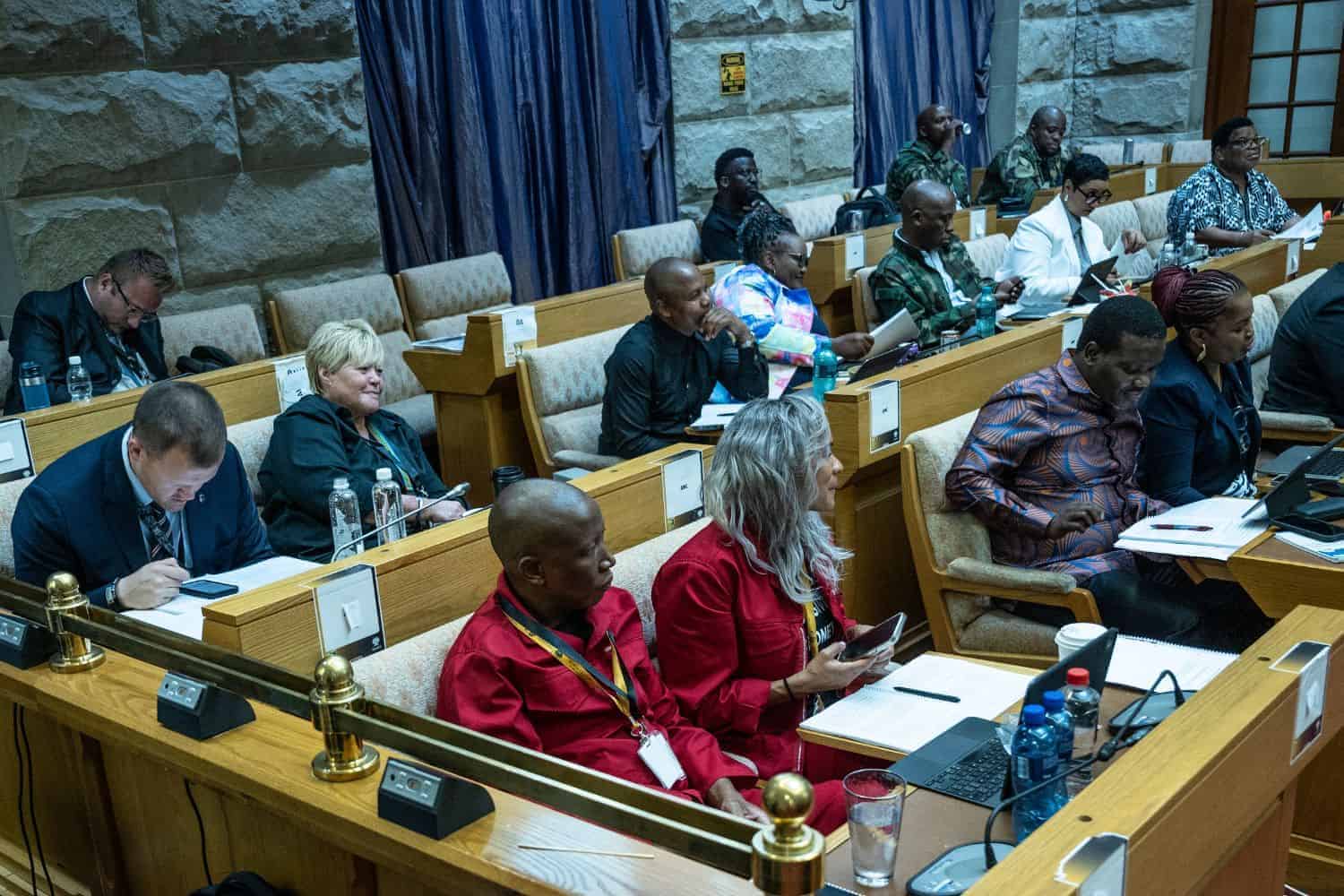
MPs during the parliamentary ad hoc committee inquiry at the Good Hope Chambers in Cape Town on 23 October 2025. Picture: Gallo Images/Brenton Geach


Whistle-blower and former South African Police Service (Saps) employee Patricia Morgan-Mashale has dismissed claims that she spreads falsehoods, asserting that all her disclosures are evidence-based.
On Tuesday, Morgan-Mashale testified before Parliament’s ad hoc committee at the Good Hope Chamber in Cape Town.
The inquiry is probing alleged criminal infiltration and political interference within South Africa’s law enforcement structures.
Patricia Morgan-Mashale clarifies her appointment
Morgan-Mashale disputed the testimony of Crime Intelligence head Dumisani Khumalo, who alleged that her hiring at Saps was improper.
She told MPs that she joined Saps in 2007 as an administrative clerk in the Free State and remained in the role until 2022.
Soon after her employment began, rumours emerged suggesting she had been fired by the Department of Health.
ALSO READ: Ex-Crime Intelligence cop links career downfall to R45m slush fund dispute
Additionally, allegations arose that her appointment was influenced by a personal relationship with former Free State deputy police commissioner Eric Nkuna after she had briefly assisted in his office for two weeks while his secretary was on leave.
“I didn’t even know who the deputy provincial commissioner was,” Morgan-Mashale said.
Although she had been recruited through the usual Saps hiring procedures, Morgan-Mashale said she was later subjected to departmental charges claiming she had not revealed her dismissal from the Department of Health.
Watch the ad hoc committee inquiry below:
She eventually prevailed in the disciplinary proceedings by providing evidence that she had formally submitted the necessary paperwork to end her nursing studies.
“The Department of Health are the ones who failed to capture [my] termination,” she remarked.
Morgan-Mashale also revealed that she sued the Saps employee responsible for spreading the rumours and won R50 000 in damages.
She added that Khumalo could easily verify the documents related to her appointment.
Exposing illegal firearms sales
Morgan-Mashale detailed how she uncovered illegal firearms meant for destruction that were instead licenced to Saps’ central firearm registry and sold to criminal syndicates.
In 2018, she made a protected disclosure after discovering that a warrant officer at a police storage facility was selling firearms.
“He was selling the firearms back to the black market. There were names of police officers who are part of this, from police station level up to head office.
“There were names of dealers who bought the firearms. I printed all that information,” Morgan-Mashale said.
Over the years, those she implicated in corruption on social media have attempted to discredit her, labelling her an “information peddler”.
She stated that this description has a negative connotation.
“I always make sure that all the information that I share, I must at least have evidence to support the information,” she said in response to the allegations.
Morgan-Mashale also referenced an August 2025 judgment by the Free State High Court in Bloemfontein, where deputy national police commissioner Shadrack Sibiya sought an interdict against her for alleged defamatory statements on social media.
The court ultimately ruled in her favour, and Sibiya’s case was dismissed.
“The judge made a decision in that case that as a whistle-blower, I’m entitled to expose corruption. I don’t see the reason to choose sides because corruption is corruption.”
Calls for stronger whistle-blower protection
When asked for recommendations to strengthen whistle-blower protection, Morgan-Mashale highlighted the challenges whistle-blowers face when coming forward.
“When you are a mother, and you last had a normal sit-down with your children four years ago because you’re in exile, you cannot meet under normal circumstances with your children, then the government must really sit down and take notice because I’m not the only whistle-blower who is living in these circumstances,” she told the committee.
“When you report wrongdoing and open cases, and the people who reported you for the wrongdoing against us are still in positions of power, then it means our government is not serious to protect whistle-blowers.
“That’s the reason why whistle-blowers are afraid to come forward, and they instead give the information to us. We have made the decision that I cannot be silent about this,” Morgan-Mashale continued.
She stressed that her only desire is for government action to protect whistle-blowers.
“I don’t want recognition. I don’t want compensation. I just want a normal life.
“The government must come forward and say anyone who retaliates or kills a whistle-blower must be harshly dealt with. We cannot go on like this.”
NOW READ: No special legislation to protect whistleblowers in the pipeline, states police ministry
Support Local Journalism
Add The Citizen as a Preferred Source on Google and follow us on Google News to see more of our trusted reporting in Google News and Top Stories.

