A drop in the national learner's license pass rate is being attributed to the elimination of manual-era cheating.
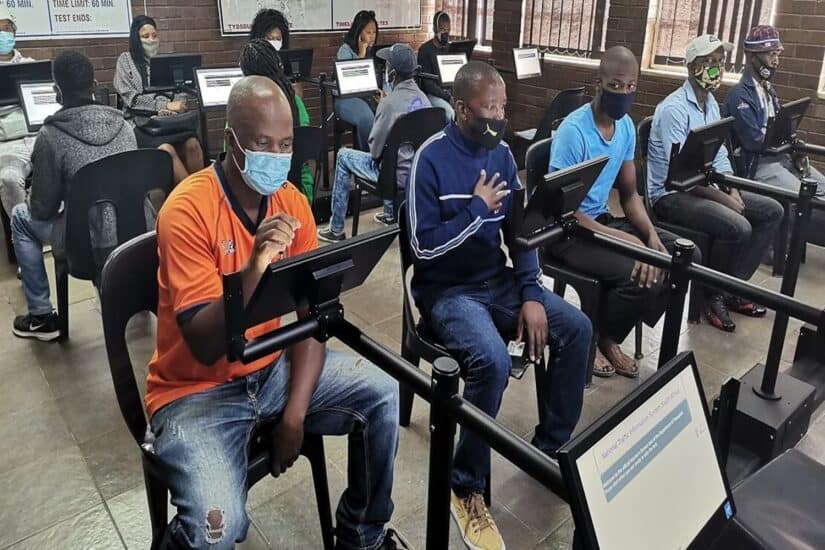
Picture: City of Ekurhuleni website


The Road Traffic Management Corporation (RTMC) has dismissed concerns that its new digital testing platform unfairly penalises applicants, instead attributing a massive 28-percentage-point drop in the national learner’s license pass rate to the successful elimination of manual-era cheating.
RTMC spokesperson Simon Zwane told The Citizen that since the rollout of the Computerised Learner’s Licence Testing (CLLT) system, the pass rate has plummeted from 68% to 40% (not nationally representative).
The end of the ‘cheat sheet’ era
The CLLT system now pulls 64 questions at random from a massive pool of roughly 1200 possibilities for every applicant. While the exam maintains its original three-section format, this randomisation ensures that no two learners face the same test.
Zwane firmly linked the decline to the closure of loopholes that once plagued paper-based tests.
He stated that the RTMC believes the bulk of the gap is directly attributable to reductions in fraudulent assistance and crib notes.
Addressing critics who argue that the new system tests “computer literacy” rather than road knowledge, Zwane labelled the claims as “unsubstantiated.”
He noted that the digital platform uses the same question papers as the manual version.
“Illiterate people have always existed and were able to obtain learner licenses. That continues even today,” Zwane said, pointing out that the technology has not created a new barrier for those who truly know the material.
In enhancing cheating measures, Zwane said RTMC is formally considering the possibility of adding biometric verification (like thumbprint scans) to make sure the person booked for a test is the one actually sitting the test.
Surprising demographic trends
The RTMC’s data debunks the assumption that older applicants are struggling most with the digital transition.
According to Zwane, the failure rate cuts across all demographics, but interestingly, it hits first-time applicants, who are generally younger and more techno-savvy, the hardest.
He noted that the majority of older drivers already possess licenses, leaving the younger generation to face the new, more rigorous digital scrutiny.
Surveillance
As corruption evolves, the RTMC is intensifying its oversight.
Zwane confirmed that while the digital test makes bribing an examiner mid-exam nearly impossible, the agency remains on high alert for new methods used to undermine the system.
Current software is designed to block “digital assistance” or remote access to testing terminals.
He said RTMC has already arrested several examiners attempting to bypass digital safeguards.
Technical glitches
Zwane also addressed the frequent offline issues that have frustrated applicants at Driving Licence Testing Centres (DLTCs).
He guaranteed that applicants would not be “prejudiced because of factors beyond their control.”
If a system failure occurs mid-test, the RTMC protocol mandates that the test be rescheduled at no additional cost to the applicant.
Rollout
The digital transition is nearing completion, Zwane said, with the system already active in more than 300 centres across all nine provinces.
Zwane confirmed the rollout will continue until every testing centre in the country is fully digitised.
“The system has been rolled out in more than three hundred centres in all provinces. There, the rollout will continue until all centres have been reached.”
The link to road safety
While the RTMC celebrates the integrity of the new system, they admit that a “clean” test doesn’t automatically equal a safer road.
Zwane argued that road infringements are driven by drivers’ attitudes and the perceived likelihood of being caught, rather than by the testing method itself.
“It cannot be attributed to the testing system,” Zwane concluded, suggesting that while the RTMC can ensure a driver knows the rules, it cannot control whether they choose to follow them once they leave the centre.