

Is Ilembe’s water safe to drink?
Gordon Reid from Reid-Line Laboratory said it may not be fair to judge the water on one test.
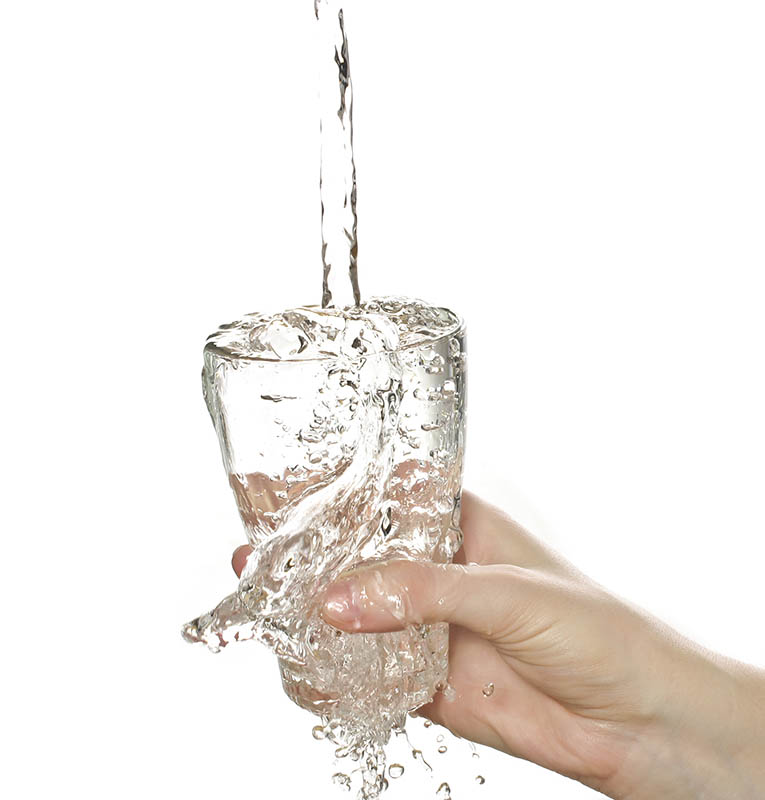
The taste and colour of the tap water in the Ilembe district has been under scrutiny by residents recently, with some taking it upon themselves to have the water privately tested and have not been happy with the results.
Zimbali resident, Benine Du Toit said she had heard rumours that the water was not safe to drink, so she she sent samples to a Cape Town laboratory, Reid-Line, for testing.
“I have recently smelt and tasted sand, strong chlorine and at times, there has been a strong sewage smell in the tap water. The results I received in May were rather disturbing. They show a scale from -4 to +4. From -1 to -4 is compromised quality, and from +1 to +4 is potable quality. The results of the water that I sent is at -1.05, suggesting our drinking water is compromised.”
However Gordon Reid from Reid-Line Laboratory said it may not be fair to judge the water on one test.
“There is just one aspect which I am uncomfortable with and that is I have never done a water sample for Siza Water before. Take into consideration that you are coming out of a drought at the moment and the water quality can vary severely over drought time periods.”
Disturbed by the results, Du Toit contacted Shyam Misa from Semcorp Siza Water which supplies the Ballito, Zimbali, Salt Rock and Sheffield areas.
Du Toit said Misra suggested she have the water tested again, this time using the laboratory that Sembcorp Siza Water uses, Talbot Laboratories.
“They collected the water from my home to test at the beginning of June and their response was that the water quality was very good and in compliance with SANS 241:2015.”
Du Toit said she did not understand why there would be a difference in the test results.
“A lot of blame has been attributed to the drought but I am not sure if I believe it,” she said.

Environmental adviser and former employee of the Council of Scientific and Industrial Research, Dr Anthony Turtin, told The North Coast Courier that the drought was not fully responsible for the inadequate drinking water.
“The state is shifting the responsibility inherent to the social contract back onto the shoulders of the consumers. This is why they offer the argument that the drought is causing deteriorating water quality. It is not the drought, but the failure of infrastructure caused by the rampant dismantling of water management institutions that has destroyed the institutional memory of the state regarding the supply of safe water under conditions of drought.”
Turtin agreed that the drought has caused serious disruption but said that full responsibility for the bad quality of water did not rest with the drought alone.
“For example, the Mvoti River has about 13 rainfall and streamflow gauging stations, but as of last year when the drought hit, only two of these were working to the extent that they provided reliable data for at least 24 months. The rest had fallen into disrepair, had been damaged or were stolen, so the state was unable to receive data showing that a drought was on the way because of incomplete or unreliable data sets. This is a failure of the state to anticipate a ‘normal’ condition in a drought-prone country.”
He concluded that there were technical reasons that contributed to the quality of tap water.
“The drought results in low flow in the rivers and dams. This means natural flows are unable to flush out the sewage and agricultural return flows (fertilisers and pesticides). The potable water treatment plant was never designed to treat sewage-contaminated water from rivers and dams into safe drinking water. Sadly today our rivers and dams at national level are contaminated by a staggering four billion litres of untreated (or at best partially treated) sewage daily.
Semcorp Siza Water PRO, Khosi Mathenjwa is adamant that water supplied by Siza is of good quality and questioned the way the water was tested by the Cape Town laboratory.
“We utilise Talbot Laboratories, one of the largest laboratories in South Africa to conduct independent testing for our water quality. When we received the water quality complaint from the consumer, we immediately requested Talbot Laboratories to not only test the water, but to also take the sample from the respective property.
“This ensures total independence of the test conducted as well as ensuring the correct methods are utilised in taking the sample in the appropriate sterile sample bottles transported in the appropriate manner and the test conducted by duly qualified persons under approved testing methods. The results received confirmed that the water quality complies with SANS241: 2015 Water Quality Standards.
“Any laboratory worth its accreditation would know the regulated standard to conduct water quality tests in South Africa are in accordance with the SANS standards and it appears that the laboratory that was used by the consumer did not use the National Standards for water quality, neither are we sure how the sample was gathered as well as transported to Cape Town.”
Do you want to receive news alerts via WhatsApp? Send us a WhatsApp message with your name and surname to 061 718 4438.
Please read our WhatsApp broadcast list disclaimer.
Join us on BBM at 59015786
Join the conversation on Facebook, Twitter and Instagram.
Stay in the loop with The North Coast Courier on Facebook, X, Instagram & YouTube for the latest news.
Mobile users can join our WhatsApp Broadcast Service here, or if you’re on desktop, scan the QR code below.