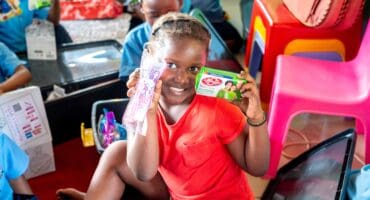

Meet the “strange white man looking for birds”
James Rawdon is a licensed bird ringer - he captures birds to help identify and track them.
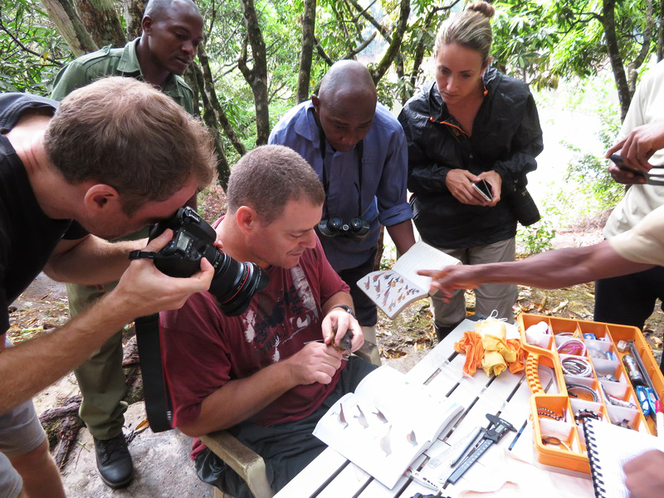
Ballito’s James Rawdon has a passion for birds which he recently carried all the way to Sierra Leone.
Rawdon is a licensed bird ringer – he captures birds to help identify and track them.
He was invited to Sierra Leone by the Tacugama Chimpanzee Sanctuary on the outskirts of Freetown in the Western Area Peninsula National Park.
Initially established to enforce wildlife laws plus rescue and rehabilitate orphaned chimpanzees, Tacugama has grown into a diverse conservation organisation.
“The aim of the trip was to identify as many bird species as possible in the three areas Tacugama operates in, with the additional method of bird ringing included,” Rawdon explained.
Also read: Budding birding business learns to fly
“Unfortunately, there was no final result in the presidential elections in March. This disappointingly meant being advised not to travel to Jaibui Island on the Moa River, which was to be the most productive birding site as well as shortening my trip by five days.
“The trip was however a great success with regards the community outreach and environmental education aspects.”
Rawdon said bird ringing allowed you to see the birds up close and offered a wonderful opportunity to teach children and adults about birds, conservation and the preservation of their natural resources.
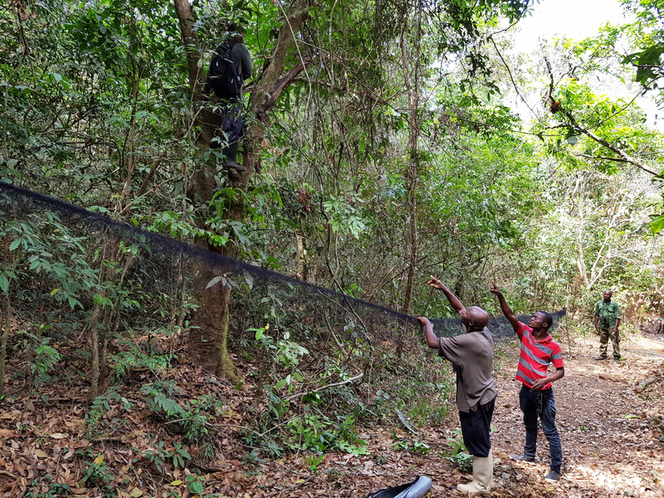
During his stay, three of the local schools sent a number of children to participate in the bird ringing, despite the schools being closed over the election period.
“The children loved the experience. It was wonderful to witness the sheer joy and amazement on the faces of these children as they nervously took part in the research.
“We were able to closely study the identification features of several of the Shier Forest species which are more usually heard or fleetingly seen.
He said finding suitable ringing sites was a challenge due to the rocky and hilly terrain combined with the dense foliage.
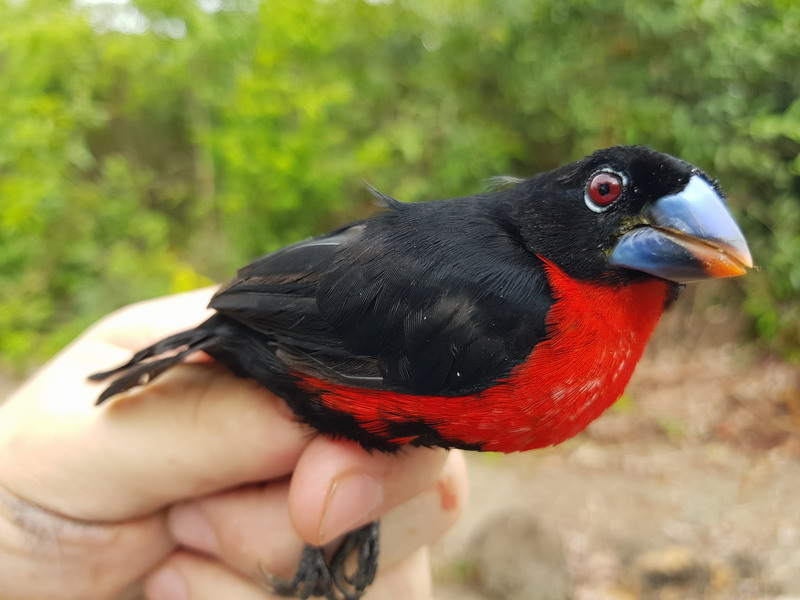
Only two sites were utilised, with 50 birds captured, ringed, measured, photographed and safely released.
Highlights included the White-tailed Ant-Thrush, White-Tailed and Brown-Chested Alethes, Honeyguide Greenbuls, Green Hylia, Western Bluebill, White-Browed Forest-Flycatcher and a pair of Buff-Spotted Woodpeckers.
“Sierra Leone is one of the ten poorest countries in the world, which I got to experience first hand when travelling to Mobanda, one of the remotest areas in the country. One of the families kindly gave up a small room in their mud hut for me to share with them. With the intense heat and humidity, lack of any electricity, running water or toilets and the night time visitors to my bed (rodents and spiders) my comfort zones were sorely tested!”
Rawdon said the experience showed him how we take all the luxuries and comforts of home for granted.
“Spending this time living with the people was a humbling experience and an amazing life lesson in daily survival. Watching young boys and girls, from five years upwards, setting off to complete their daily chores of collecting water from a stream was quite a culture shock.”
One of the children’s favourite games, according to Rawdon, was to follow this strange white person around from a distance, until he would suddenly turn around and chase them.
Thirty or more kids would scatter in all directions, shrieking and laughing at the same time, to only gather again a few minutes later.
“Life is far from easy for these people, with no access to doctors or hospitals. However, they seemed content with their simple, uncluttered lives.”
Sierra Leone, to date, does not have the tourism facilities to attract large numbers of travellers.
However Rawdon said the potential is certainly there with beautiful beaches, incredible bird life, wildlife and with wonderful friendly people who are only too willing to learn and share their small part of Africa.
Are you looking to join a local church? Visit our Churches on the North Coast feature to find out more.

Do you want to receive news alerts via WhatsApp? Send us a WhatsApp message (not an sms) with your name and surname to 061 718 4438.
Please read our WhatsApp broadcast list disclaimer.
Join the conversation on Facebook, Twitter and Instagram
Stay in the loop with The North Coast Courier on Facebook, X, Instagram & YouTube for the latest news.
Mobile users can join our WhatsApp Broadcast Service here, or if you’re on desktop, scan the QR code below.