Be a hero, save a life
Have you ever thought about how the average person can change or even save someone’s life?
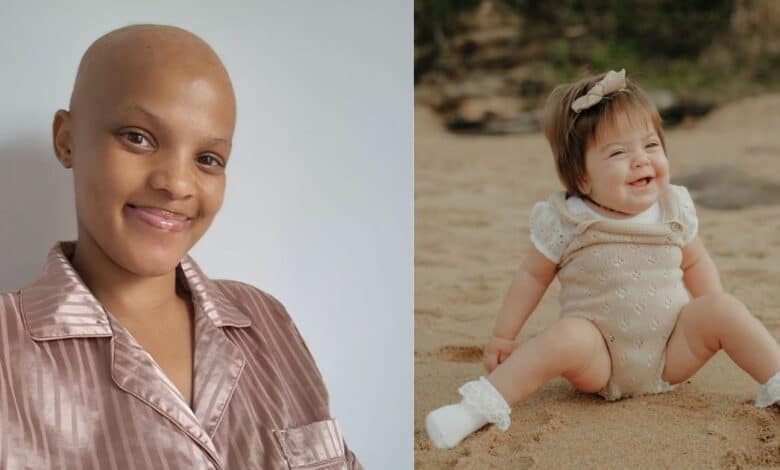
Society always believes that heroes wear capes, but have you ever thought about how the average person can change or even save someone’s life? For Lee-Ann and Alyssa, there are no heroes in capes, but they are hoping an average person will step up as a stem cell donor to potentially save their lives.
Here are their stories:
Alyssa
Alyssa Cas Aldworth is a bubbly 8-month-old who was diagnosed with MPS I. Trysten. Alyssa’s father, explained that she had been diagnosed when she was about seven months old.
The rare genetic disorder was linked to a mutation in the IDUA gene, which meant her body couldn’t produce an enzyme needed to break down certain complex sugars, leading to a buildup in her system. This buildup affected multiple organs, and the condition was inherited in an autosomal recessive manner.
Both he and his wife Jade were carriers, giving Alyssa a 25% chance of being affected by the condition, a 50% chance of being a carrier, and a 25% chance of being unaffected altogether. Trysten said they discovered the diagnosis after a series of routine consultations with specialists.
Alyssa had been born three weeks premature and spent ten days in the NICU due to complications with her heart and lungs. Because of her early health issues, they were seeing a range of specialists – a cardiologist, ENT, audiologist, and ophthalmologist – who began to notice some patterns. These led them to consult a geneticist, who then carried out a full assessment that included physical exams, urine tests, and blood work.
The results confirmed the presence of high levels of glycosaminoglycans (GAGs), pointing to MPS I. He recalled how, as first-time parents, they hadn’t initially noticed anything unusual about Alyssa. To them, she was just their baby. But after the diagnosis, they started to see some of the characteristic physical features associated with the condition, like puffy cheeks, big earlobes, wide- or lower-set eyes, narrow nasal passages, and a high-arched palate.
Internally, there were other complications. Alyssa had heart issues, including pulmonary stenosis, and breathing challenges linked to lung obstruction and corneal stenosis. She also experienced sleep apnea. Trysten mentioned that doctors had flagged potential future challenges, too, such as joint abnormalities, skeletal issues, and stunted growth. He said that even though they had braced themselves for the possibility of something serious, the confirmed diagnosis was still emotionally overwhelming.
The first weekend after hearing the news was especially difficult. They had told close family, who responded with love and support, although many had questions that they didn’t yet have answers to. Trysten shared that there were currently two main treatment paths. One was enzyme replacement therapy (ERT), which provides the missing enzyme but needs to be administered for life and comes with a high monthly cost of around R90 000. The other option is a hematopoietic stem cell transplant, commonly known as a bone marrow transplant, which offered better long-term outcomes but also came at a significant cost, between R500 000 and R1 million or more.
He said Alyssa’s heart condition, which had been a concern at birth, had improved, and her cardiologist was pleased with her progress. They were due for another check-up in July. Despite the emotional rollercoaster, Trysten expressed that he and Jade were taking things one day at a time, leaning on the support of their community and working closely with medical professionals to figure out the best way forward for Alyssa.
Lee-Ann
In June last year, Lee-Ann Scholtz (24) was diagnosed with Acute Myeloid Leukaemia (AML).
“When I heard the diagnosis, it felt like my world was crashing down. My first thought was my daughter—she’s only six years old.”
It all started when she experienced drastic weight loss, prompting her to visit a local doctor. Concerned about her health, she was referred to a hospital, where doctors ran several tests but couldn’t determine the cause of her symptoms. The following day, she was transferred to another hospital, where further tests were conducted. There, doctors suspected cancer but weren’t sure of the exact type.
It wasn’t until she was moved to yet another hospital that she finally received a confirmed diagnosis of leukemia. Accepting the reality of cancer was incredibly difficult for Lee-Ann. Her family was devastated, especially her grandmother, while her parents tried to stay strong for her.
Before her diagnosis Lee-Ann was actively involved in a youth group at church. However, life has changed drastically. She no longer attends church as often and spends most of her time in the hospital. The hardest part? Being away from her daughter.
“My little girl recently started Grade One, and I couldn’t attend her first day of school. That broke my heart.” Despite the challenges, Lee-Ann remains hopeful. She knows that this journey is one of the hardest people can face, but she chooses to keep her faith. “I believe God never gives you a battle you cannot fight. I will overcome this.”
*You can be a hero by getting yourself tested as a potential stem cell donor on July 25 at the Amphitheatre at North-West University between 08:00 – 15:00. You might just be the miracle Lee-Ann and Alyssa are praying for.