Between sprinklers and police helicopters: The life and times of a cricket groundsman
The cricket pitch is one of cricket’s great mysteries. The central and most important part of the sport has been under discussion since the first-ever ball was bowled. Simply, the 22-metre strip of turf can decide the outcome of a cricket match. When a cricket team loses, the pitch gets the blame more often than …

The cricket pitch is one of cricket’s great mysteries.
The central and most important part of the sport has been under discussion since the first-ever ball was bowled. Simply, the 22-metre strip of turf can decide the outcome of a cricket match. When a cricket team loses, the pitch gets the blame more often than not, while the winners praise their players instead of the quality of the pitch for the victory.
One person who has heard and seen it all before is North West Cricket’s head groundsman, Louis Kruger, who has been a part of the setup since 1987.
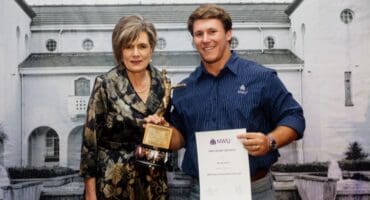
Kruger is as experienced and hard working as they come, with a string of accolades and a bunch of interesting stories in his locker.
He has won the SA Cricket Groundsman of the Year award a record 11 times, prepared the first-ever pitch at Senwes Park, overseen a number of international matches and even arranged a police helicopter to dry the outfield in the 2003 Cricket World Cup.
“If you want to hear everything, then we are going to chat for a long while,” says Kruger jokingly before he goes back in time to 1987, when he started preparing pitches for the Witrand Cricket Ground.
Taking the new ball at Senwes Park
“Senwes Park has been my home since its opening in 1999 and a lot of great things have happened here. Interestingly, I was the groundsman when our former CEO, Jacques Faul, and current CEO, Heinrich Strydom were still youngsters playing cricket,” he says.
The first match at Senwes Park was a warm-up game when England played against North West in 1999. The first international match was in 2000 when New Zealand played against the Proteas. Unfortunately, that game rained out.
“My best ever pitch would be the Zimbabwe and South Africa One-Day International in 2006 when the Proteas hit 400 – the third time in the world at that time,” he says. The autographs and photo of that match are still framed in the Senwes Park clubhouse to this day.
Time for the covers
“It takes 14 days to prepare a pitch for a big match. You have to take the weather, the moisture in the pitch and the teams who are playing into account. I know the players well so I know what the ideal pitches are for the matches.”
According to Kruger, the quality of the pitches stays the same, irrespective of whether it is a domestic or international match.
“One of the biggest challenges was preparing four pitches at the same time for the Varsity Cricket tournament this year. In total, I prepared 14 pitches in that week and had to do a lot of work. You don’t spend a lot of time at home during the cricket season.
When the match starts, the umpire is in control of the game. He signals when the covers should go on.
We need to get the covers on in five minutes. It is a dangerous job because the men who put them on have to go up against the elements of thunder and lightning. Nobody ever mentions their safety,” he explains the other side of the story.

The perfect pitch?
Kruger’s award-winning pitches and meticulously prepared grounds are always held in high regard by Cricket South Africa in their annual cricket ground ratings. Kruger consistently manages scores in the high 90’s with his best an astonishing 96.5% – as close to perfection as humanly possible.
“Depending on the weather, a good wicket should have as little moisture in the pitch and grass on the wicket. There should be enough pace and bounce and a bit of swing for the bowlers in the first few overs of the match.
The spinners should only get into the game by day 2 and 3 in a three-day match,” he said.
“The most important aspect for the groundsman is the winter preparation. Poor preparation will result in the pitches losing their character and becoming uneven. To rebuild a pitch due to poor preparation can cost an extra million rand.
“It is my passion and you get to learn new things about the turf every day, new developments in cricket as well as pitch preparation. Chris Scott, the former groundsman at Wanderers, is my mentor and I still ask him for advice.”
Rubbing shoulders with the world’s best
Kruger has also prepared pitches and training facilities for the world’s best who come to practice in Potchefstroom ahead of big SA tours. One of his fondest memories was seeing Sachin Tendulkar in action during the 2003 Cricket World Cup.
“Sachin plays alone in one net, only he bats in that net. His experience and how he experiences pitches are second to none.”
According to Kruger, there is still criticism for the pitch, especially from players and umpires.
“We do get the recognition from North West Cricket for our hard work after matches,” he added.
There are not a lot of people who want to be groundsmen, because of the long hours. You have to sleep in during matches. We play about 60-70 games at Senwes Park in a season compared to 18-20 matches per season at a bigger stadium. We have 11 pitches in the square and 47 practice pitches, as well as cement pitches,” he said.

Keeping an eye out for your wicket
There have been some funny and memorable moments for Kruger at Senwes Park, too – cricket, after all, is a strange game.
“The funniest moment would be when Friedel de Wet bowled for North West against Western Province in a three-day match. Just as he ran in to bowl, the sprinkler next to the pitch went on.
He deliberately kicked it to spray water away from the pitch,” he remembers fondly.
The most memorable must surely be when Kruger managed to get a police helicopter to dry the surface before a Cricket World Cup game between the Netherlands and Australia.
“It worked and was quite an unusual sight. The Australian team awarded me a medal for my effort in getting that match started. Sometimes you have to think out of the box.”