
Former Sapref plant reopening plan explored
The restoration project is projected to create approximately 12 500 construction jobs and 2 850 permanent positions.
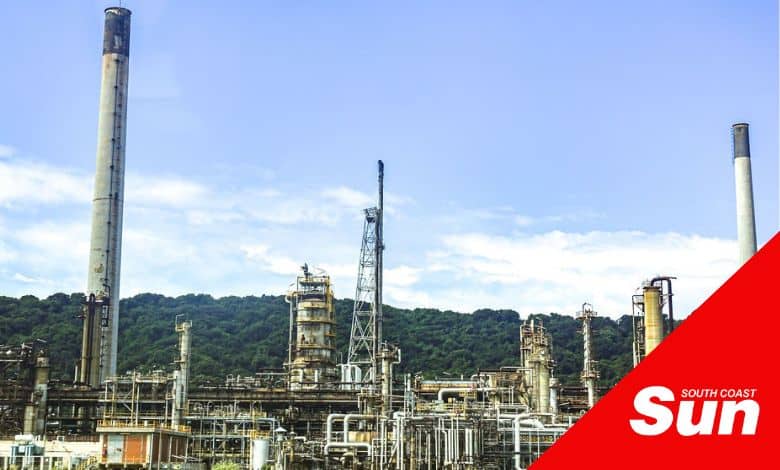
ETHEKWINI Municipality has revealed that it is leading the efforts to revive the refinery in Prospecton, formerly known as Sapref, amid uncertainty regarding fuel security in the country as a result of the war in the Middle East.
Also read: Red flags ignored during Sapref sale
Now rebranded as the South African National Petroleum Company (SANPC) after it was bought by new owners, eThekwini said the company is being repositioned as a key driver of industrial renewal.
In 2024, Sapref was sold to the State-owned Central Energy Fund (CEF) for R1 by previous joint owners, BP Southern Africa and Shell Downstream South Africa, after flood damage in 2022 caused the facility to cease production.
On March 30, eThekwini city manager Musa Mbhele, deputy minister of Mineral and Petroleum Resources Phumzile Mgcina, and other stakeholders, conducted an oversight visit to the inoperational facility.
eThekwini spokesperson Gugu Sisilana said the engagement was a co-ordinated effort between national and local government focused on charting a clear roadmap for the refinery’s revival under its new identity, and strengthening long-term energy security for the country.
Mbhele said the refinery’s return to operation is expected to unlock strategic crude supply opportunities aligned with BRICS partnerships.
Also read: eThekwini Municipality hopes to see Sapref revived
“The SANPC Refinery is a critical asset for both the municipal and national economy. Its revival will ensure that eThekwini remains globally competitive in industrial development,” said Mbhele.
He further said that by leveraging South Africa’s membership, the facility aims to secure more reliable and diversified energy sources, contributing to greater fuel price stability.
Sisilana said the restoration project is projected to deliver significant economic benefits, including approximately 12 500 construction jobs and 2 850 permanent positions.
“It is also expected to contribute an estimated 1.8% to the national Gross Domestic Product, with a strong emphasis on inclusive growth through a targeted 65% local content threshold,” said Sisilana.
The CEF had until March 31 to hand in a report to Parliament’s Portfolio Committee on Mineral and Petroleum Resources about a study into the future of the refinery.
Meanwhile, the Department of Mineral and Petroleum Resources and the Fuels Industry Association of SA (Fiasa) recently said even if the closed refineries, including Sapref, were still operational, fuel security would not be guaranteed. Fiasa CEO, Fani Tshifularo, said South Africa’s exposure to global oil market volatility would persist even if the closed refineries were brought back to production.
“Even if those refineries were operational today, they would still be dependent on imported crude oil and subject to the same global price shocks,” he said.

Do you have more information pertaining to this story? Feel free to let us know by commenting on our Facebook page or you can contact our newsroom on 031 903 2341 and speak to a journalist.