
Nature’s quiet predator: The purple heron
Although the purple heron looks similar in appearance to the grey heron, they are slightly larger and more elusive birds.
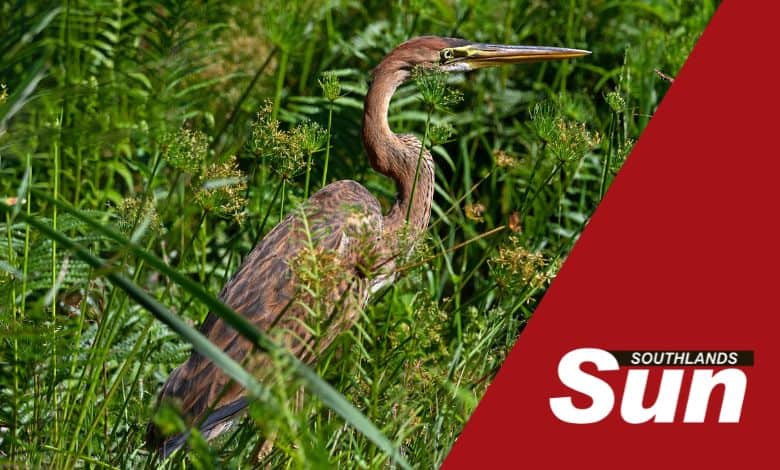
THE purple heron is a wide-ranging species throughout most of Africa, Europe and Asia, however locally not so common or abundant.
Similar in appearance to the grey heron, they are more elusive birds, favouring dense vegetation among the reeds on riverbanks where they hunt small fish, crabs, frogs, rodents and insects.
Also read: Stop feeding wild birds, says rehabilitator
The purple heron is a large bird, measuring up to 97cm in length with a 150cm wingspan. They are redish brown in colour and the adults can have a dark grey back.
They are community nesters, preferring to come together in groups to make nests among the reeds on a river bank. About five bluish eggs are laid which are incubated by both parents and take up to four weeks to hatch, the babies fledge six weeks later.
Did you know?
The purple heron is one of a few bird species that have a different descriptive name in Afrikaans as they do in English; in Afrikaans the purple heron is known as the “rooireier”, meaning red heron.
Contact Warren to have some of your interesting insects, snakes or spiders identified. Call or WhatsApp him on 072 211 0353, or visit his Facebook page, Warren’s Small World.
For more Southlands Sun news, follow us on Facebook, Twitter and Instagram. You can also check out our videos on our YouTube channel or follow us on TikTok.