Young rider Kaidan Brewer is recovering after a scary fall.
Picture: iStock


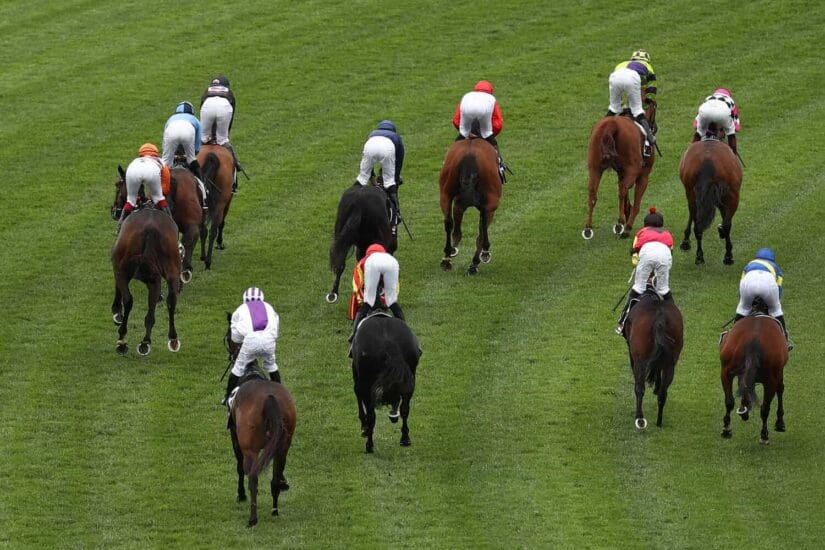
The position a jockey assumes on the back of a racehorse has been described as “a situation of dynamic imbalance and ballistic opportunity”, by a group of scientists studying dangerous jobs. TV cop shows tell us “ballistic” refers to the way a projectile – usually a bullet, but possibly a person – flies through the air.
We can blame an American jockey called Tod Sloan for popularising the modern-day “monkey crouch”. It was a radical departure from the age-old riding method of sitting upright in a saddle with long stirrup leathers, but it was a great improvement in terms of winning races – if not in terms of rider safety, considering the ballistic opportunity.
Physicists say the nowadays universal jockey stance improves race times five to seven percent over the upright style.
A 500kg horse can gallop at 55-60km per hour but the 50kg athlete aboard is the true decider in a race.
“A jockey’s split-second mechanics actively alter the physics of a race,” notes a well-informed poster on Quora.
“The most significant behavioural impact a jockey has is biomechanical… By hovering, a jockey actively isolates their own body mass from the horse’s vertical movement. As the horse bounds forward, its center of mass moves up and down. Because the jockey remains relatively level, the horse does not have to expend energy repeatedly lifting the rider’s weight against gravity,” adds the contributor.
From his position of relative equilibrium on the animal’s neck, the rider can better pace the gallop, navigate through other horses and synchronise strides in the final furlong.
All this came to mind when promising young jockey Kaidan Brewer took a frightful tumble at Turffontein a short while ago.
Brewer’s mount Kudikaran crashed to the turf in the closing stages of the race, giving spectators and television viewers a close-up view of the carnage; blood ran cold thinking about possible outcomes.
Kudikaran had to be euthanised; Kaidan got quick medical attention and was rushed to hospital – from where regular updates on his condition suggest he is recovering well.
Riding racehorses is one of the most dangerous occupations in the world. Global stats show that Flat jockeys fall once every 250 rides. Modern flak jackets and helmets, along with ever-stricter riding rules, have reduced injury and death rates significantly but accountants and lawyers are much safer in their day jobs – and sometimes even earn more money while cocooned in warm offices.
So why do jockeys do what they do? Short answer: the buzz.
Any jockey will tell you that no thrill beats riding a speeding beast to victory, wind in your face, hooves thundering, coloured silks fluttering, loudspeakers blaring, people shouting…and the rest.
Even in an anesthetic haze last week, Kaidan Brewer was babbling about an upcoming probable winning ride. At the other end of the country, former champion jockey Andrew Fortune was itching to get back into action after eight weeks on the sidelines with six broken ribs and a punctured lung – at the age of 59!
These little guys with big, brave hearts know the score – and embrace it.
There’s a story about the famous American jockey George Woolf, who sometimes rode the great Seabiscuit. In 1946, diabetes and over-zealous fasting caused him to fall off in a race and get killed. At the funeral, Hollywood star Gene Autry sang “Empty Saddles in the Old Corral”. All the jockeys assembled to pay their respects knew it might one day be sung for them, but none quit their jobs.