
‘We are vulnerable, but not all destined for extinction’ – NWU Prof
Since January 2020 most countries of the world have been affected by Covid-19. On 31 May the global mortality statistics of the pandemic had risen to 369 847 deaths. Who could have thought that our deep personalised collective worldview would change into feelings of fear of moving beyond the confines of our homes –pigeon instinct – in the space of two months?
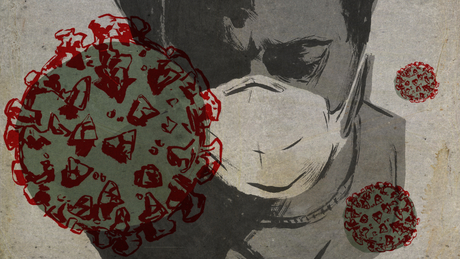
As humankind we are resolute to overcome a crisis, similar to the global flu pandemic at the end of World War 1 (1914-18). One consequence of that war and the flu was a set of international law that would stipulate we would never again resort to chemical and biological warfare.
Ironically, in 1945, shortly before the end of World War 2 (1939-45), the United States of America bombed Japan with the strongest nuclear bombs available. To boot, the world after 1945 was caught up in a Cold War. For four decades we persistently feared that the two most powerful states of the world, America and Russia, would start a war that could lead to the extermination of life as we know it.
Since the 1990s the fear of a nuclear war has diminished. In the 21st century environmental activists, like the Extinction Rebellion group, since 2017 have been warning world leaders to stop the use of fossil fuels, responsible for global climate change.
The history of extinction is of recent origin in Western Civilization, according to Oxford University’s Thomas Moynihan, who recently (2020) published a brief intellectual history of existential risk and extinction.
He explains that the principle of plenitude, dating back to ancient Greek philosophy, implies that if any species is lost (exterminated), the chances of its returning will inevitably be fulfilled. Up to the 17th century, even natural philosophers, believed that plenitude was an eternal truth. Humans were destined to an eternal presence.
Religion held sway. The Christian faith’s alignment with plenitude, also has a bearing on apocalypse, which is evident in the revelation of God’s plan with us. Therefore, the mass extinction of the human species does not feature prominently in religious.
By the 18th century Enlightenment thinkers saw reality in a different light. In 1721, the French statesman, Montesquieu, reported on his population research and concluded that human extinction was possible. He had read histories of disasters. There certainly were extinctions of large human communities in former times.
Montesquieu was proven right in 1796 when the French natural scientist, Georges Cuvier, found irrefutable geological evidence of the extinctions of animal species in history. That affirmation settled in human consciousness, thanks to thinkers like Montesquieu. By thinking about human population in actuarial and security terms, Montesquieu literally dehumanised humans.
Also in the 18th century, the German philosopher Immanuel Kant, who in his early writings supported plenitude, later separated ‘value’ from ‘fact’. Kant reasoned that human values are the creations of human consciousness. If there were no humans there would be no consciousness. Therefore, extinction could be real, if there were no people to be conscious of existence.
Today we are well aware of the extinction of animal life on a grand scale. In Africa wildlife extinction is most notable. It is the result of population growth and development and the human instinct of wanting to be destructive. Africa’s elephant population, estimated at about three million in 1918, at the time of the 2019 elephant census stood at 350 000 – mainly in southern Africa.
If no measures are taken, elephants, like their ancestor, the mammoth of the Pleistocene epoch (2.5 million years – 10 700 years before the present), will soon become extinct.
It is unlikely, for now, that humans will become extinct. We have a history of innovation and resilience that negates speculation that humans face extinction because of Covid-19.
Governments of the world have modern disaster management and mitigation strategies to reduce fatality rates. As soon as we have built up our own immune systems and developed appropriate vaccines to fight the pandemic, at least 7.7 billion of us, will forge ahead. We are, after all, connected as a species, like never before.
Our governments have a heightened sense of security. They rely on the latest technologies, data and advanced science knowledge to bring a speedy end to the Covid-19 pandemic.
In view of our innovative capacity to successfully get the upper hand against a deadly virus, is it not perhaps appropriate for us, in Africa, to use our actuarial, demographic and scientific knowledge to take measures to bring to an end the irresponsible human-engineered extinction of our continent’s wildlife?
- The author is an extraordinary professor in the Faculty of Humanities at North-West University’s Vanderbijlpark campus.