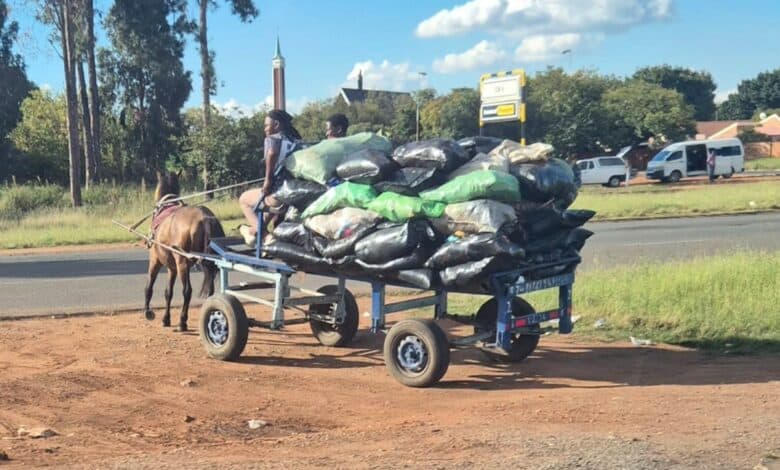
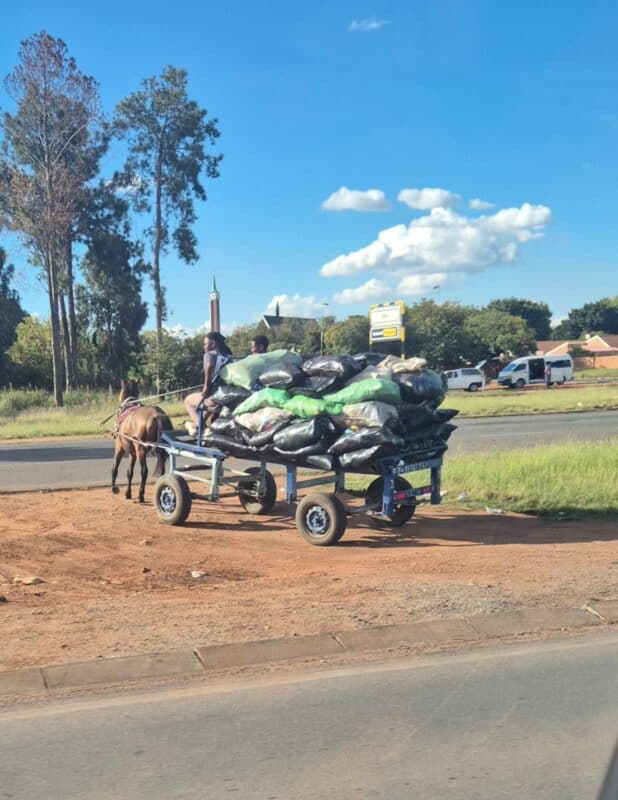
VANDERBIJLPARK – They are a common sight on the suburban streets of the Vaal: weary horses and ponies straining against harnesses, pulling carts overflowing with black refuse bags.
But as these sightings become more frequent, so do the cries for help from concerned residents.
Throughout March, Vaalweekblad was inundated with calls from locals worried about the welfare of these animals. For many, the line between a “working animal” and an “abused animal” is blurry, leaving residents unsure of when to step in.
To make it worse, the issue isn’t just about animal welfare; it’s a systemic problem.
Many residents, frustrated by service delivery gaps, pay cart operators to whisk away their trash.
However, this “convenience” comes at a high cost to the environment.
With the nearest official landfill located in Palm Springs, nearly a 45-minute drive by car, it is physically impossible for a horse-drawn cart to make this trip.
The grim reality is that these collected bags are almost certainly being dumped illegally in nearby open fields, creating health hazards and eyesores across the region.
By paying for these services, residents are directly subsidising both the potential exhaustion of the animals and the degradation of their own neighborhoods.
Where does the law stand?
Vaalweekblad reached out to the Vanderbijlpark/Vereeniging SPCA to clarify where labor ends, and cruelty begins. Marlien de Klerk, manager of the branch, notes that the sight of a working horse is not, by itself, a crime.
“The SPCA is not opposed to the use of working animals, provided that their welfare and well-being are not compromised,” De Klerk explained.
“Our authority to intervene is limited to instances where there are contraventions of the Animals Protection Act 71 of 1962.”
While it may be uncomfortable for the public to witness, South African National Standards (SANS) provide specific, perhaps surprising, guidelines for equine labor:
Weight Limits: A fit and healthy equine is legally permitted to pull a load up to double its body weight.
Condition: The animal must be in good physical health and not subjected to “undue suffering.”
Legality: The practice is lawful as long as the animal is treated humanely and the equipment (harnesses/carts) does not cause injury.
The power of the consumer
The SPCA’s message is clear: as long as there is a market for these informal collectors, the horses will remain on the road. De Klerk emphasised that public patronage is the primary engine keeping this practice alive.
If you witness a situation where an animal appears injured, malnourished, or is being physically mistreated, the SPCA urges you to act.
How to report
If you have concerns regarding the welfare of a working horse or pony, contact the Vanderbijlpark/Vereeniging SPCA office immediately at 016 422 1505.