
Consumers spent a few billion rands on everything from expensive vacations to extra toilet paper, Coca-Cola, air fryers and Klipdrift brandy.
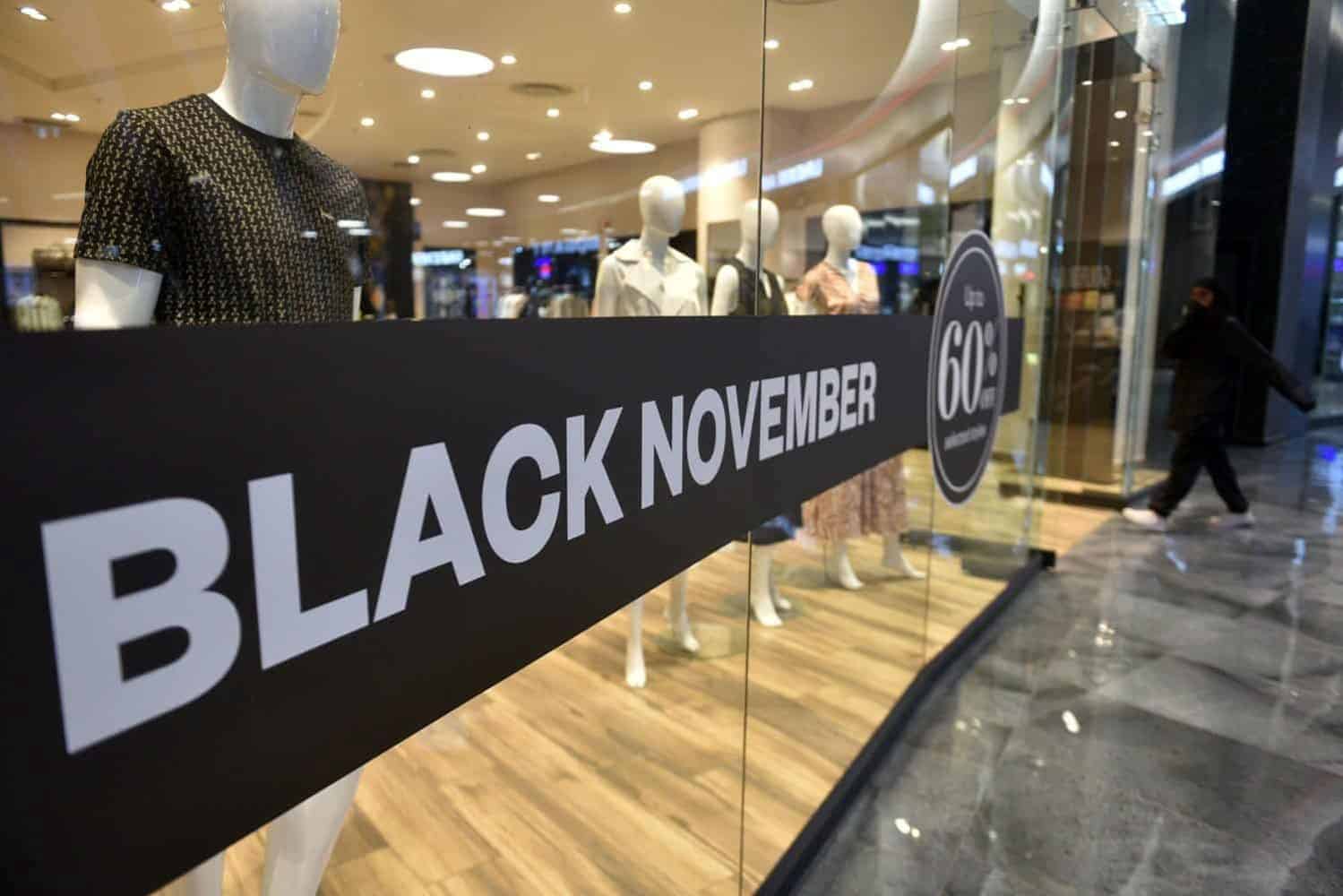
Picture: Nigel Sibanda


Online shops and banks are still counting the rands they made during Black Friday and the surrounding days this year. At Takealot, a customer filled up a basket for a cool R114 000, the single highest spend on Black Friday, while a Discovery Bank customer spent a whopping R500 000 in one transaction for travel.
According to Takealot, the online shopping platform had a record-breaking month again this November as it ran Black Friday deals throughout the entire month from 3 November to 1 December. Black Friday was once again its highest contributing single day in terms of gross merchandise value, while it achieved its highest ever number of visits, orders and units processed in a single day in Takealot’s entire history.
ALSO READ: Black Friday: One person spent more than R1m for a holiday
What did consumers buy through Takealot?
A spokesperson says Takealot sold enough Coca-Cola to give every fan at a sold-out FNB Stadium a cold drink… twice. And if you stacked all the air fryers it sold, it would reach higher than 70 Table Mountains. Consumers also effectively bought the equivalent of 250 full cinemas’ worth of screens — enough to host an entire country’s movie night.
The top products by orders on Black Friday 2024 were Finish dishwashing tablets, Klipdrift brandy, Baby Soft toilet paper, Coca-Cola bottles, TRESemmé hair treatment and Russell Hobbs microwave ovens. This year, the top 10 were Baby Soft toilet paper, Russell Hobbs air fryer, Eucerin sunscreen, cases of Coca-Cola, Maybelline primer and Sunlight dishwashing liquid.
The top products by gross merchandise value on Black Friday last year were PlayStation 5, Samsung 70″ TV, Hisense 65″ TV, Hisense 50″ TV, Apple iPhone 13 and Red Bull energy drinks. This year, the top 10 included Samsung 65″ TV, PlayStation 5, Samsung 75″ TV, Samsung 55″ TV, Apple iPad, HUAWEI tablet and ASUS laptop.
The most popular categories were homeware, personal care, health products, small appliances, non-perishables, DIY, consumer beauty, electronic accessories, toys, sport and TV and audio.
ALSO READ: This is how South Africans spent on Black Friday
Discovery saw a customer pay R500 000 in one transaction
Hylton Kallner, Discovery Bank CEO Discovery Bank, says a new SpendTrend the bank identified was that customers are moving to tap-to-pay and virtual cards. Nearly two-thirds of in-store card transactions are now paid for with tap-to-pay with smart devices, and a third of online spend is using virtual cards.
“Black Friday is a powerful barometer of consumer trends and economic health. This year we saw strong growth in card spend and transaction volumes alongside clear signs of disciplined, value-conscious shopping as clients take advantage of lower interest rates and targeted deals to stretch their budgets further.”
Discovery Bank’s data shows a clear, though cautious, recovery in consumer activity with higher overall spend, more transactions and smaller average baskets. Kallner says this is consistent with broader industry comment, which highlights resilient Black Friday demand supported by recent rate cuts and more optimistic, although still value-focused, shoppers.
ALSO READ: Hey, big spender: R122 195 for a couch on Black Friday?
Consumers’ spending trends
The SpendTrend analysis shows that:
- Online shopping nearly matched in-store buying: Online spend accounted for 45% of all Black Friday card spend among Discovery Bank clients. Online card transactions were also 45% higher than on a typical last-Friday-of-the-month, underscoring the increasing shift to digital shopping. While in-store volumes grew strongly, online is growing faster.
- Growth in spend and transactions, but with smaller baskets: Average transaction sizes declined by 3% in-store and 9% online, indicating that clients are breaking purchases into more, smaller baskets and using deals to stretch their budgets. Kallner says this points to a positive recovery in activity, with consumers using the breathing room from lower interest rates to manage spend more actively rather than simply increasing basket sizes.
- Black Friday as a “super-charged Payday Friday”: In-store purchase volumes were about 20% higher than a typical last-Friday-of-the-month, positioning Black Friday as the key spending day that amplifies regular payday-weekend behaviour.
- Black Friday becomes a 24-hour event: Only 54% of total online spend occurred during traditional store trading hours between 9am and pm, compared to 77% of in-store spend. Kallner says this shows a significant share of online spend happening outside normal trading hours, as clients use online channels to secure deals before stores open and to avoid peak-time congestion.
ALSO READ: Black Friday is no longer about luxuries but about survival
Consumers focused on essentials such as food and drinks
- Every day and home-focused spending prevailed: Food and drink, recreation and home goods were the top three Black Friday spend categories. Younger clients (under 25) used Black Friday to refresh their wardrobes, with clothing ranking as their second-highest spend category, while older clients focused more on groceries, home and recreation, mirroring broader market observations that essentials and high-utility items continue to dominate in a cautious recovery.
- International marketplaces gain share: International retailers, such as Shein and Temu, continued to grow in popularity, with South African shoppers mixing international and local ecommerce platforms to access competitively priced imported goods and cross-border deals.
- Value-seeking and disciplined shopping: The combination of higher overall spend and volumes with smaller average transaction values suggests price-sensitive shopping in a high cost-of-living environment. Clients are breaking up purchases, comparing prices and targeting deals, rather than making large one-off splurges. The dominance of online, digital wallets and virtual cards shows that clients are shopping where it is easiest to compare, search and track, using secure, app-based payment tools that fit into a broader money-management and rewards ecosystem.
Did you miss spending this Black Friday? Do not despair: the next one is only 354 days away on 27 November 2026.
Support Local Journalism
Add The Citizen as a Preferred Source on Google and follow us on Google News to see more of our trusted reporting in Google News and Top Stories.