
Despite improvements, the port's poor performance against its global peers is hurting economic growth, says the city.
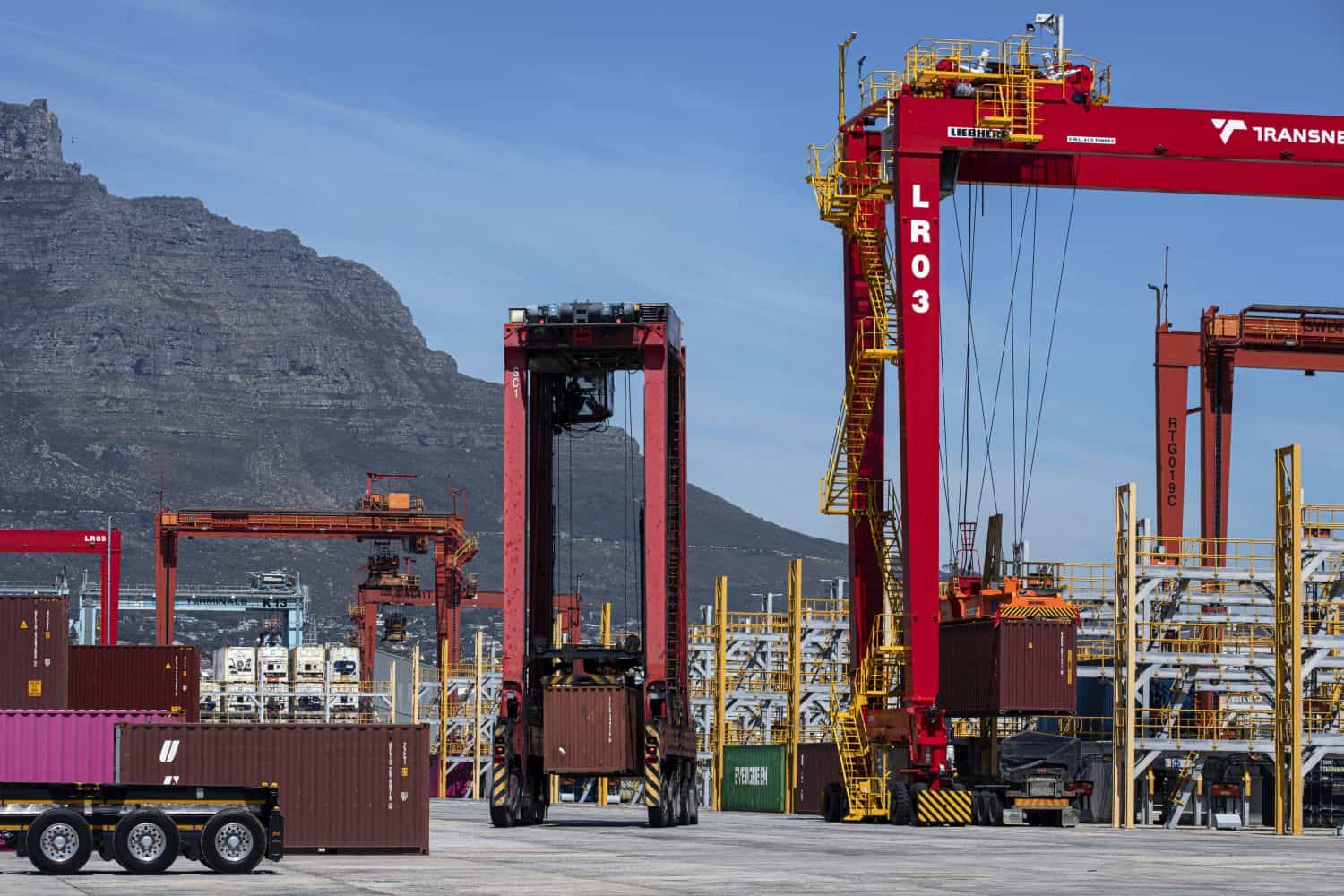
Loading and unloading of container ships at the busy Cape Town Container Terminal on 30 October 2025. Picture: Per-Anders Pettersson/Getty Images


The City of Cape Town has called on port manager Transnet to speed up initiatives – including private sector involvement – to improve efficiencies at South Africa’s oldest port.
This comes just days after Cape Town was ranked the world’s worst container port by the Container Port Performance Index (CPPI) 2025, produced annually by the World Bank and S&P Global Market Intelligence.
Two South African ports – Cape Town and Durban – appear in the bottom five of the world’s worst ports, though Durban was also credited as being the most improved port in the world in 2025.
The CPPI reflects the performance of container terminals in various ports around the world, but does not include other terminals such as dry and liquid bulk.
This repeats a pattern reported in previous years.
In last year’s report, Durban was ranked dead last with Coega and Cape Town close behind. The 2025 rankings show Durban edging up slightly (398th), while Cape Town dropped to 400th place.
Alderman James Vos of Cape Town’s Mayoral Committee for Economic Growth, says Cape Town should have one of the most efficient ports in the world, as it is strategically located on one of the world’s busiest shipping routes.
Cape Town is SA’s oldest port, but Durban is the country’s biggest and busiest container port, handling between 60% to 65% of SA’s container traffic, due in large part to its proximity to the country’s economic hub, Gauteng.
Cape Town is SA’s second busiest container port, although Coega in the Eastern Cape has a higher container handling capacity currently.
“While Transnet has made investments to improve port operations, we are still not seeing this improvement reflected in the latest global port rankings. This should concern everyone who cares about economic growth, exports, investment and job creation in South Africa,” says Vos.
He adds that “there are encouraging signs that reforms and partnerships are beginning to yield improvements elsewhere in the country’s port network”.
However, the Port of Cape Town “continues to struggle with operational inefficiencies that undermine competitiveness and frustrate exporters who are trying to get their products to international markets.”
Worst performing ports in 2025
| Rank | Port | Country |
| 400 | Cape Town | South Africa |
| 399 | Conakry | Guinea |
| 398 | Durban | South Africa |
| 397 | Rijeka | Croatia |
| 396 | Mombasa | Kenya |
Cape of storms
The Port of Cape Town’s struggles are not entirely of its own making.
Traffic to the port was repeatedly disrupted by bad weather and swells. This, combined with equipment reliability issues, led to volatility in ship times in port – despite easing of supply chain stress.
“This deterioration was accompanied by a decline in berth utilisation, suggesting that vessels increasingly accumulated time outside productive berth operations,” says the CPPI.
Cape Town has started to tackle these disruptions by introducing a predictive wind model developed with the CSIR to reduce weather-related disruptions, a helicopter piloting service to improve ship access during high swells, and a digital technology platform for cargo planning.
“The port’s CPPI trajectory underlines how structural exposure to external conditions can dominate performance outcomes, independent of global demand cycles,” adds the CPPI.
The report measures time spent in port, reflecting queuing, waiting, and idle berth time, as well as the port’s ability to cope with volatile arrival patterns and recover from disruption.
One shipping analyst who asked not to be named told Moneyweb that Cape Town has been shoved to the bottom of the pile when it comes to infrastructure upgrades, despite consistent pressure from the city.
“The city notes the encouraging steps taken by port authorities to improve efficiencies, including requests for proposals to operate the liquid bulk terminal and a cold storage terminal, as greater private sector involvement at the port cannot come soon enough,” says Vos, adding that the city management will continue to provide its full support to port authorities in reforming port inefficiencies.
Constraint to growth
A persistent gripe among businesses, exporters and investors is poor port performance in the city stifles economic growth.
“Whether it is agricultural producers trying to get fresh produce to overseas markets, manufacturers moving goods through supply chains, or logistics operators attempting to plan with certainty, the message is remarkably consistent: The port remains one of the biggest constraints on economic growth in the Western Cape,” says Vos.
Research commissioned by the Western Cape Government shows a more efficient port could unlock about R6 billion in additional exports, support nearly 20 000 jobs, generate more than R1.6 billion in additional tax revenue and grow the provincial economy.
“Our port should be a competitive advantage that strengthens our position as a leading hub for trade and investment. Instead, it too often acts as a bottleneck that constrains growth and limits opportunity,” adds Vos.
Cape Town’s container port handles most of SA’s fresh fruit exports, and has relied on collaboration between Transnet, the provincial government and private sector groups to maintain port capacity during peak export seasons.
The Western Cape has a goal of trebling exports by 2035, which requires much improved port efficiency and reduced logistics costs.
Vos says the city will use every means at its disposal to improve port efficiency. This includes partnerships, advocacy, stakeholder engagement and reform.
“We support opening the door far wider to private sector participation in port operations. We support reforms that bring investment, expertise and innovation into the system. We support measures that improve efficiency, reduce delays and strengthen South Africa’s competitiveness in global markets.
“Most importantly, we support interventions that help unlock economic growth and create more jobs for the people of Cape Town and South Africa,” says Vos.
Transnet is yet to comment on the latest CPPI report or on the City of Cape Town’s comments on the performance of the Port of Cape Town.
This article was republished from Moneyweb. Read the original here.