


Johnson resigned after facing scrutiny at the Madlanga commission.
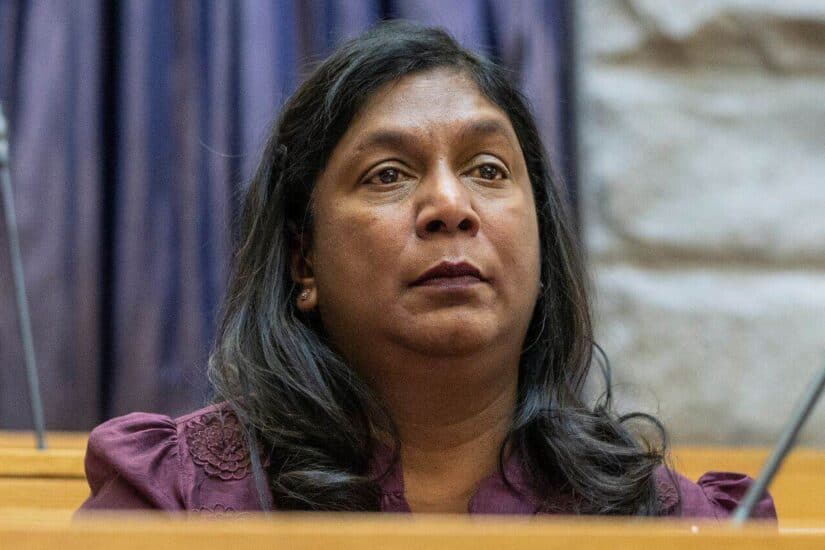
Andrea Johnson testifies at the Parliamentary Ad Hoc Committee inquiry into alleged corruption and political interference in the criminal justice system at Good Hope Chambers on 6 November 2025 in Cape Town. Picture: Gallo Images/Brenton Geach.


An expert says Andre Johnson’s resignation as head of the Investigating Directorate Against Corruption (IDAC) is not a major setback for the National Prosecuting Authority’s (NPA) efforts to clamp down on corruption.
On Monday, President Cyril Ramaphosa announced that he had accepted Johnson’s resignation. This comes after her gruelling testimony at the Madlanga commission and the criticism that she faced afterwards.
Political analyst Theo Neethling told The Citizen that the immediate effects of Johnson’s departure may include disruptions to institutional stability and ongoing inquiries. He also said the absence of seasoned leadership could hinder progress in prominent corruption cases.
“Simultaneously, Johnson’s exit could reduce additional reputational harm to the NPA, since she contended that the dispute related to her had turned into a distraction.
“Furthermore, the NPA today is institutionally more robust than it was during the state capture period, with IDAC legally established and a wider pool of seasoned prosecutors.
“The extent to which her resignation poses a major setback will hinge on the prompt selection of a reliable successor, the ongoing progression of corruption investigations, and the NPA’s capacity to show institutional strength.”
He said Johnson’s stepping down signifies a “tactical loss” rather than a “strategic failure” for South Africa’s prosecutorial body.
Madlanga commission
Neethling said the Madlanga commission has exposed challenges in various government agencies,s including the NPA, and that the commission should be given a chance to complete its work.
“The scope of the investigation is far greater than initially anticipated. The commission is not merely investigating individual cases of corruption, but allegations of criminal infiltration, political interference, and systemic corruption within the police, intelligence services, and other sectors of the criminal justice system.
“Since the hearings began in September 2025, new witnesses and evidence have significantly expanded the investigation. The initial extension(s) were therefore essential, as several key witnesses had yet to testify, and there remains outstanding work,” said Neethling.
Political parties react to Johnson’s resignation
Meanwhile, the IFP has welcomed Johnson’s resignation and called for a transparent process in the appointment of a new IDAC head.
“The IFP reiterates that South Africa’s anti-corruption institutions must be led by individuals who inspire public confidence and are able to execute their constitutional mandates with integrity, independence and professionalism.
“Furthermore, we trust that the process to appoint new leadership will be conducted transparently and without delay to ensure continuity in the fight against corruption,” said the party’s chief whip in parliament, Nhlanhla Hadebe.
The DA’s Glynnis Breytenbach, in a statement on Monday, said Johnson’s resignation underscores the importance of allowing the Madlanga commission to continue its work without fear, favour or prejudice.
“South Africans deserve a full and credible account of the matters before the commission, together with appropriate action where wrongdoing is ultimately established,” she said.
In a statement on Monday, the Congress of the People (Cope) called on the NPA and all relevant law enforcement agencies to immediately institute an independent criminal investigation into Johnson’s conduct.
“Where the evidence permits, she must face charges relating to defeating the ends of justice, corruption, abuse of power, political interference, misleading parliament, and any false testimony allegedly given under oath.
“The disturbing evidence that has emerged before the Madlanga commission has exposed what appears to be a deliberate abuse of state institutions entrusted with fighting corruption,” said the party.



