
Largely thanks to a sharp decline in international oil prices.
Picture: iStock


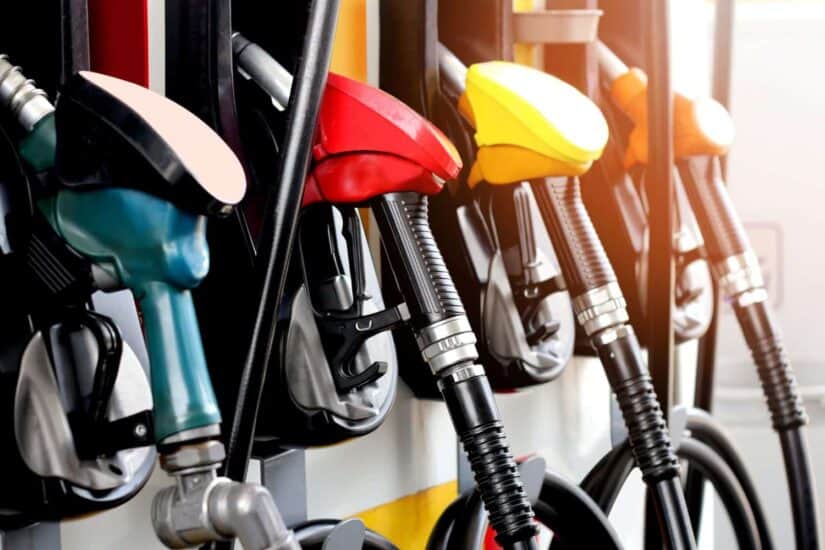
A drop in global oil prices could bring festive cheer to motorists at the fuel pumps in December, with overrecoveries setting prices up for a much-needed drop.
Petrol prices could fall by nearly R4 per litre, while diesel prices are projected to drop by as much as R2.50 per litre.
This is according to the latest Central Energy Fund (CEF) data, which tracks international oil prices and the rand/dollar exchange rate to estimate changes in SA’s fuel costs ahead of the government’s monthly price adjustments.
Petrol 93 is currently tracking at an overrecovery of R3.78, while 95 octane is at R4.01.
If current market conditions persist, this would make it the largest petrol price cut in South Africa’s history.
The previous record was set in 2022, when prices fell by just over R2 per litre.
Diesel is also showing significant overrecoveries, with the 0.05% grade at R2.04 per litre and 0.005% grade at R2.50 per litre.
Oil price slump
The figures are consistent with Investec chief economist Annabel Bishop’s assessment, thanks largely to a significant decline in international oil prices.
Brent crude fell below $90 a barrel in November, from around $120 per barrel the previous month, as markets anticipate a quicker end to the Middle East war in 2027.
The oil price was up nearly 1% on Thursday, trading at $91.33 per barrel.
“The Brent crude oil price has deteriorated somewhat recently as Iran threatens missile attacks on European-based US military centres, although there has only been a mild lift in global oil prices on the war rhetoric,” Bishop said in a note.
“The oil (Brent crude) price is still expected to be near, if somewhat above, $90/bbl for the remainder of the year, but is expected to fall next year to near $75/bbl, with the EIA [US Energy Information Administration] seeing similar forecasts.”
The outlook offers some relief for oil-importing economies such as SA, where international petroleum prices are a key determinant of domestic fuel costs.
Sasol, which benefits from higher oil prices, has lost nearly 30% of its value on the JSE over the past 30 days.
Its share price stood at R206.89 on Thursday, down from R290.01 in October.
Rand pressure
The rand/dollar exchange rate is also key.
The local currency weakened against a supercharged US dollar this month, at one point touching its weakest level of 2026.
“The rand touched R17.73 overnight [Wednesday], its weakest level this year, before recovering to around R17.53 as global markets pulled back from the brink of a tech bear market,” said Andre Cilliers, currency strategist at TreasuryONE.
“But with strong US data keeping the Fed on track to hike in December, and Friday’s ratings reviews looming, the rand needs a sustained improvement in risk sentiment to extend its recovery.”
The rand was trading at R17.44 to the dollar in the early hours of Friday morning, around 0.5% stronger compared to Thursday evening.
A weaker rand against the dollar, or a renewed increase in international oil prices, could erode some of the expected fuel price reductions.
Treasury’s intervention
National Treasury’s earlier intervention to cushion motorists against a series of fuel price increases, which pushed prices to record levels, could now have the opposite effect.
Delivering his Medium-Term Budget Policy Statement in October, Finance Minister Enoch Godongwana announced that the general fuel levy would be reduced by R3 per litre for diesel and R1.50 per litre for petrol from 4 November until 1 December 2026.
The relief would then continue at reduced levels until 5 January 2027, with the diesel levy cut by R1.50 per litre and the petrol levy by R1 per litre.
If the intervention stays in place, it could reduce the extent of the fuel price cuts expected in December, particularly for diesel.
“The scheduled R1.00/litre cut in the general fuel levy is no longer needed in December and will likely not go ahead as it will just need to be reversed later by a disruptive R1.00/litre hike in the petrol price if it did go ahead,” Bishop added.
Treasury is yet to confirm the status of the fuel levy cut.
The next fuel price adjustments, once announced, are set to kick in on 2 December.
This article was republished from Moneyweb. Read the original here.