Cumulatively, directors have been penalised R30m since 2024.
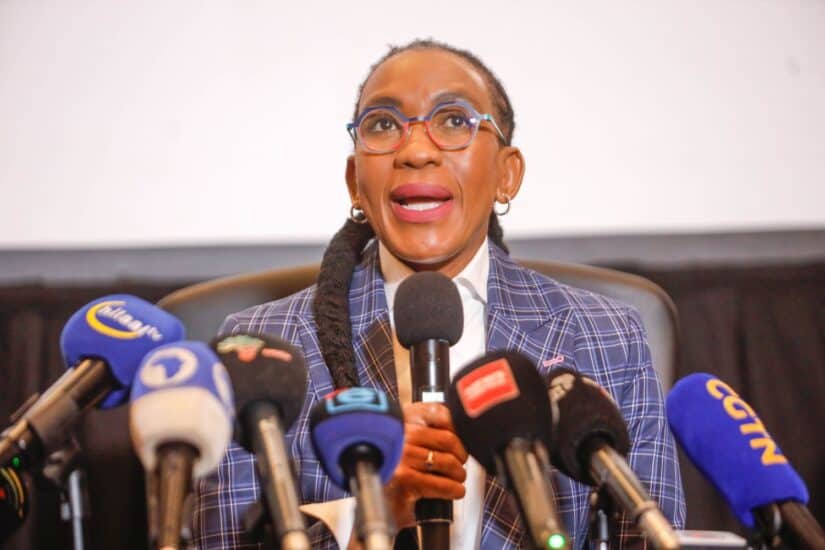
FirstRand CEO Mary Vilakazi. Picture: Gallo Images/Sharon Seretlo


FirstRand has again reduced the short-term incentives awarded to its executive directors for the negative impact on the group of the “UK motor commission matter”.
The final details of the redress scheme were announced by the Financial Conduct Authority in April and the impact on MotoNovo in its Aldermore unit was far greater than it had anticipated.
The group raised a total provision of R17.7 billion and has put its UK business up for sale.
CEO Mary Vilakazi was initially awarded a short-term incentive of R25.3 million “which was reduced by R1 300 000 given the impact of the UK motor commission matter”.
Similarly, CFO Markos Davias saw his short-term incentives reduced by R828 000 (to R19.8 million), while former FNB CEO Harry Kellan’s was also reduced by R400 000 (to R23 million).
Kellan was CEO of its retail banking unit until April, and he will retire in December. Notably, he was group CFO prior to his move to run FNB.
Balancing act
The group says its remuneration committee “debated at length how to manage the UK motor commission provision with regards to the short-term incentive (STI) and long-term incentive (LTI) outcomes”.
It adds that the “committee and the management team are mindful that shareholders have experienced a material earnings impact from the provision”.
“However, the committee also sought to balance that outcome with the longer-term sustainability of the organisation and ensuring that the employees who delivered positive outcomes for shareholders are appropriately rewarded.”
It says it also “considered the following principles of management accountability vs shareholder outcomes”:
- “Negative shareholder harm does not automatically imply management culpability. While shareholders may suffer due to a risk event (e.g. fines, reputational damage, financial loss), executive accountability must be based on actions or omissions – not outcomes alone.
- “Holding management financially accountable for outcomes that were not caused by their decisions – but merely experienced under their tenure – would breach principles of fairness and proportionality.”
It further highlights and stresses – in bold – that “given the group’s long-term philosophy of aligning management outcomes to shareholder outcomes since 2024, the executive directors have been penalised around R30 million on a cumulative basis”.
Impact on execs
Vilakazi received total remuneration of R65.9 million in the year ended 30 June, a 16% decline on the R78.2 million in FY2025.
However, R18 million of the amount last year comprised a one-off restricted share award. Excluding this, her remuneration rose by 9.5%. Her cash package was R11.9 million, the short-term incentives totalled R24 million and the value of long-term incentive awards allocated during the year under its conditional incentive plan was R30 million.
Davias received total remuneration of R50.2 million in the 2026 financial year, with a cash package of R9.3 million, short-term incentives of R18.9 million and long-term incentives of R21.9 million.
The long-term incentives vest in three years, “contingent upon the achievement of cumulative performance conditions”.
RMB CEO Emrie Brown received total remuneration of R51.8 million, while new FNB CEO Lytania Johnson received R38.2 million. This figure includes only three months in that role, with the prior nine spent as CEO of FNB’s Personal segment.
Private Banking and Wealth Management CEO Sizwe Nxedlana’s total remuneration for the year was R37.6 million (he was CEO of FNB’s Private segment prior to this role from April), while that of Muneer Ismail, Commercial and Corporate Banking CEO was R37.5 million.
FirstRand says “in the current year, STI growth for the executive directors has been adjusted down to 5% vs pool growth of 14%, to align them more closely with shareholder outcomes”.
Under new disclosure requires by the Companies Amendment Act, the group says he average total remuneration of the top 5% highest paid employees was R5.3 million, while that of the bottom 5% lowest paid was R287 438, equating to a ratio of 18.5 times.
This article was republished from Moneyweb. Read the original here.