
It follows calls by the Financial and Fiscal Commission for the move to be scrutinised.
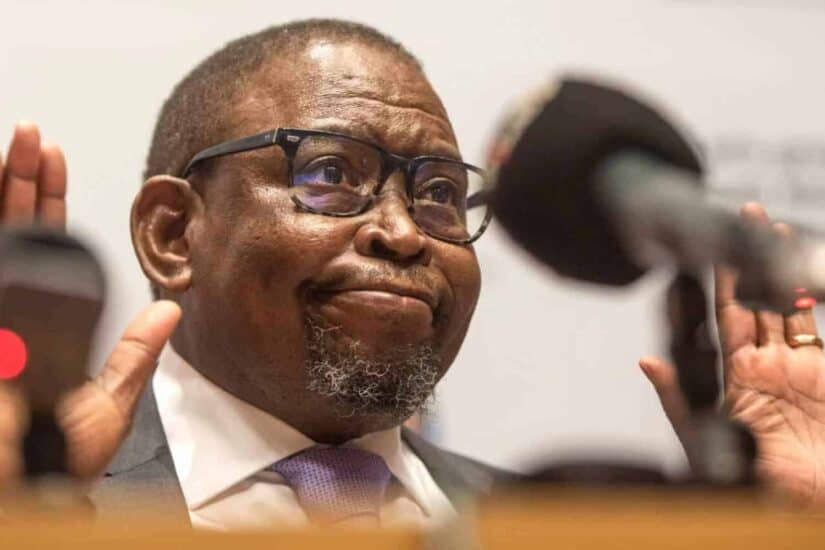
Finance minister Enoch Godongwana. Picture: Gallo Images/Brenton Geach


Finance Minister Enoch Godongwana will on Friday be hauled before parliament’s portfolio committee on Cooperative Governance and Traditional Affairs (Cogta) in a high-level joint meeting to discuss National Treasury’s decision to freeze equitable share payouts for 69 municipalities to the tune of R13.5 billion.
Last week, Godongwana invoked Section 216 of the Constitution in what he described as a corrective measure to spur municipalities to change their financial management positions.
The equitable share allocations for July will be released when Treasury is satisfied that the errant municipalities have taken steps, or at least tabled plans, to address fruitless and wasteful expenditure, unfunded budgets and a lack of consequence management.
The City of Johannesburg (CoJ) and Nelson Mandela Bay are among the municipalities affected.
The Financial and Fiscal Commission (FFC), which advises government and parliament on financial matters, has taken exception to National Treasury’s decision, with the Chapter 9 institution calling for parliament to scrutinise the move.
The FFC said it is important to hold municipalities accountable, but that this must be done transparently and “within the parameters of the Constitution and relevant legislation”.
Its position is that any decisions regarding the grant must therefore be made and approved through parliament, because it is inherently parliament’s function to determine how the funds are divided and allocated through the Division of Revenue process.
Noting the concerns, Cogta portfolio committee chair Zweli Mkhize consulted Cogta Minister Velenkosini Hlabisa, Godongwana, the South African Local Government Association (Salga), and the chairs of parliament’s oversight committees on finance, public accounts and appropriations.
They are among those expected to be in parliament to answer to the municipal issues in Friday’s sitting.
While there appears to be some pushback from certain members of parliament, Mkhize previously warned that weak controls at municipalities could not continue to go unchecked.
“There must be actions on those who cause the irregularities, so that it’s not illegal for Treasury to spend money where there have been transgressions,” Mkhize previously said.
Reset of municipal finances needed
Following its decision, National Treasury held two media briefings in one week to address the matter. Godongwana, who was travelling when Treasury officials held the first briefing, had the final word last Friday.
While he wouldn’t be drawn into the politics of CoJ, he did say (in no uncertain terms) that there needs to be a reset across the board.
“We’ve got to look at what are their cost drivers. A part of that is to restructure the finances of those municipalities. It’s not the City of Johannesburg alone, a lot of municipalities will have to undergo this process to make sure that their finances are sustainable.
“In the absence of that, we are not going to see sustainability.”
Godongwana also shut down proposals to raise the equitable share allocation granted to municipalities – calls made by the likes of Salga, which wants the current 9.8% allocation of nationally raised, non-interest revenue to be nearly doubled to 17%.
“It’s not going to happen with ease. I’m not going to mislead anybody here,” Godongwana said, adding that it would have a massive impact on allocations to key departments including health and education.
Local government leaders sleeping behind the wheel
Business Unity South Africa (Busa) has added to growing concerns from the business fraternity about the effect of badly run municipalities on the economy.
“It’s about time that something is done about it because the consequences are dire,” Busa CEO Khulekani Mathe told Moneyweb on Wednesday.
“Everything is falling apart, services are not rendered to communities and businesses are in those communities. It’s become costly to do business in these municipalities where you have these collapses.”
He says it is difficult to quantify how much business bleeds from the dysfunction, but failures in Joburg in particular cannot be ignored.
“As the business community we stand ready to support the recovery of Johannesburg. We have experience in working with institutions and sectors in distress – and for the private sector’s support to amount to something, you need a credible partner on the public sector side.
“But we do not have such a partner in particular in Johannesburg.
“The mayor [Dada Morero] is still in denial about the problem the city is in,” says Mathe.
“How can a person who denies the crisis be a credible partner in solving the problem?”
Mathe says the upcoming local government elections need to yield credible leadership, adding that political will is key to turning the failing municipalities around.
Busa is expected to continue lobbying at national government level for an intervention to resolve the issue across the board.
Situation impeding investments – Sapoa
In addition to the documented challenges, and Eskom’s looming threat to suspend electricity supply to CoJ, the South African Property Owners Association (Sapoa) tells Moneyweb that the continued closure of the Metro Centre has heightened concerns.
“[It] impacts the operations of many Sapoa members to a great extent, impeding further investments,” says Sapoa CEO Neil Gopal.
“We will continue to constructively engage the Executive Mayor and the City Manager of Johannesburg to discuss these concerns. This follows previous attempted engagements with the City shortly after the closure of the Metro Centre early in 2024.
“As the financial hub of the country, it is imperative that the city takes appropriate action to stabilise its precarious financial position.”
Like Busa, Sapoa says it remains available to discuss ways in which it can assist the city in improving its position.
This article was republished from Moneyweb. Read the original here.