


The department warns that the country could lose R1 billion a day should there be no fuel.
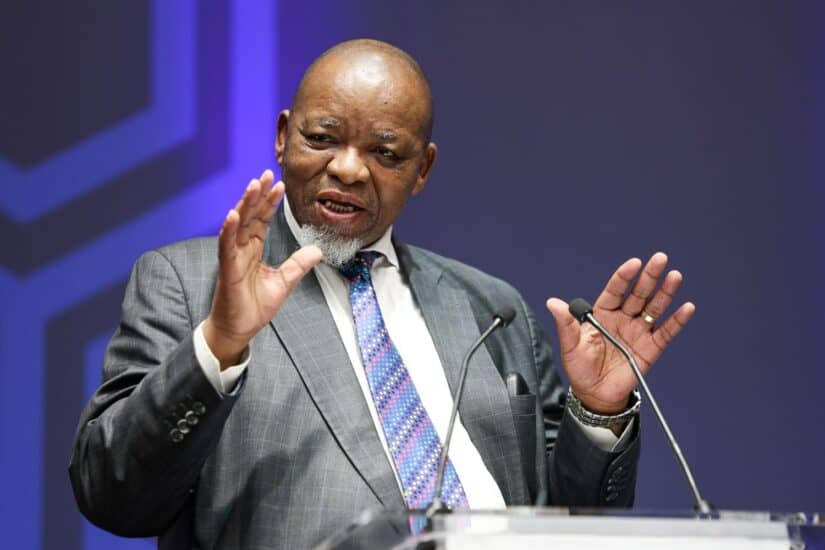
Mineral and Petroleum Resources minister Gwede Mantashe. Picture: Gallo Images/Lubabalo Lesolle


Mineral and Petroleum Resources minister Gwede Mantashe has published a draft policy that aims to ensure South Africa has enough emergency fuel supplies to keep the country running during global fuel shortages or price shocks.
The draft policy follows the outbreak of the Middle East conflict, which highlighted how quickly geopolitical tensions can disrupt South Africa’s fuel supply and drive up prices. It was published late last week for public comment.
South Africa is heavily dependent on imports of crude oil and refined petroleum products. The department said the policy will now move from a “voluntary stockholding model to a regulated, mandatory regime”.
The department warns that the country could lose R1 billion a day should there be no fuel.
Government fuel storage
“There is a compelling need for South Africa to have a Strategic Stocks Policy to enhance the state of readiness in the event of major oil supply disruptions,” noted the draft policy.
The policy proposes a revision to stock holdings, with a mix of crude oil and refined products. Once the policy is implemented, the government will be expected to hold 60 days of net-importer reserves.
This will be managed by the South African National Petroleum Company and will focus on 70% crude oil and 30% key refined products, including diesel, petrol and jet fuel, held in state-owned storage at Saldanha and Milnerton.
Fuel companies must store
According to the draft policy, private oil companies and wholesalers will need to store 21 days of backup fuel at their own expense. This includes Astron, Engen, Sasol, Shell, and others.
“Mandatory for all licensed wholesalers and importers,” read the draft policy. “Stocks must be held in 70% crude & 30% finished product to ensure immediate market liquidity.”
The department noted that approval of the policy will alleviate supply risks and ensure that the country has a strengthened response mechanism to a petroleum crisis.
SA’s readiness
The draft policy stated that the main objective is to ensure readiness by maintaining a buffer of physical stocks that can be released during a declared state of emergency.
“This strategic reserve is specifically intended for catastrophic events rather than minor operational inefficiencies, with the Minister of Mineral and Petroleum Resources being the authority empowered to trigger the release of these stocks,” read the document.
“South Africa’s petroleum stocks are characterised by insufficient physical reserves which jeopardise the national petroleum security.
“This vulnerability is further compounded by the closure of major domestic refineries, which has shifted the country from being a manufacturer of petroleum products to a net importer of finished products.”
Risk to the economy
It is noted that the country’s economy is exposed to risks, including fuel supply shortages in emergency situations, a lack of a buffer against external shocks and currency fluctuations, and short-term supply logistics.
“Dependence on long shipping routes and specific maritime chokepoints exposes the economy to an estimated R1 billion in losses for every single day of total fuel unavailability,” said the department.
The draft policy noted that imports take a minimum of 21 days and a maximum of 42 days to reach South African ports of entry. A further 10 -14 days are spent on offloading, refining and transporting products from coastal refineries to the inland market.
20% shortfall costs R24m
The department noted that fuel supply disruptions in the country have far-reaching economic consequences, affecting transportation, manufacturing, agriculture, and household consumption.
“Given the country’s heavy reliance on petroleum imports and road-based logistics, even short-term interruptions can impose significant costs on the economy,” read the document.
“Assuming a moderate disruption lasting two weeks, with a 20% reduction in fuel availability, the economic cost can be estimated using sectoral fuel consumption and GDP contribution data.
“South Africa consumes approximately 30 million litres of petroleum products annually, valued at around R600 million. This is based on an average price of R20 per litre.
“A 20% shortfall over two weeks, which is about 4% of annual consumption, equates to 1.2 million litres of lost supply, valued at R24 million.”



