Municipal debt increased to nearly R120 billion, and electricity sales volumes fell by 6.2%.
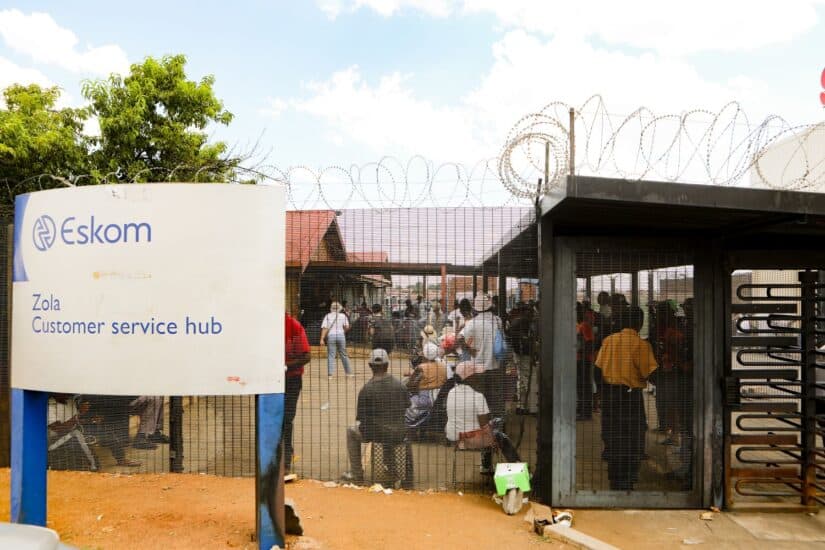
Eskom made a R30 billion profit despite selling less electricity and seeing municipal debt rise. Picture: Gallo Images/Fani Mahuntsi


Power utility Eskom’s road to recovery is raising concerns among analysts. While its more than R30 billion profit for the 2026 financial year is a significant turnaround worth celebrating, analysts warn the gains came at a cost, with much of the revenue generated through higher electricity prices paid by already-burdened households and businesses.
Eskom released its financial results on Monday, revealing massive municipal debt, a decline in sales, and higher profits than the previous year.
Municipal arrear debt rose to R119.9 billion by June 2026, electricity sales volumes fell by 6.2% to 178TWh, and the average tariff rose by about 12.7%, allowing revenue to rise by about 4.1% despite lower sales.
Profitability raises eyebrows
Senior research fellow at the University of Johannesburg’s School of Economics, Dr Charles S Saba, told The Citizen that Eskom’s profitability did not come only from increased tariffs, and that it is concerning that the power utility was able to make a profit despite lower sales.
“From an economic perspective, declining electricity sales alongside rising tariffs can become a structural problem,” he said.
“Households, businesses and other consumers that can afford alternatives may increasingly adopt rooftop solar, batteries and private generation, while energy-intensive industries may reduce production or seek alternative electricity suppliers. This leaves Eskom recovering its high fixed costs from a progressively smaller customer base.”
Disaster waiting to happen
Saba added the power utility needs to avoid a cycle in which higher tariffs reduce electricity demand, declining demand then weakens Eskom’s revenue base, and further tariff increases become necessary to compensate for falling sales.
Such a cycle would ultimately undermine both Eskom’s long-term financial sustainability and the competitiveness of the South African economy, said Saba.
“The R30.3 billion profit is therefore encouraging, but the quality and sustainability of that profit matter more than the headline number. Eskom should increasingly generate financial improvements through efficiency, stronger electricity demand, lower operating costs and expanded economic activity rather than primarily through higher tariffs.”
Municipal debt a threat
Eskom’s CEO, Dan Marokane, said municipal debt remains the single greatest threat to the utility’s financial sustainability and the biggest obstacle to legally separating the Distribution business.
“Persistent nonpayment by municipalities directly erodes the revenue, cash flows and liquidity which power the electricity supply industry.”
“We have heard South Africans clearly: double-digit electricity price increases are unaffordable,” Marokane added.
Eskom CFO Calib Cassim acknowledged that the power utility earned more because tariffs increased, while better operations and careful spending helped keep costs under control.
“A 12.74% standard tariff increase supported revenue growth, while an improved operating environment enabled real efficiencies and decisive cost discipline,” he said. “Eskom is financially stronger than it was. However, it is not yet structurally sustainable. “
More electricity, fewer customers
Marokane said the power utility’s problem is now changing. Previously, it struggled because it didn’t have enough electricity, and now it is producing more electricity than people are buying. Simply put, Eskom needs to find customers for the extra electricity it is producing.
He attributed the decline in sales volumes to weak industrial demand and the effects of embedded self-generation.
“The closure of the Mozal aluminium smelter when it entered care and maintenance in March 2026 removed a large, stable base-load customer from our planning assumptions, adding to these constraints,” said Marokane.
“We have had to move decisively from passively managing sales erosion to actively growing and diversifying revenue – retaining strategic industrial customers through negotiated pricing agreements, pursuing new demand from data centres, optimising customer wheeling and cross-border sales, and developing electric-vehicle charging and renewable offerings through Eskom Green.
“Turning surplus capacity from a risk into an opportunity is now one of our foremost commercial priorities.”
Can Eskom find more customers?
The Organisation Undoing Tax Abuse (Outa)’s executive manager for local government, Julius Kleynhans, told The Citizen that Eskom selling less electricity would normally negatively impact its profit.
“Eskom carries substantial fixed costs regardless of the electricity it sells. If demand continues falling, these costs must be recovered from fewer units sold, which puts both profitability and future tariffs under pressure.”
On the power utility’s plans to deal with surplus, Kleynhans added that the organisation is “cautiously optimistic”.
“Data centres, industrial expansion, exports and electrification could create demand, but success depends on competitive electricity prices, grid capacity, efficiency, future price reduction and broader economic growth,” he said.
“These plans will take time and should not be regarded as guaranteed demand, especially with the government’s poor track record in implementing such plans.”
Caution
Both Saba and Kleynhans acknowledged that Eskom’s recovery is good news; however, factors remain that need to be addressed.
“Profitability should not come predominantly through continuously raising electricity tariffs on already financially constrained households and businesses. Electricity is an essential input into almost every economic activity.
“Excessive tariff increases therefore affect household disposable income, business operating costs, inflation and ultimately economic growth, which may also affect employment levels,” said Saba.
“Municipal arrears, electricity theft, debt and major infrastructure requirements remain serious risks,” said Kleynhans.
“Outa’s concern is that customers should now benefit from improved performance through greater efficiency and inflation-linked tariffs, not continuing increases of nearly 9% a year. Eskom is pricing itself out of the market, and soon it will be cheaper to take on debt and go off-grid than to keep being a customer of the Power Giant. Where is Nersa [National Energy Regulator of South Africa] in all of this?”