'Instead of the shortages many anticipated, the market has swung in the opposite direction.'
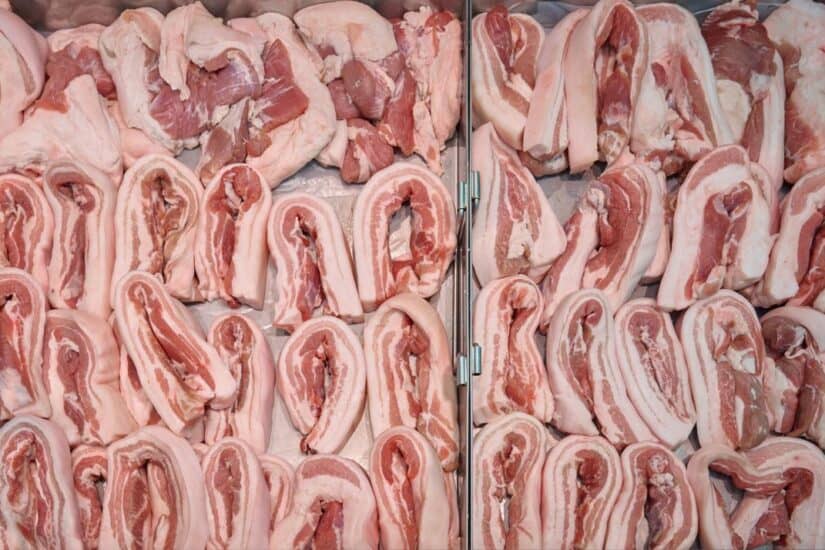
Wholesale pork prices have fallen from around R40/kg to approximately R30/kg, after earlier outbreaks of African Swine Fever (ASF) and Foot-and-Mouth Disease (FMD). Picture: iStock


South Africans can expect to pay less for pork as prices come down after the market swung from fears of shortages to an oversupply. The increased supply has driven wholesale prices lower, offering some relief to households battling the high cost of living.
Eskort CEO Arnold Prinsloo said concerns that disease outbreaks would significantly reduce local supply prompted processors to secure imported pork to avoid potential shortages.
“Instead of the shortages many anticipated, the market has swung in the opposite direction,” he said. “Imports arrived at the same time as local supply recovered, creating a significant surplus of pork.”
Pork prices fall as fears of disease outbreaks grow
He noted that wholesale pork prices have fallen from around R40/kg to approximately R30/kg after earlier outbreaks of African Swine Fever (ASF) and Foot-and-Mouth Disease (FMD) temporarily disrupted supply and triggered precautionary imports.
ASF and FMD are severe, highly contagious viral diseases that affect animals. Neither disease affects human health or poses a food safety risk, but both cause devastating economic losses to agriculture and livestock trade.
ASF affects only domestic and wild pigs (suids), while FMD affects cloven-hoofed (split-hoofed) livestock, including cattle, sheep, goats and pigs.
Under South Africa’s animal health regulations, farms affected by FMD are placed under restrictions for a minimum of 42 days after no new symptoms are detected. While these measures are essential for disease control, they can also create a backlog of market-ready animals that enter the market once restrictions are lifted.
Here’s how much pork will cost
Prinsloo said following price increases due to the fear of disease outbreaks, there has been a substantial oversupply of pork, placing downward pressure on prices. The market is expected to stabilise closer to its historical average of around R32/kg as supply and demand gradually rebalance.
“The lower wholesale prices are already filtering through to retailers, with Eskort products dropping significantly, including pork chops being reduced from R120/kg to approximately R80/kg, boerewors from around R120/kg to approximately R100/kg and three packs of bacon that previously retailed at around R130 now selling for approximately R100,” he noted.
“The current market conditions are good news for consumers. We have ample supply, lower prices and, importantly, no food safety risk to consumers.”
Protecting SA’s livestock industry
Prinsloo added that the recent outbreaks also reinforce the importance of continued investment in biosecurity, veterinary services and disease surveillance to protect South Africa’s livestock industry and maintain long-term food security.
Chief Economist at AgbizSA, Wandile Sihlobo noted in a post that the decrease in pork prices is good news for households and for inflation.
“Another important factor that will help keep South Africa’s food price inflation at moderate levels. Grains, fruits, and vegetables are also easing nicely because of large supplies,” he said.
R10 million in losses
According to DA Gauteng Shadow MEC for Agriculture and Rural Development, Bronwynn Engelbrecht, there have been seven outbreaks of ASF in the City of Tshwane since November 2025. These outbreaks have affected both commercial and smaller-scale pig farming operations.
He noted that this has caused the industry more than R10 million in losses. A total of “69 171 pigs have been affected, with approximately 60 000 pigs culled,” said Engelbrecht.
“The South African Pork Producers’ Organisation (SAPPO) has already incurred an estimated R10 million in costs, including culling, disposal, and labour. This figure does not yet include the direct financial losses suffered by affected farmers, which have still not been submitted to the Gauteng Department of Agriculture and Rural Development.”
Engelbrecht said this information was revealed by Gauteng MEC for Agriculture and Rural Development, Vuyiswa Ramokgopa, in an oral reply to the DA’s questions tabled in the Provincial Legislature.