


A broader view of neurological conditions is reflected in the brain-health research at the NWU.
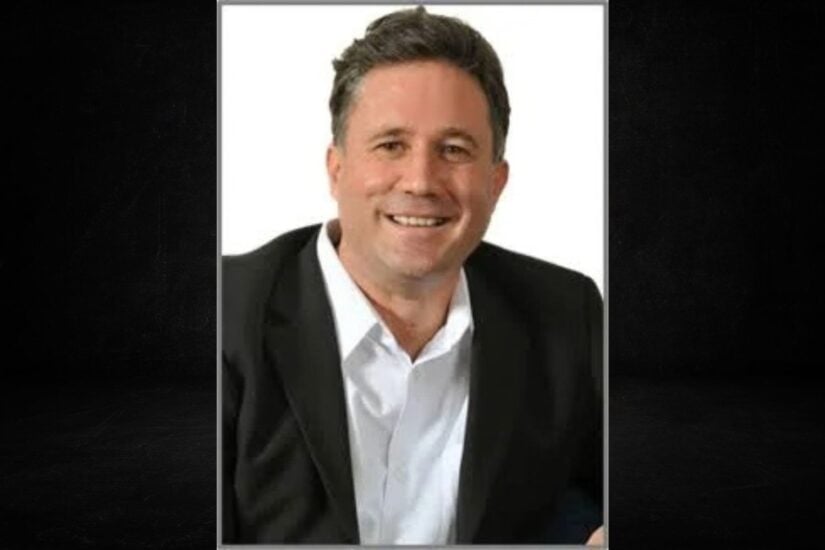


For Prof. Greg Lamb, understanding the brain started close to home. In fact, it started right in his own home – with an adopted sister who was almost totally blind and deaf, severely cognitively impaired and autistic. She was the seventh child in his family, says Prof. Lamb, a paediatric neurologist at the North-West University’s Centre for Health and Human Performance (CHHP).
As the eldest, he experienced first-hand how difficult life could be for a child with severe neurological challenges. When his sister’s routine was disrupted, for instance, she would sometimes display severe behavioural problems, even in public. His family was even reported to child welfare because people could not understand her behaviour.
Neurology gets a whole new meaning when it affects you so closely, Prof. Lamb says. For him, neurology is less about what he calls “academic chest-thumping” and more about getting “into the trenches” with parents and families who spend years caring for children with neurological conditions.
“I can identify with the parents and the families and their suffering,” he says. His experience taught him that neurological conditions affect an entire family, not only the child.
That broader view is reflected in the brain-health research at the NWU. Through the NeuroThrive Brain Health initiative, researchers from the university’s Faculty of Health Sciences are studying the brain in real-world settings. Their work examines neurological function during sporting activity, after exposure to impact and while people interact, rather than exclusively in a laboratory.
One project, run with the non-profit organisation Care for Education, asks whether people’s brains fall into sync when they play and build together. Participants use LEGO Six Bricks, a simple hands-on learning and play approach, while researchers track their brain activity with functional near-infrared spectroscopy (fNIRS), a technique that uses light to measure activity in the brain.
Another project is exploring whether changes in acoustic reflex and acoustic immittance could help identify concussion early. Using audiology-based equipment, researchers are assessing whether those changes could provide an objective physiological indicator of mild concussion in children and adolescents who participate in impact sports.
Although the projects ask different questions, both examine the brain in everyday contexts: how people connect and develop, and what happens when injury disrupts normal functioning.
More than just a brain scan
For Prof. Lamb, the importance of understanding concussion becomes particularly clear when the patient is a child. One of the biggest problems with concussion, is that it can be difficult to see and diagnose.
No single objective test can reliably show what has happened inside the brain immediately after an injury, he says. Concussion therefore remains a clinical diagnosis based on the patient’s history, symptoms and the clinician’s assessment.
“People look for headaches and things like that, but much more important is school performance.
“When performance goes down, children’s self-confidence also goes down. This is something that is very hard to get back.”
Problems with visual processing can also affect reading. “You suddenly get a totally different little person, and nobody understands why,” he says.
Concussion cannot simply be treated as something that happens on a sports field and ends when the player gets up. The injury may occur on the field, but its effects can follow a child into the classroom, the home and everyday life.
Originating in the CHHP’s Care2Kids division at the NWU, the concussion project records baseline measurements before children take part in sport. Researchers repeat the acoustic-reflex and acoustic-immittance tests after a match and again about 24 to 36 hours later, then compare any physiological changes with recognised concussion indicators, including symptoms, cognition, executive functioning, fatigue and mood.
The focus on children and adolescents is deliberate, with the project considering how concussion can affect areas such as learning, communication, hearing, executive functioning, mood and everyday participation, not only sporting performance.
It also explores whether measurements could eventually be obtained using portable equipment closer to where an injury occurs, such as on a school sports field, rather than exclusively in specialist clinical facilities.
Changing how we monitor concussion
Prof. Lamb believes children who suffer a concussion should be looked after holistically for six months to two years, with attention paid to auditory and visual processing, school performance, attention and concentration. This calls for several disciplines, from acute care and concussion assessment to speech therapy, occupational therapy and neurological monitoring.
The concussion project reflects this, bringing together audiology, speech-language pathology, child neurodevelopment and rehabilitation to test whether an additional objective signal could support clinical assessment without replacing it.
Listening also matters, says Prof. Lamb, because about 90% of a neurological diagnosis lies in the history of the injury. A three-year-old who appears to have fallen, hit his head and then had a seizure may in fact have had a first epileptic seizure that caused the fall. In another case, a 12-year-old girl had seizures and severe headaches after a head injury. Prof. Lamb found that the seizures were unrelated to the concussion, while the headaches stemmed from visual processing problems caused by the injury.
Whether researchers are watching two brains connect over a handful of LEGO bricks or tracking the hidden effects of a knock on the sports field, the NWU’s brain-health research keeps returning to the same idea: the brain cannot be understood apart from the person and the life around it.
For Prof. Lamb, that lesson began at home with a sister whom few people understood, and it still shapes how he listens to every child and family he treats. As these projects move forward, the hope is that science and compassion together will help more children recover, connect and thrive.
Content supplied by our select Partners and paid for content ad advertisement.


